Gemini 4 Argon Found Over Twice as Many Vulnerabilities as Baseline Models in Wiz Tests
Google DeepMind has released test results showcasing Gemini 4 Argon in cybersecurity. Wiz researchers evaluated the model through shadow A/B testing on live systems. According to their findings, it uncovered more than twice as many vulnerabilities as baseline models. Notable critical discoveries included a file download bypass and an exposed master key in healthcare software. DeepMind is leaning heavily on the model's ability to carry out multi-step threat analysis and suggest remediations without fatigue. Independent data and absolute figures are not yet available. • More than double the vulnerabilities identified compared to baseline models. • Key findings included a file download restriction bypass and an exposed master key in healthcare software. • Data currently comes solely from the developer and its testing partner.
AI-processed from YouTube: Google DeepMind; edited by Hamidun News
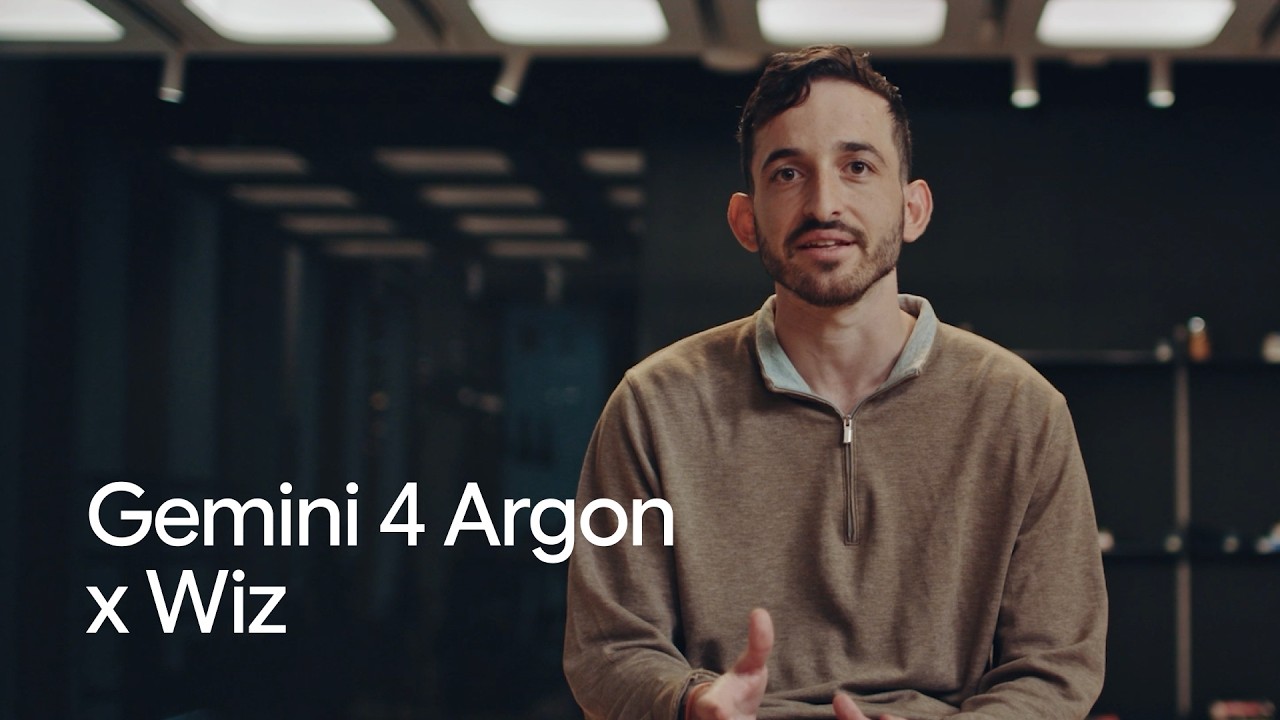
Google DeepMind has published a video highlighting Gemini 4 Argon's performance in cybersecurity testing. Wiz researchers evaluated the model through shadow A/B testing on live production systems. According to their assessment, Argon discovered more than twice as many vulnerabilities as baseline models. Critical findings included a file download restriction bypass and an exposed master key within healthcare software.
What We Know About the Test
Shadow A/B testing typically involves running a new system in parallel with existing workflows, benchmarking outputs side by side without directly replacing active production tools. Baseline models served as the control group, and tests ran on live systems rather than artificial staging environments with deliberately planted bugs. This setup offers a far more demanding test than synthetic benchmarks, as live codebases are saturated with noise, legacy decisions, and non-obvious cross-component dependencies.
Key takeaways from the announcement:
- Format: shadow A/B testing on live systems;
- Evaluators: Wiz security researchers;
- Primary result: more than a two-fold increase in discovered vulnerabilities compared to baseline models;
- Example findings: a file download bypass and a master key in healthcare software;
- Claimed core strengths: advanced reasoning, long-horizon operations, multi-step threat analysis, and remediation assistance.
Why These Findings Matter
Bypassing file download controls generally grants unauthorized access to restricted data. An exposed master key gives attackers wide-ranging access across an infrastructure. In healthcare software, the cost of such vulnerabilities extends beyond financial losses to severe breaches of sensitive patient data. DeepMind deliberately showcased these examples to demonstrate that the model surfaces issues with tangible, real-world blast radiuses rather than superficial code-style nitpicks.
Claims regarding "long-horizon" capabilities in security are particularly relevant. Severe vulnerabilities rarely sit on the surface. Instead, they typically form an exploit chain: a weak validation check here, an invalid assumption in an adjacent module, and an exposed key tucked away in an unexpected place. A model capable of maintaining context across extended multi-step investigations without losing the thread is theoretically much better positioned to trace these chains than tools evaluating files in isolation. DeepMind emphasizes that Argon operates without fatigue—a major operational advantage when auditing massive, sprawling codebases.
What the Announcement Leaves Out
Because the findings come directly from the developer's promotional video, independent third-party verification remains impossible for now. Several critical questions remain unanswered:
- Which specific models served as baselines, and on which versions were they run?
- How many vulnerabilities were discovered in absolute numbers, rather than just relative multiples?
- What percentage of the findings were confirmed—meaning, what was the false-positive rate?
- How were the discoveries distributed across severity tiers?
- How much time and compute were spent per run, and how much manual triage was left to human engineers?
Without this context, "more than double" serves as an encouraging signal rather than an actionable procurement metric. If the baseline models performed poorly, a two-fold increase might still represent modest absolute numbers. Conversely, if a sizable portion of the discoveries proved to be noise, security teams would simply end up with twice as many alert tickets to triage.
What This Means for Defenders
The practical takeaway is straightforward: validate on your own stack. Security teams should replicate Wiz's framework on a smaller scale. Deploy the model in a shadow configuration across one or two internal services alongside existing security scanners and manual code reviews. From there, measure confirmed critical vulnerabilities, false-positive rates, and triage time rather than raw finding counts.
Teams should pay particular attention to secret and key discovery, authorization bypasses, and file access logic, as these are the exact failure classes DeepMind chose to highlight. Suggested remediations must undergo human code review and automated test suites rather than being applied blindly. The model's access to internal repositories and sensitive data should remain strictly compartmentalized, especially in heavily regulated domains like healthcare.
Finally, defenders must view the landscape holistically. If security teams gain access to models capable of multi-step analysis, threat actors will inevitably adopt the same tools. Advantage will belong to the teams that integrate these systems into operational workflows early and learn how to quickly filter out the noise.
Build & Ship Production AI Apps with Vibe Coding
Join Zhemal Khamidun's hands-on Vibe Coding Intensive at hamidun.com/vibecoding — master Claude Code, Cursor, and autonomous agentic workflows.
The AI world, distilled — once a week
Seven stories that actually mattered, hand-picked. No noise, no reposts, no press releases.
Done! Check your inbox for a confirmation.