Guangdong to speed up development of AI models for transport
The government of Guangdong province in China has announced measures to bring AI into its transport system. The plan calls for specialized AI models and intelligent agents to monitor, manage and maintain transport infrastructure. Particular attention goes to building knowledge bases and big-data processing technologies.
AI-processed from 36Kr (36氪); edited by Hamidun News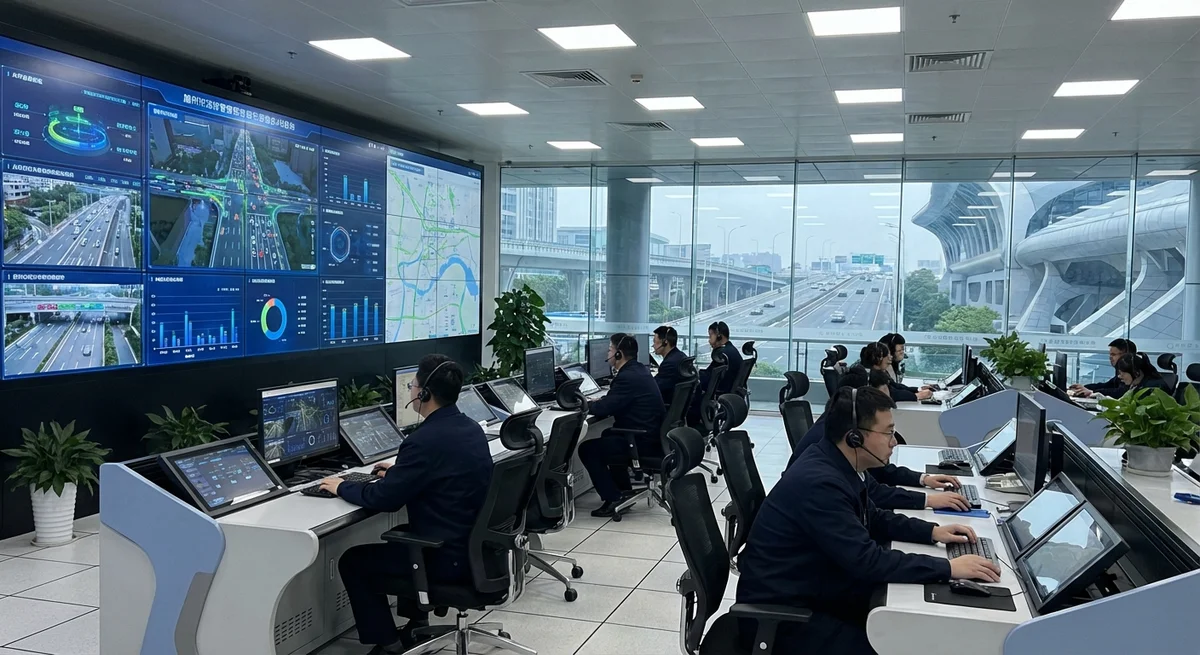
The authorities of China's Guangdong province intend to accelerate the integration of artificial intelligence into the region's transport infrastructure. This is stated in the "Several Policy Measures to Promote High-Quality Development of Transport and Logistics with Artificial Intelligence," published by the General Office of the Guangdong Provincial People's Government. The main emphasis is on developing specialized AI models and intelligent agents to handle key tasks in the transport sector.
The initiative aims to make the transport system more efficient and safer through advanced technologies. In particular, the plan is to apply AI in areas such as monitoring the condition of transport facilities, managing traffic flows, responding promptly to emergencies, improving passenger service, optimizing operations and maintenance, and improving sector-wide management as a whole.
Successful implementation requires a solid technological foundation. To that end, Guangdong's authorities intend to actively develop knowledge bases geared toward the transport sector. They plan to build a knowledge-graph system that should help optimize machine learning models and support better-grounded decisions. In addition, a shared technology platform will be created to support the deployment of large language models in transport, which should improve the efficiency of engineering implementation.
Particular attention goes to the digital transformation of road and waterway infrastructure. Key tasks include developing technologies for real-time monitoring of dynamic scenes, merging data from multiple sources, intelligent control and strategy optimization. These measures aim to produce a smarter, more adaptive transport system that can respond effectively to changing conditions.
The adoption of AI in Guangdong's transport sector has far-reaching implications. For users, it means safer and more comfortable journeys and shorter travel times. For the industry as a whole, it opens new opportunities to cut costs, raise efficiency and improve environmental sustainability. Guangdong's experience, if successful, could become a model for other regions of China and the world.
However, carrying out these ambitious plans comes with a number of challenges. Authorities must ensure there are enough qualified specialists able to develop and deploy AI solutions. Issues of data protection and cybersecurity must also be resolved. In addition, the ethical aspects of using AI in transport must be taken into account to avoid discrimination and ensure fairness.
In conclusion, Guangdong's initiative to bring AI into its transport infrastructure is an important step toward a more efficient, safer and more sustainable transport system. If successfully carried out, these plans could become a powerful driver of the region's economic development and improve residents' quality of life.
Test Frontier LLMs & Autonomous Agents in One Workspace
Run Claude Opus 5.5, GPT-6, Gemini 3.1, and DeepSeek side-by-side in Nomad AI (nomadnet.ai) — unified model routing, deep research, and multimodal workflows under one subscription.
The AI world, distilled — once a week
Seven stories that actually mattered, hand-picked. No noise, no reposts, no press releases.
Done! Check your inbox for a confirmation.