Alibaba Teams Up With Chinese Nuclear Giant to Power AI
Alibaba Group has partnered with a Chinese nuclear company to set up a power generation venture. The goal is to secure a stable energy supply for the data centers that its artificial intelligence projects depend on.
AI-processed from Bloomberg Tech; edited by Hamidun News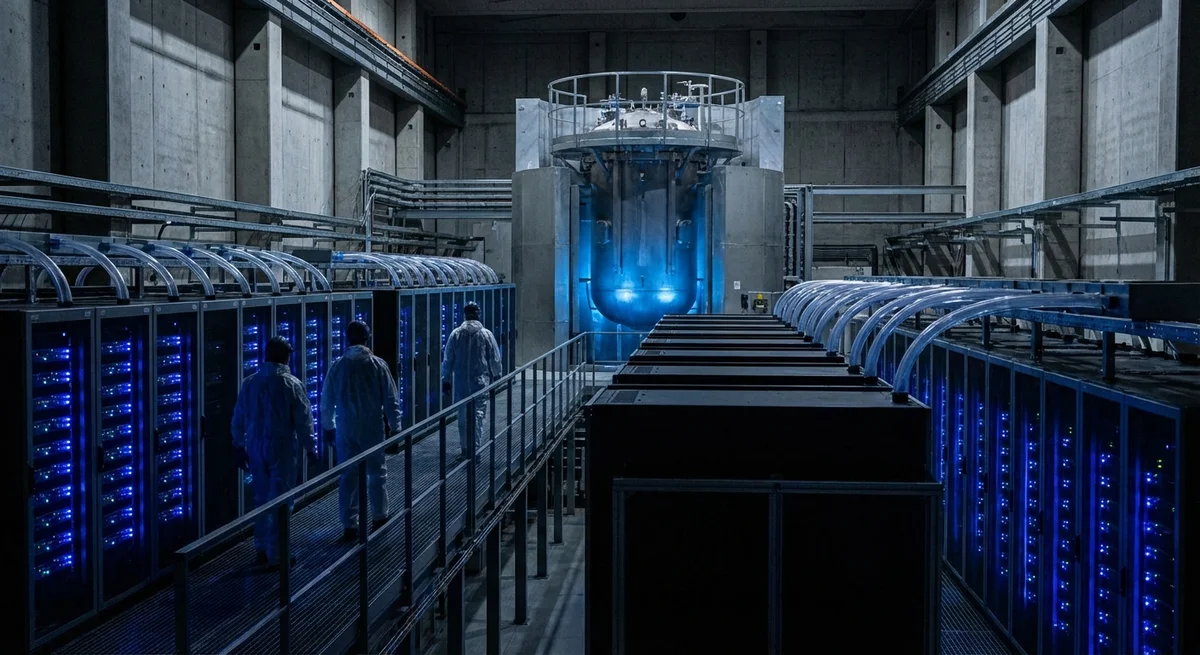
Alibaba Group, the Chinese tech giant, has announced a joint venture with one of China's leading nuclear power companies. The move may look unexpected at first glance, but it carries strategic weight for Alibaba's ambitious artificial intelligence (AI) plans. The partnership aims to secure a stable, reliable power supply for data centers, the "heart" of modern AI systems.
In recent years, AI development has demanded an exponential increase in computing capacity. Training complex neural networks and deploying large-scale AI services consume enormous amounts of electricity. Environmental sustainability is becoming an increasingly important factor, and the geopolitical situation creates risks of energy supply disruptions. Against that backdrop, a reliable, clean energy source has become a critical asset for any company that wants to lead in AI.
Despite lingering concerns, nuclear power is one of the most efficient and cleanest ways to generate electricity at scale. The partnership will give Alibaba access to a stable and relatively inexpensive energy source, reducing its reliance on traditional sources such as coal and shrinking the carbon footprint of its operations. This matters especially given China's push toward carbon neutrality.
For Alibaba, this is a strategic move that secures long-term competitiveness in the fast-moving AI sector. With control over an energy source, the company can plan the expansion of its AI projects with more confidence, without worrying about supply disruptions or sharp spikes in electricity prices. It may also give Alibaba an edge over competitors that lack similar capabilities.
However, working with a nuclear company also comes with certain risks and challenges. Nuclear facilities must operate under the strictest safety standards, and public opinion and environmental concerns have to be taken into account. It is also important that the terms of the partnership benefit both sides and divide profits and risks fairly between the partners.
Overall, Alibaba's decision to partner with a Chinese nuclear company is a bold and strategically sound move that could significantly influence AI development in China and beyond. It shows that leading in AI takes more than developing cutting-edge algorithms and building innovative products: companies also need reliable, sustainable infrastructure, including their power supply.
Going forward, we can expect other major tech companies, especially those investing heavily in AI, to look for similar ways to secure energy independence and reduce the environmental impact of their operations.
Test Frontier LLMs & Autonomous Agents in One Workspace
Run Claude Opus 5.5, GPT-6, Gemini 3.1, and DeepSeek side-by-side in Nomad AI (nomadnet.ai) — unified model routing, deep research, and multimodal workflows under one subscription.
The AI world, distilled — once a week
Seven stories that actually mattered, hand-picked. No noise, no reposts, no press releases.
Done! Check your inbox for a confirmation.