Microsoft expands data centers, promises not to raise electricity rates
Microsoft has announced the construction of new data centers to meet rising demand for AI. The company promises to offset its energy consumption so that household electricity rates do not rise. A sustainability strategy will be a priority.
AI-processed from TechCrunch; edited by Hamidun News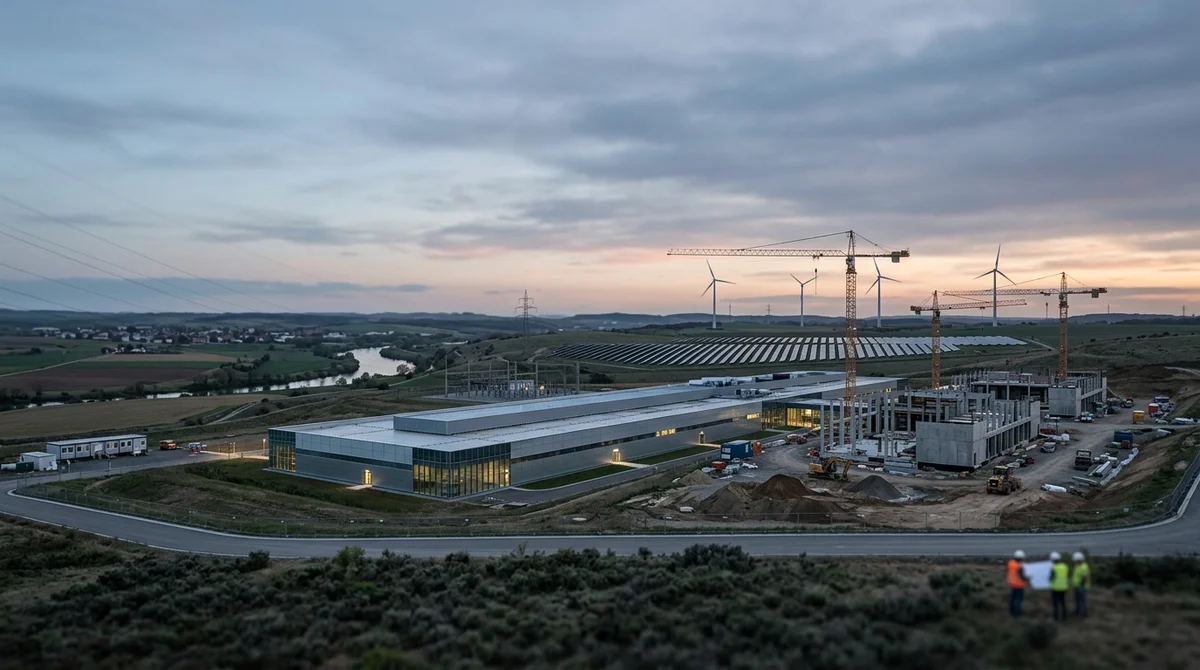
Microsoft is making a big bet on artificial intelligence, expanding its data center infrastructure across the country. The new construction, however, raises concerns about higher electricity consumption and, as a result, higher rates for households. In response, Microsoft issued a statement pledging to be a "good neighbor" and to offset any additional energy consumption tied to the new data centers.
Context matters here. The rapid growth of AI demands enormous computing power, which in turn drives exponential growth in energy use. Data centers, which house the servers that run AI models, are among the most energy-intensive facilities there are. With environmental sustainability and energy security becoming ever more pressing issues, Microsoft's pledge looks like an attempt to soften potential backlash from the public and regulators.
The details of Microsoft's strategy remain unclear. The company will likely use a combination of measures, including investment in renewable energy, improving the energy efficiency of its data centers, and agreements with local utilities. It is worth noting that Microsoft already has experience with projects of this kind. The company is actively investing in solar and wind power and aims to be carbon neutral by 2030.
The implications of the statement for the industry and for users are significant. First, it sets a precedent for other tech companies that are also investing in AI infrastructure. They are expected to be pushed to follow Microsoft's example and take steps to minimize their impact on the environment and the power grid. Second, it may encourage the development of more energy-efficient AI technologies. Developers will have an incentive to build algorithms that need less computing power and therefore consume less energy. Third, it may influence where new data centers are built. Companies will favor regions with well-developed renewable energy infrastructure and conditions favorable to building environmentally clean facilities.
In conclusion, Microsoft's pledge not to raise electricity rates despite expanding its AI infrastructure is an important step toward sustainable development. It shows that tech companies recognize their responsibility for their environmental impact and are ready to act to minimize the negative effects. The future will show how well Microsoft can keep its promises, but for now the statement can be seen as a positive signal for the industry and for society as a whole.
- Nov 2, 2026Bank Architect: In a METR Test, AI Made Experienced Developers' Tasks Take 19% Longer
- Nov 2, 2026CoFiBreak Reward Teaches an Attacker LLM Diverse Jailbreaks Without Losing ASR@10
- Nov 2, 2026Anthropic needs to grow revenue 32% a year to cover $850 billion in contracts
- Nov 2, 2026Microsoft releases 4B model Mage-VL-Cowork, which solves 66.0% of OSWorld-Verified tasks
Test Frontier LLMs & Autonomous Agents in One Workspace
Run Claude Opus 5.5, GPT-6, Gemini 3.1, and DeepSeek side-by-side in Nomad AI (nomadnet.ai) — unified model routing, deep research, and multimodal workflows under one subscription.
The AI world, distilled — once a week
Seven stories that actually mattered, hand-picked. No noise, no reposts, no press releases.
Done! Check your inbox for a confirmation.