Оптические дисплейные системы – ключ к AI-очкам: Анализ CICC
Analysts at CICC, a leading Chinese investment company, have identified optical display systems as one of the most important components in the development of AI glasses. In their recent report, they emphasized that technological breakthroughs in this area will determine the future of wearable AI devices. The AI glasses market is on the verge of significant growth. After Meta launched its AI glasses in September 2023, the industry is preparing for a period of active development. CICC forecasts that 2025 will be the year of an "explosion" for AI glasses, and in 2026-2027, products from giants like Google are expected to enter the market. Additional stimulus for market development could come from government support: in 2026, AI glasses are planned to be included in a state subsidy program, which will likely lead to significant growth in consumer demand.
AI-processed from 36Kr (36氪); edited by Hamidun News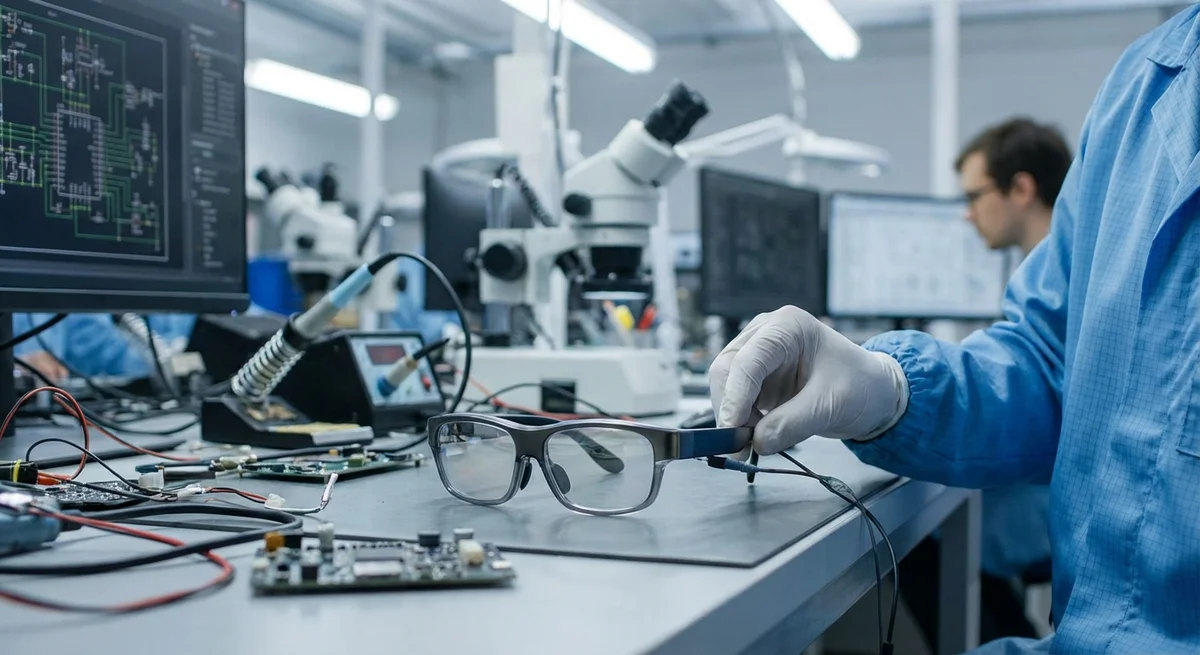
Analysts at CICC, a leading Chinese investment company, have identified optical display systems as one of the most important components in the development of AI glasses. In their recent report, they emphasized that technological breakthroughs in this area will determine the future of wearable AI devices. The AI glasses market is on the verge of significant growth.
After Meta launched its AI glasses in September 2023, the industry is preparing for a period of active development. CICC forecasts that 2025 will be the year of an "explosion" for AI glasses, and in 2026-2027, products from giants like Google are expected to enter the market. Additional stimulus for market development could come from government support: in 2026, AI glasses are planned to be included in a state subsidy program, which will likely lead to significant growth in consumer demand.
However, the development of AI glasses faces the so-called "impossible triangle": the need for a compromise between cost, weight, performance, and battery life. Currently, AI audio glasses and AI photography glasses have already reached a certain level of maturity, while AI+AR glasses with displays are still in the active development stage. This is where optical display systems play a crucial role.
CICC believes that waveguide solutions are the most promising direction in the development of optical systems for AI glasses. This technology allows creating compact and lightweight displays that project images directly onto the retina. When waveguide technology reaches sufficient maturity, AI glasses will be able to replace smartphones and become a personal multimedia center.
The prospects for the AI glasses industry look very promising. As technologies develop and component costs decrease, AI glasses will become increasingly accessible and functional. Ultimately, they could transform the way we interact with the digital world, providing users with new opportunities for work, entertainment, and communication.
It is important to note that the success of AI glasses largely depends on solving problems related to power consumption and ease of use. Only then will they be able to gain widespread popularity and become a full replacement for smartphones. In conclusion, the CICC report emphasizes the importance of optical display systems for the development of AI glasses.
Technological breakthroughs in this area, especially in waveguide solutions, will determine the future of wearable AI devices and open new possibilities for human-technology interaction. Government support and the reduction of component costs will also play an important role in stimulating the growth of the AI glasses market.
Need AI working inside your business — not just in your newsfeed?
I build production AI for companies — custom CRM, internal tools, autonomous agents, workflow automation. Owned by you, shaped to your process, no per-seat tax. Built by Zhemal Khamidun, CPO of AlpinaGPT (AI platform, 6,000+ users).
The AI world, distilled — once a week
Seven stories that actually mattered, hand-picked. No noise, no reposts, no press releases.
Done! Check your inbox for a confirmation.