L'Oréal, Mondelēz and Nestlé Use AI to Accelerate Product Development
L'Oréal, Mondelēz and Nestlé use AI to accelerate product development. L'Oréal has been applying the technology in its laboratories for four years: AI helps predict molecular behavior and find new uses for existing ingredients, reducing costly iterations and time-to-market for new products.
AI-processed from AI News; edited by Hamidun News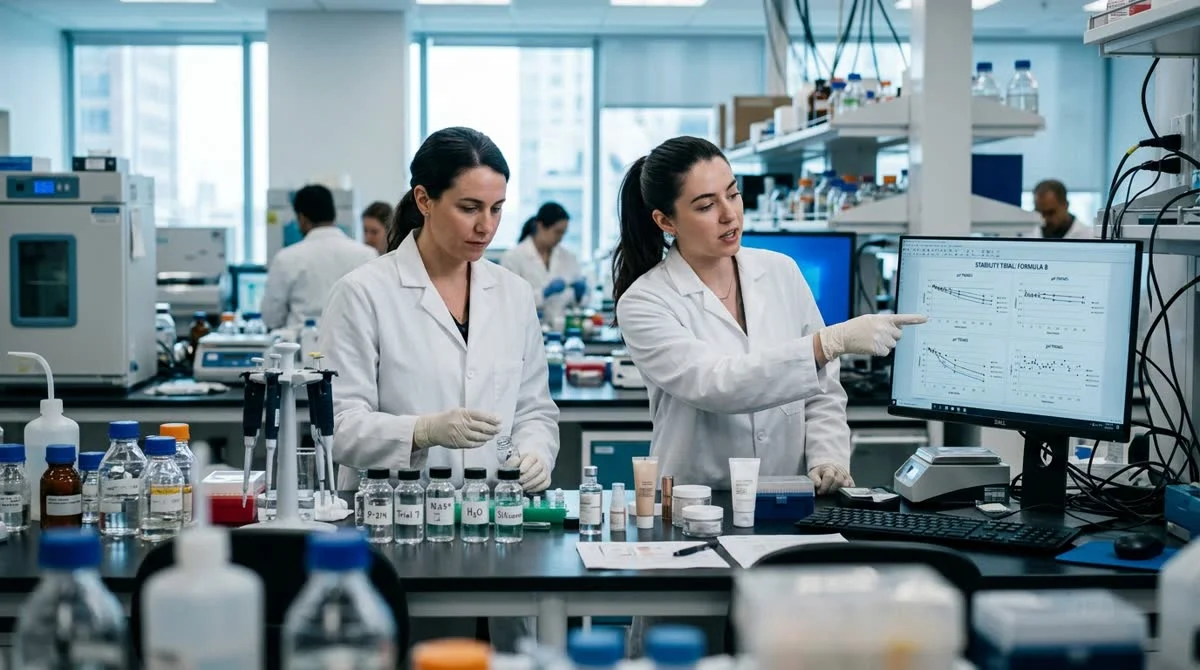
L'Oréal has been applying AI in its laboratories for four years now to reduce the development time for cosmetic products and find new applications for ingredients from its existing portfolio. In July 2026, Fabrice Megarbane, president of L'Oréal's consumer division, discussed this in an interview with Reuters. A similar approach to accelerating product R&D is being used by Mondelēz and Nestlé.
How L'Oréal Uses AI in Formula Development
The technology helps predict the behavior of molecules — one of the most labor-intensive stages in creating new cosmetic products. Traditionally, developing a new formula is a lengthy and expensive process: chemists synthesize and test compounds by hand, assess ingredient compatibility, check stability and safety of formulations. For every product that reaches the shelf, there are dozens of formulas rejected at intermediate stages.
An AI model allows researchers to predict the outcome before a physical experiment begins: they receive a list of promising hypotheses and test only those. The number of dead ends and the cost of each iteration drop significantly.
The second scenario involves finding new applications for already existing components. L'Oréal has accumulated an extensive library of ingredients, and the algorithm identifies which ones can be deployed in new products or contexts without needing to start a research cycle from scratch.
Applying AI to laboratory R&D is part of a broader industry trend: machine learning technologies have been used in pharmaceuticals for molecular screening for several years, and now similar approaches are spreading to consumer chemistry and cosmetics.
- Four years — the duration of AI use in L'Oréal's laboratories
- Fabrice Megarbane — president of L'Oréal's consumer division
- AI tasks: predicting molecular properties and finding new applications for ingredients
- Companies in the trend: L'Oréal, Mondelēz, Nestlé
Why FMCG Giants Are Betting on AI in R&D
Mondelēz and Nestlé, among the world's largest consumer goods manufacturers, are moving in the same direction. Three companies from different sectors — cosmetics, confectionery, food products — are simultaneously applying AI to optimize development.
The synchronized movement of three different players is logical: all face similar structural problems. Consumers expect increasingly personalized products, retailers demand constant assortment updates, and competition from private labels and direct-to-consumer brands is intensifying. AI offers a way to do more with the same resources.
A traditional R&D cycle in FMCG takes years: molecular research, formula iterations, consumer testing, safety verification, regulatory approval. AI takes on the most analytical and repetitive parts of the cycle and frees up teams for tasks requiring expert judgment. In a rapidly changing industry, development speed becomes a competitive advantage: a company that launches a new product in 18 months instead of three years occupies the shelf first and tests market response.
What This Means
When L'Oréal, Nestlé, and Mondelēz simultaneously announce practical application of AI in product R&D, this signals a systemic shift in traditional industries. Four years of actual technology use in L'Oréal's laboratories suggests measurable results, not experimental interest. The next question for the industry is: exactly how much has AI reduced development time and costs in specific product lines — and when will companies begin publishing this data.
Need AI working inside your business — not just in your newsfeed?
I build production AI for companies — custom CRM, internal tools, autonomous agents, workflow automation. Owned by you, shaped to your process, no per-seat tax. Built by Zhemal Khamidun, CPO of AlpinaGPT (AI platform, 6,000+ users).
The AI world, distilled — once a week
Seven stories that actually mattered, hand-picked. No noise, no reposts, no press releases.
Done! Check your inbox for a confirmation.