UK Foreign Secretary Cooper: AI Is the Biggest Security Challenge of the Past Decade
UK Foreign Secretary Cooper plans to warn that artificial intelligence is the biggest security challenge of the past decade. According to Bloomberg, she is expected to call on governments worldwide to quickly agree on mechanisms to control the technology before the threats spiral out of control. The details of her proposals have not been disclosed. The warning has yet to be delivered, and the key question is what practical steps will follow.
AI-processed from Bloomberg Tech; edited by Hamidun News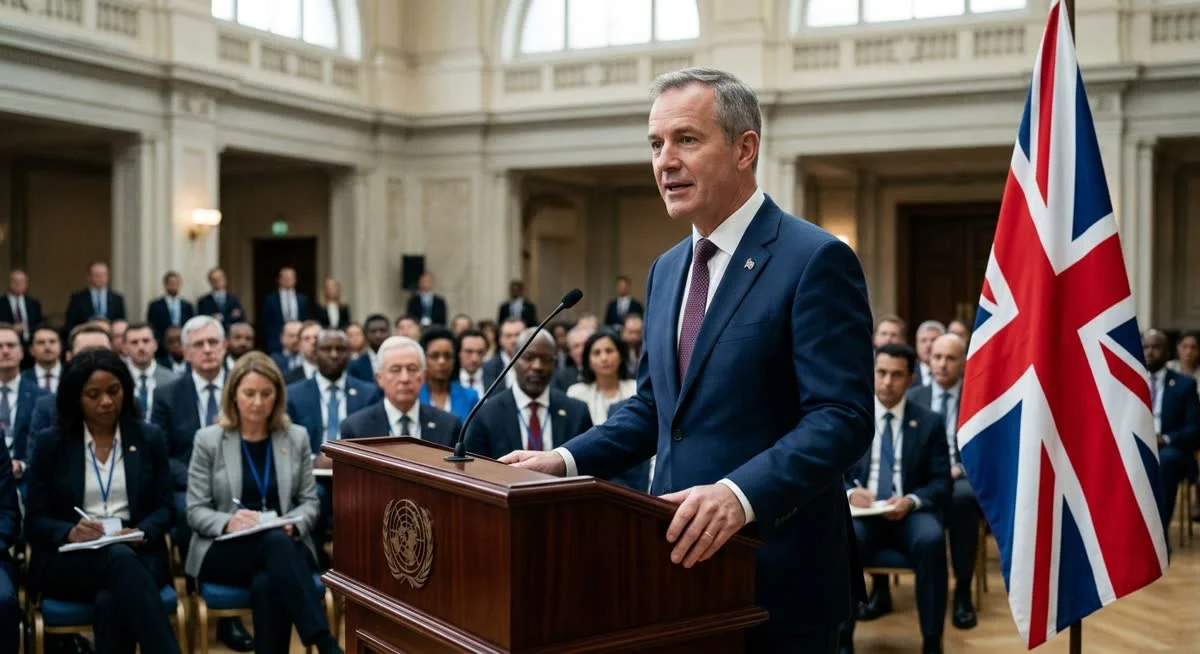
UK Foreign Secretary Cooper plans to say that artificial intelligence poses the biggest security challenge of the past decade. According to a Bloomberg report dated 5 July 2026, Cooper will call on the international community to quickly develop mechanisms to contain this threat.
What lies behind the warning
The choice of speaker matters: this is the head of the Foreign Office, not a technology or home affairs minister. That suggests Cooper treats AI threats as a geopolitical problem: the potential use of the technology by state actors, the vulnerability of critical infrastructure, and the use of AI in intelligence and military operations.
According to Bloomberg, specific proposals have not yet been disclosed; the outlet is reporting on an upcoming speech. The warning itself has yet to be delivered, and the main question is what practical steps will follow.
In the AI debate, the term "guardrails" covers a wide range of measures, from mandatory safety testing of systems before deployment to international bans on certain military uses of AI. What exactly Cooper means by the term will become clear after the speech.
The UK as a venue for AI dialogue
London has consistently sought a leading role in the international dialogue on AI safety. In November 2023, the world's first AI Safety Summit took place in the UK, at Bletchley Park, bringing together representatives of 28 states, the largest AI labs and scientists. It produced the Bletchley Declaration, the first agreed international principles for responsible AI development.
The UK AI Safety Institute was also established then, a government body for independent assessment of the risks of frontier models. It works with similar bodies in the US and several other countries.
Cooper's statement continues this strategic line but shifts the emphasis: from technical evaluation of specific systems to political mobilization of allies and a demand for binding international rules.
Why there is still no international coordination
Despite active movement in AI legislation, global coordination remains a weak spot:
- The European Union has adopted the AI Act, the first binding AI law, which classifies systems by risk level
- The US is debating federal legislation, while individual states are already introducing their own rules
- China has adopted rules for regulating generative AI that are incompatible with Western approaches
- Bletchley-style initiatives are advisory and have no enforcement mechanisms
Cooper apparently intends to put this "regulatory misalignment" at the center of the international agenda.
What this means
Rhetoric at foreign secretary level opens the way to initiatives at the UN, the G7 and bilateral agreements. The real effect of Cooper's warning will be measured by whether it is followed by mechanisms with real obligations, or whether it remains one more appeal in a long line of similar statements.
Key Questions Answered
What lies behind the warning?
The choice of speaker matters: this is the head of the Foreign Office, not a technology or home affairs minister. That suggests Cooper treats AI threats as a geopolitical problem: the potential use of the technology by state actors, the vulnerability of critical infrastructure, and the use of AI in intelligence and military operations. According to Bloomberg, specific proposals have not yet been disclosed; the outlet is reporting on an upcoming speech. The warning itself has yet to be delivered, and the main question is what practical steps will follow. In the AI debate, th
What are the key details on The UK as a venue for AI dialogue?
London has consistently sought a leading role in the international dialogue on AI safety. In November 2023, the world's first AI Safety Summit took place in the UK, at Bletchley Park, bringing together representatives of 28 states, the largest AI labs and scientists. It produced the Bletchley Declaration, the first agreed international principles for responsible AI development. The UK AI Safety Institute was also established then, a government body for independent assessment of the risks of frontier models. It works with similar bodies in the US and several other countries.
Why there is still no international coordination?
Despite active movement in AI legislation, global coordination remains a weak spot: The European Union has adopted the AI Act, the first binding AI law, which classifies systems by risk level The US is debating federal legislation, while individual states are already introducing their own rules China has adopted rules for regulating generative AI that are incompatible with Western approaches Bletchley-style initiatives are advisory and have no enforcement mechanisms Cooper apparently intends to put this "regulatory misalignment" at the center of the international agenda.
Test Frontier LLMs & Autonomous Agents in One Workspace
Run Claude Opus 5.5, GPT-6, Gemini 3.1, and DeepSeek side-by-side in Nomad AI (nomadnet.ai) — unified model routing, deep research, and multimodal workflows under one subscription.
The AI world, distilled — once a week
Seven stories that actually mattered, hand-picked. No noise, no reposts, no press releases.
Done! Check your inbox for a confirmation.