Synthetic Sciences releases OpenScience, an open AI workbench for ML, biology, physics and chemistry
Synthetic Sciences has released OpenScience, an open AI workbench for scientific research under the Apache 2.0 license. The platform runs with any model through the researcher's own API keys and does not tie users to a specific provider. It ships with 250+ editable skills, access to scientific databases, and support for ML, biology, physics and chemistry. It deploys on your own infrastructure.
AI-processed from MarkTechPost; edited by Hamidun News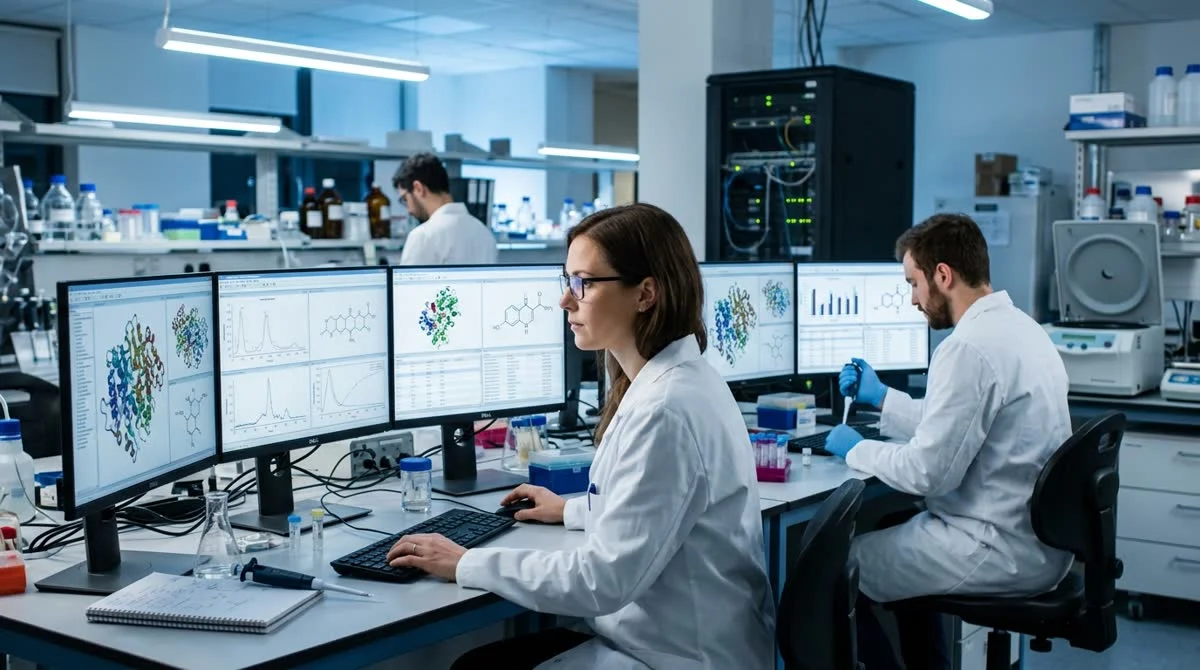
Synthetic Sciences released OpenScience on July 5, 2026: an open AI workbench under the Apache 2.0 license that automates research in machine learning, biology, physics and chemistry. The platform works with any frontier or open-weight model through the researcher's own API keys and deploys on the organization's own infrastructure, without sending data to external services.
What ships in the standard release
The workbench covers the full research cycle, from searching scientific databases to running computational tasks, so researchers do not have to switch between incompatible tools from different providers.
Key components of the release:
- License: Apache 2.0, with fully open source code
- Coverage: machine learning, biology, physics, chemistry
- More than 250 editable skills in the standard package
- Built-in access to the scientific databases researchers query
- Compatibility with any frontier or open-weight model through the user's API keys
- Deployment on the organization's own infrastructure
Each skill is an editable unit of logic. A researcher can rewrite a prompt, change the sequence of steps or add domain-specific checks without reworking the whole platform. This is a fundamental difference from SaaS tools, where users are limited to what the vendor allows: here the lab adapts the ready-made tool to the task rather than bending the task to the tool's limits.
Why does independence from the AI model matter?
The underlying problem is that most AI tools for science are tied to a single provider. Changing the model means changing the entire working environment: a different platform, new prompts, retraining the team. That discourages experimenting with new models and creates long-term vendor dependence.
OpenScience breaks that dependence with a single interface on top of any engine. Researchers pick the model for the job: a powerful frontier model for complex multistep reasoning, or a lightweight open one for routine data processing and cost control. Academic groups often work with several providers, switching depending on grants and institutional licenses. Model neutrality guards against vendor lock-in and lets teams move to new models painlessly as they appear.
Data confidentiality is a separate issue. Biological experiments, chemical compounds and unpublished genomic sequences often contain information that an organization cannot send to external cloud services. OpenScience lets a lab run the entire research cycle inside its own perimeter, from defining the task to getting the result. This removes regulatory barriers that have kept many institutions from adopting external AI services.
Scientific databases inside the pipeline
Built-in access to scientific databases is one of the platform's key advertised features. AI skills can query structured scientific data directly inside the research pipeline, bypassing manual export and dataset uploads. This cuts routine preparatory work in literature search, training-set selection and result verification.
Covering four disciplines (ML, biology, physics and chemistry) reflects a focus on AI4Science, where AI is used to speed up scientific discovery, from protein structure prediction to quantum chemistry. As a universal open workbench, it aims to become an infrastructure layer connecting experimental labs with current AI capabilities.
What this means
OpenScience is a bid for an open standard in AI tooling for the natural sciences. The combination of the Apache 2.0 license, model neutrality, 250+ editable skills and local deployment targets academic institutions and corporate R&D labs, for which vendor lock-in and data confidentiality requirements are real dealbreakers. How widely the scientific community adopts the platform will become clear from contribution activity in the repository over the coming months.
- Nov 1, 2026Adobe's EditAgent judge picks a usable edit 81.3% of the time, versus 74.8% for EditScore
- Nov 1, 202616 models tested on 7 search tools: Exa averaged 10.5 out of 14, SearXNG about 3
- Nov 1, 2026MoneyGate safety layer blocked all 42 fraudulent requests to local AI models
- Nov 1, 2026Hugging Face's BERT Tokenizer Gets a 50x Speedup by Skipping Needless Work on ASCII
Key Questions Answered
Why does independence from the AI model matter?
The underlying problem is that most AI tools for science are tied to a single provider. Changing the model means changing the entire working environment: a different platform, new prompts, retraining the team. That discourages experimenting with new models and creates long-term vendor dependence. OpenScience breaks that dependence with a single interface on top of any engine. Researchers pick the model for the job: a powerful frontier model for complex multistep reasoning, or a lightweight open one for routine data processing and cost control. Academic groups often work wit
What ships in the standard release?
The workbench covers the full research cycle, from searching scientific databases to running computational tasks, so researchers do not have to switch between incompatible tools from different providers. Key components of the release: License: Apache 2.0, with fully open source code Coverage: machine learning, biology, physics, chemistry More than 250 editable skills in the standard package Built-in access to the scientific databases researchers query Compatibility with any frontier or open-weight model through the user's API keys Deployment on the organization's own infras
What are the key details on Scientific databases inside the pipeline?
Built-in access to scientific databases is one of the platform's key advertised features. AI skills can query structured scientific data directly inside the research pipeline, bypassing manual export and dataset uploads. This cuts routine preparatory work in literature search, training-set selection and result verification. Covering four disciplines (ML, biology, physics and chemistry) reflects a focus on AI4Science, where AI is used to speed up scientific discovery, from protein structure prediction to quantum chemistry. As a universal open workbench, it aims to become an
Build & Ship Production AI Agents Without Boilerplate Code
Start your free 72-hour trial at Hamidun Academy (academy.hamidun.com) — interactive lessons on Claude Code & Cursor, live Tech Radar, and production agent templates.
The AI world, distilled — once a week
Seven stories that actually mattered, hand-picked. No noise, no reposts, no press releases.
Done! Check your inbox for a confirmation.