First clinical trials of drugs against the rare Bundibugyo Ebola strain begin in the DRC
On July 6, 2026, in the Democratic Republic of Congo, patients with the rare Bundibugyo Ebola strain began receiving experimental drugs as part of the first clinical trial for this virus. The current outbreak has claimed more than 100 lives. Unlike the well-studied Zaire strain, no approved treatments have existed so far against Bundibugyo.
AI-processed from Bloomberg Tech; edited by Hamidun News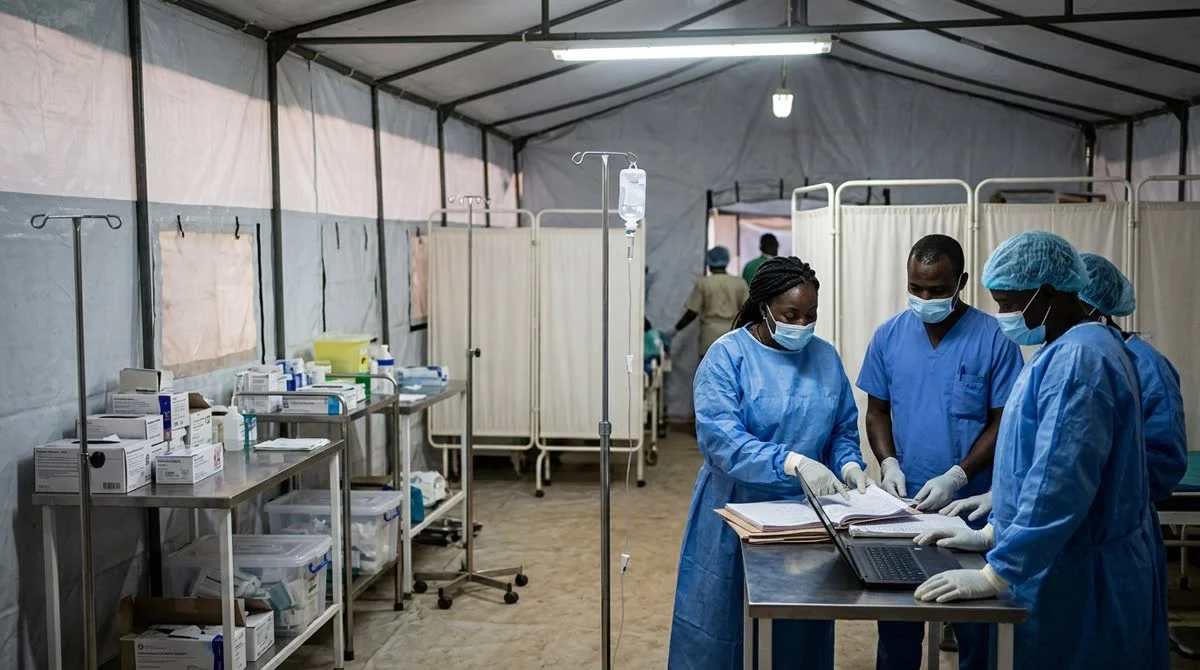
On July 6, 2026, patients with Ebola virus Bundibugyo strain in the Democratic Republic of the Congo began receiving experimental drugs as part of a clinical trial. This is the first systematic attempt to test treatment specifically against this rare strain — the current outbreak has claimed the lives of over 100 people; the total death toll from Ebola in the DRC has exceeded 500.
What is the Bundibugyo strain?
Bundibugyo is one of the rarest known types of Ebola virus. It was first identified in 2007 in the Bundibugyo district of western Uganda and since then has caused only isolated outbreaks, primarily in Uganda and the DRC. Unlike the Zaire strain — responsible for the largest epidemics, including the 2014–2016 outbreak with more than 11,000 deaths — Bundibugyo remains poorly understood.
The small number of documented cases long prevented comprehensive clinical research. As a result, there are no approved drugs specifically developed for this strain: doctors have used drugs developed against other Ebola variants without solid evidence of their effectiveness.
Why conduct trials during an active outbreak?
This is a forced, but standard global practice for rare infections: gathering a sufficient number of participants for statistically significant results is objectively possible only when the disease is actively spreading.
Key facts about the current situation:
- Clinical trials began on July 6, 2026, in the Democratic Republic of the Congo
- The death toll from the current outbreak has exceeded 100 people
- In total, more than 500 people have died from Ebola in the DRC
- The trial is specifically targeting the Bundibugyo strain — for the first time in the history of observations
In parallel with the trials, quarantine measures and contact tracing of infected individuals continue. Work in remote areas with limited medical infrastructure remains a serious operational challenge.
What this means
The launch of the first clinical trial against the Bundibugyo strain is a long-awaited step for tropical infection specialists. Even if specific drugs do not produce an immediate effect, the accumulated data will lay a scientific foundation for combating future outbreaks of this rare but deadly virus.
Key Questions Answered
What is the Bundibugyo strain?
Bundibugyo is one of the rarest known types of Ebola virus. It was first identified in 2007 in the Bundibugyo district of western Uganda and since then has caused only isolated outbreaks, primarily in Uganda and the DRC. Unlike the Zaire strain — responsible for the largest epidemics, including the 2014–2016 outbreak with more than 11,000 deaths — Bundibugyo remains poorly understood. The small number of documented cases long prevented comprehensive clinical research. As a result, there are no approved drugs specifically developed for this strain: doctors have used drugs de
Why conduct trials during an active outbreak?
This is a forced, but standard global practice for rare infections: gathering a sufficient number of participants for statistically significant results is objectively possible only when the disease is actively spreading. Key facts about the current situation: Clinical trials began on July 6, 2026, in the Democratic Republic of the Congo The death toll from the current outbreak has exceeded 100 people In total, more than 500 people have died from Ebola in the DRC The trial is specifically targeting the Bundibugyo strain — for the first time in the history of observations In
What this means?
The launch of the first clinical trial against the Bundibugyo strain is a long-awaited step for tropical infection specialists. Even if specific drugs do not produce an immediate effect, the accumulated data will lay a scientific foundation for combating future outbreaks of this rare but deadly virus.
Test Frontier LLMs & Autonomous Agents in One Workspace
Run Claude Opus 5.5, GPT-6, Gemini 3.1, and DeepSeek side-by-side in Nomad AI (nomadnet.ai) — unified model routing, deep research, and multimodal workflows under one subscription.
The AI world, distilled — once a week
Seven stories that actually mattered, hand-picked. No noise, no reposts, no press releases.
Done! Check your inbox for a confirmation.