How to build an AI harness for SaaS development: combining Orca, Pi Agent, and GitHub
In real-world development, it's not the most powerful model that wins, but the properly built system around it — the agent harness. The Habr author shows his own working setup: the Orca orchestrator breaks down tasks and routes them between agents, Pi Agent makes targeted code fixes, GitHub serves as the single sync point, and a VPS provides an isolated execution environment. The harness turns a standalone model into a manageable production pipeline.
AI-processed from Habr AI; edited by Hamidun News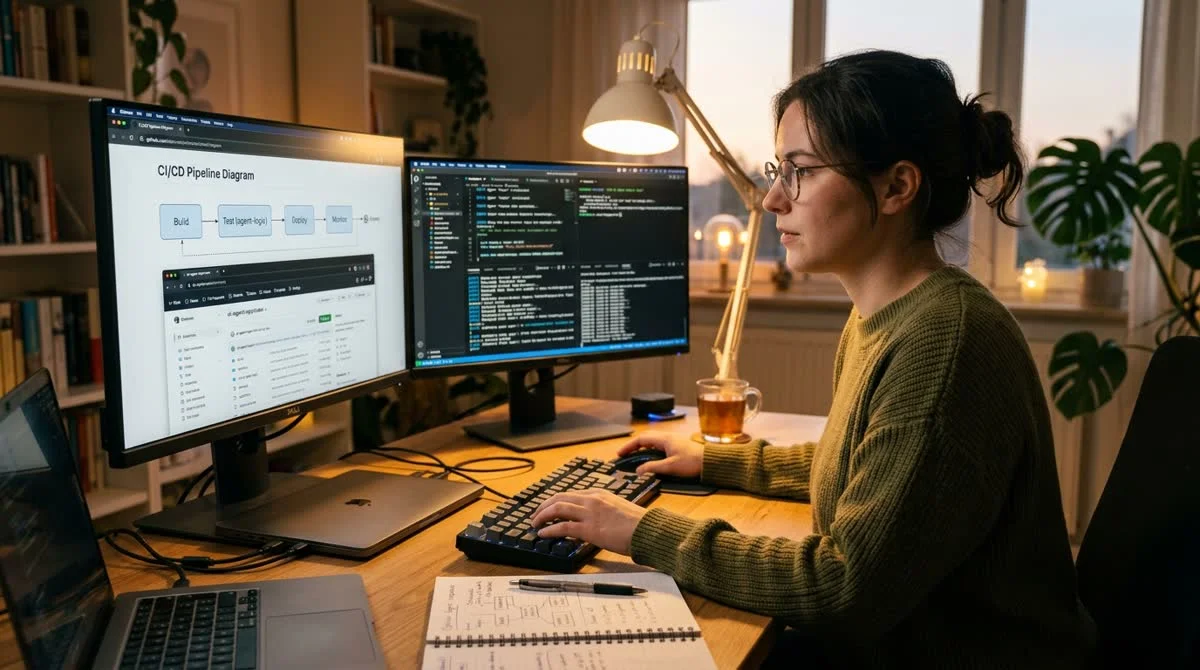
A developer published on Habr in July 2026 a detailed breakdown of his own AI system for SaaS development — a so-called agent harness. The main thesis: in real production work, not the most powerful language model wins, but the correctly built infrastructure around it, including the Orca orchestrator, lightweight Pi Agent, GitHub, and a custom VPS pipeline.
Why the harness matters more than model choice?
The debate over LLM selection never subsides: GPT-5 or Claude Opus 4.6, Gemini or Codex. But the author puts forward a radical thesis: in real development, the question "which model to choose" is secondary. Primary is the question "how is the model embedded in the workflow."
Agent harness is a layer between the developer and the language model that manages context, task routing, isolated code execution, logging, and feedback loops. Without it, even the most powerful model remains a smart chatbot, unable to reliably work in a production environment.
What components make up the setup
The author describes a specific architecture of five elements:
- Orca — central orchestrator: receives a task, breaks it down into subtasks, and routes to the appropriate agent or tool
- Pi Agent — lightweight execution agent for targeted tasks: code fixes, refactoring, logic verification
- GitHub — repository as the "single source of truth" for the system and synchronization point for agents
- VPS — isolated execution environment: agents run code on a remote server without risk to the local machine
- Custom pipeline — describes the task flow from assignment to merge
Orca and Pi Agent work as a pair: the orchestrator sees the big picture and distributes work, Pi Agent executes a specific, clearly defined instruction without needing to maintain the entire project context.
GitHub plays a dual role in this scheme. First — the familiar code repository. Second — synchronization point: agents write to branches, create pull requests, and the developer reviews changes in a classic code review loop, only now AI is on the execution side.
How this approach differs from regular ChatGPT
Most developers use LLM in "ask-answer" mode: paste code in chat, get a fix, copy back. This works for isolated tasks but breaks down in system development.
The harness changes the paradigm: the model becomes part of an automated workflow where each step is verified, versioned, and logged. An agent error is not lost — it's captured in the system and can be debugged. VPS isolation: multiple agents can work in parallel without conflicts on the local machine.
"In real work, it's not just the strongest model that wins, but a
correctly assembled system around it" — the author's key thesis.
What this means
The article captures an important shift in AI development practice: the growth point becomes not model quality, but infrastructure maturity around it. Developers who invest in harness — orchestration, isolated execution, versioning — get stable production results. Those who simply switch between ChatGPT and Claude work slower and less predictably.
- Oct 24, 2026Lovable builds GPT-Live, Claude and Gemini Omni into its chat: 9 AI tools in one place
- Oct 24, 2026GPT-6.1 Sol in Devin Scores 60.4% on FrontierCode at $0.31 per Task
- Oct 24, 2026Math Advisers Say OpenAI's Flood of Proofs Broke the Field's Rules
- Oct 24, 2026Vercel Takes Python to GA and Launches Daemons for Background Workers
❓ Key Questions Answered
Why the harness matters more than model choice?
The debate over LLM selection never subsides: GPT-5 or Claude Opus 4.6, Gemini or Codex. But the author puts forward a radical thesis: in real development, the question "which model to choose" is secondary. Primary is the question "how is the model embedded in the workflow." Agent harness is a layer between the developer and the language model that manages context, task routing, isolated code execution, logging, and feedback loops. Without it, even the most powerful model remains a smart chatbot, unable to reliably work in a production environment.
What components make up the setup?
The author describes a specific architecture of five elements: Orca — central orchestrator: receives a task, breaks it down into subtasks, and routes to the appropriate agent or tool Pi Agent — lightweight execution agent for targeted tasks: code fixes, refactoring, logic verification GitHub — repository as the "single source of truth" for the system and synchronization point for agents VPS — isolated execution environment: agents run code on a remote server without risk to the local machine Custom pipeline — describes the task flow from assignment to merge Orca and Pi Agen
How this approach differs from regular ChatGPT?
Most developers use LLM in "ask-answer" mode: paste code in chat, get a fix, copy back. This works for isolated tasks but breaks down in system development. The harness changes the paradigm: the model becomes part of an automated workflow where each step is verified, versioned, and logged. An agent error is not lost — it's captured in the system and can be debugged. VPS isolation: multiple agents can work in parallel without conflicts on the local machine. "In real work, it's not just the strongest model that wins, but a correctly assembled system around it" — the author's
Delegate Deep Research, Coding & Workflows to an AI Agent
Deploy autonomous multi-step execution with NomadNet Agent (agent.nomadnet.ai) — automated web research, data synthesis, code generation, and complex task orchestration.
The AI world, distilled — once a week
Seven stories that actually mattered, hand-picked. No noise, no reposts, no press releases.
Done! Check your inbox for a confirmation.