South Korea to channel AI-boom tax windfall from Samsung and SK hynix into a youth fund
South Korea's government has decided to direct above-forecast tax revenue from the AI boom into a special fund for young people and for reducing inequality. Samsung Electronics and SK hynix, the largest chipmakers, hold a 65–80% share of the memory market and supply the country's biggest source of tax revenue. As AI demand for servers and accelerators grows, the companies' profits and their contributions to the budget rise in proportion.
AI-processed from 3DNews AI; edited by Hamidun News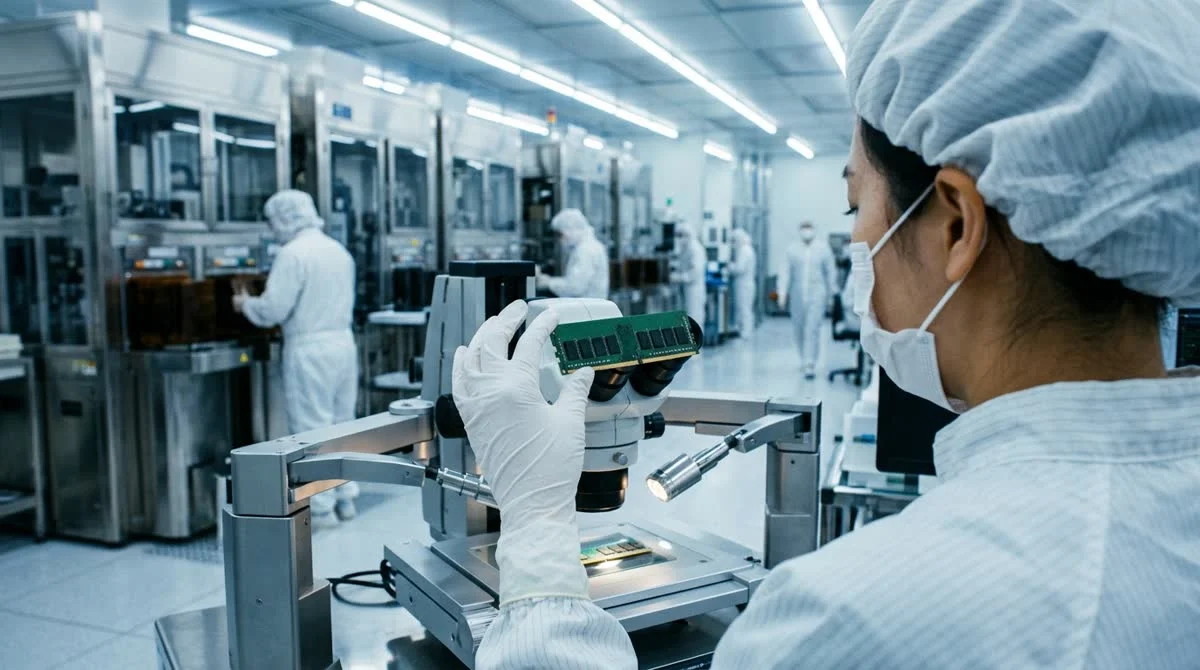
In July 2026, South Korea's government announced its intention to direct the additional tax revenue generated during the global AI boom into a special "future generations fund." The money is slated to support young people and reduce wealth inequality, two of the sorest points on the country's social agenda.
Where the above-forecast taxes come from
South Korea holds a unique place in the global AI economy: two of its companies, Samsung Electronics and SK hynix, together control 65% to 80% of the world market for DRAM and NAND memory chips. That makes them the country's largest corporate taxpayers and the main source of state revenue.
Explosive growth in demand for AI infrastructure, including data center servers, GPUs for training neural networks and high-bandwidth HBM memory, has pushed both chipmakers' revenue sharply above forecasts. Higher profits automatically translate into higher corporate tax payments, creating a budget surplus that the original government plan did not anticipate.
- Samsung Electronics and SK hynix: combined share of the global memory market of 65–80%
- Key growth driver: HBM memory and server DRAM for AI data centers
- Company revenue exceeded budget forecasts, producing above-forecast tax income
- The fund's priorities: supporting young people and reducing social inequality
Why the money goes into a separate fund rather than the general budget
Creating a separate "future generations fund" is a political signal, not just a financial decision. The government openly states that the technology rent generated by the global AI boom should serve the long-term interests of young citizens in a targeted way, rather than dissolving into current spending.
This carries particular weight in South Korea. The country is going through one of the most acute demographic crises in the world: its fertility rate has fallen in recent years to the lowest levels among developed economies. Youth unemployment, the gap in access to housing in Seoul and other large cities, and wealth inequality between generations have all become constant themes in political debate. The fund lets the government lock in a commitment: income from the AI boom will return to those who are only now entering the labor market.
Norway has long used a similar structure, topping up its state pension fund with oil windfall profits. The Korean initiative follows the same logic, except that the source of the rent is not oil but a technological monopoly in the memory semiconductor market.
What this means
For the first time, the AI boom is explicitly turning into a mechanism of intergenerational redistribution. Windfall profits of memory makers, which grew thanks to demand from global AI labs and hyperscalers, are starting to be converted into social investment in the producing country. If the program is implemented in full, it may become a benchmark for other economies whose prosperity depends on technology rent in the AI era.
Key Questions Answered
Where the above-forecast taxes come from?
South Korea holds a unique place in the global AI economy: two of its companies, Samsung Electronics and SK hynix, together control 65% to 80% of the world market for DRAM and NAND memory chips. That makes them the country's largest corporate taxpayers and the main source of state revenue. Explosive growth in demand for AI infrastructure, including data center servers, GPUs for training neural networks and high-bandwidth HBM memory, has pushed both chipmakers' revenue sharply above forecasts. Higher profits automatically translate into higher corporate tax payments, creatin
Why the money goes into a separate fund rather than the general budget?
Creating a separate "future generations fund" is a political signal, not just a financial decision. The government openly states that the technology rent generated by the global AI boom should serve the long-term interests of young citizens in a targeted way, rather than dissolving into current spending. This carries particular weight in South Korea. The country is going through one of the most acute demographic crises in the world: its fertility rate has fallen in recent years to the lowest levels among developed economies. Youth unemployment, the gap in access to housing
What this means?
For the first time, the AI boom is explicitly turning into a mechanism of intergenerational redistribution. Windfall profits of memory makers, which grew thanks to demand from global AI labs and hyperscalers, are starting to be converted into social investment in the producing country. If the program is implemented in full, it may become a benchmark for other economies whose prosperity depends on technology rent in the AI era.
Test Frontier LLMs & Autonomous Agents in One Workspace
Run Claude Opus 5.5, GPT-6, Gemini 3.1, and DeepSeek side-by-side in Nomad AI (nomadnet.ai) — unified model routing, deep research, and multimodal workflows under one subscription.
The AI world, distilled — once a week
Seven stories that actually mattered, hand-picked. No noise, no reposts, no press releases.
Done! Check your inbox for a confirmation.