Kioxia ships next-generation flash memory samples to AI datacenter operators
Kioxia Holdings has begun distributing samples of next-generation flash memory to AI datacenter operators. The Japanese NAND chipmaker aims to capture market share from Samsung, SK Hynix, and Micron—the main competitors in a segment where hyperscalers spend hundreds of billions on AI infrastructure.
AI-processed from Bloomberg Tech; edited by Hamidun News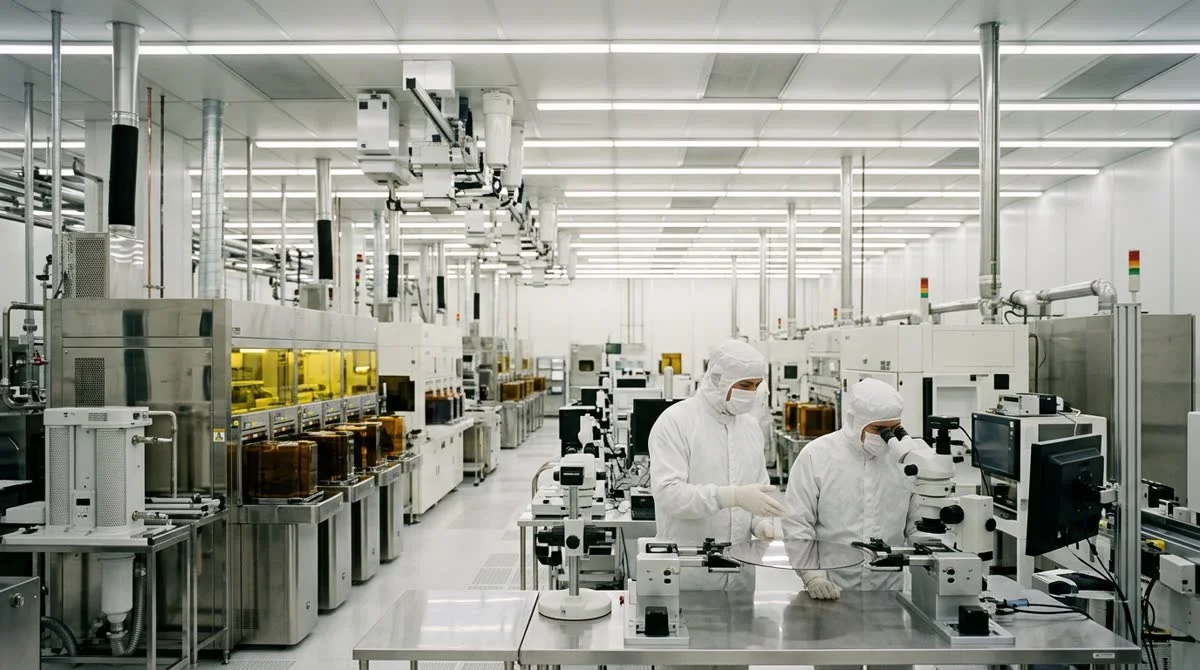
Kioxia Holdings on July 2, 2026, began distributing samples of next-generation flash memory to AI datacentre operators. The Japanese chip manufacturer is seeking to strengthen its position in one of the fastest-growing segments of the semiconductor industry, competing with Samsung, SK Hynix, and Micron for long-term corporate contracts.
What sample distribution means in the NAND industry
Sample distribution is a standard yet critically important stage in the semiconductor sales cycle. Potential buyers — major datacentre operators — receive test chips, integrate them into their own server platforms, and conduct extended load testing. During this testing, sequential read and write speeds are checked, reliability at high temperatures, compatibility with NVMe controllers, and chip behavior under real AI workloads.
Only after successful client-side validation does the manufacturer receive "qualification" — permission to place commercial orders. The process takes from several months to a year. This is why sample distribution is not just a technical stage, but a public signal of next-generation product readiness for real operation.
Kioxia is one of the world's largest NAND flash memory manufacturers. The company emerged in 2017 from the separation of semiconductor operations from Toshiba. Today it competes with Samsung Electronics, SK Hynix, and Micron Technology — and all four players are actively investing in next-generation technologies, focusing primarily on the AI infrastructure market.
Why have AI datacenters become a priority for flash manufacturers
Flash memory has become a strategically important component of AI infrastructure. NAND-based storage systems are used in datacenters at all levels: from storing neural network weights and training datasets to intermediate buffers in inference clusters. The higher the read and write speed, the less expensive GPU and TPU accelerators sit idle — this directly reduces AI computing costs.
Hyperscalers — Amazon Web Services, Microsoft Azure, Google Cloud, and Meta — have formed constant and predictable demand for enterprise-class flash drives. According to analyst forecasts, technology company investments in AI infrastructure will continue growing at double-digit rates over the next two to three years. This fundamentally differs from the consumer flash market, which is traditionally subject to sharp price fluctuations.
Competition for NAND market share in AI
Samsung holds dominant share of the global NAND market and has the broadest product portfolio. SK Hynix has been ramping capacity after acquiring Intel's Solidigm division. Micron gains advantage from government subsidies under the American CHIPS and Science Act, aimed at restoring domestic semiconductor production in the United States.
Against this competitive backdrop, Kioxia is betting on the technological characteristics of its own developments. Sample distribution specifically to AI datacentre operators shows: the company views the corporate AI market as a priority growth channel — in contrast to the more volatile consumer segment.
What this means
The beginning of trial shipments is a sign that Kioxia is ready to compete for multi-year contracts with AI infrastructure operators. If samples successfully pass qualification, the company will gain access to stable and high-margin orders from the world's largest semiconductor buyers. The next key milestone — results of customer testing and first announced commercial agreements.
*Meta is recognized as an extremist organization and prohibited in the Russian Federation.
Delegate Deep Research, Coding & Workflows to an AI Agent
Deploy autonomous multi-step execution with NomadNet Agent (agent.nomadnet.ai) — automated web research, data synthesis, code generation, and complex task orchestration.
The AI world, distilled — once a week
Seven stories that actually mattered, hand-picked. No noise, no reposts, no press releases.
Done! Check your inbox for a confirmation.