UN: AI capabilities are developing faster than governments can regulate them
The UN published a report with a direct conclusion: AI capabilities are developing faster than any government can understand, test, or regulate them. The document was released in July 2026 — delegates from around the world gathered in Geneva for the opening of the AI governance dialogue. The UN believes that only international coordination can provide a real answer to this gap.
AI-processed from TNW; edited by Hamidun News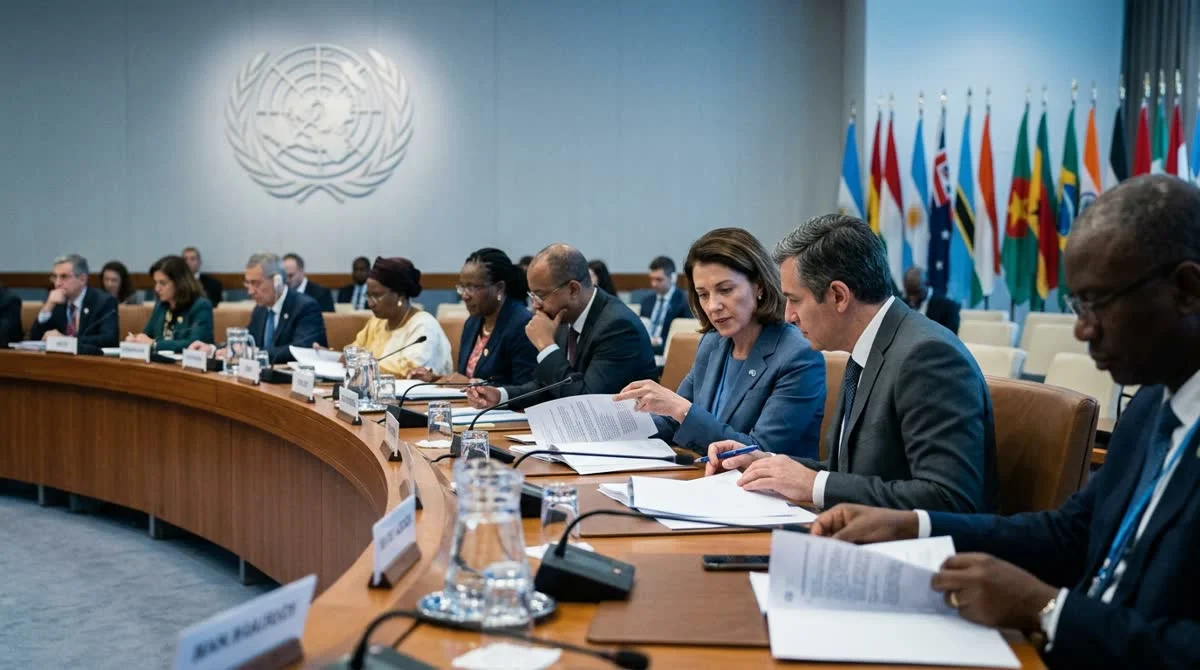
The UN has published a report whose principal conclusion is stated without diplomatic softening: the capabilities of artificial intelligence are developing faster than any government in the world has time to understand, test, or regulate. The document was presented in July 2026 in Geneva at the opening of an international dialogue on AI governance, attended by delegates from dozens of countries.
What the UN report documented
The United Nations gathered accumulated concerns about artificial intelligence into a single official document. The key thesis is straightforward: no country in the world today is keeping pace with the speed of AI technology development — neither in terms of understanding the nature of these systems, nor in conducting independent testing and audits, nor in developing adequate legal frameworks.
The very nature of this statement is important. The UN is not warning about a hypothetical future — it is documenting a gap that exists right now. This is the official position of the world's largest international organization, not expert alarm from academia.
The report emerged at a crucial moment: delegates from different countries had just gathered in Geneva to discuss this problem. The choice of venue is symbolic — this is where major international agreements on security have historically been concluded: from the Geneva Conventions to arms control treaties. The city is now set to play a similar role in AI governance negotiations.
Why regulators can't keep pace with AI?
The gap between the speed of technology and the speed of law has always existed — but with artificial intelligence, it has acquired a new, fundamental character. Traditional regulatory methods assume that the object of regulation can be described, tested, and compared to a standard. With modern AI systems, this does not work.
The first problem is opacity. Modern models are designed in such a way that their behavior in specific situations is difficult to predict and explain even to their developers themselves. An external regulator faces an even more complex task: controlling something they fundamentally cannot fully understand.
The second problem is the speed of generational change. The lifecycle of a significant AI model is measured in months. Passing a law in most jurisdictions takes years. By the time a regulatory norm takes effect, the technology has already gone through several iterations — and the norms effectively describe the previous generation of systems.
The third problem is cross-border nature. The AI industry knows no national borders, while regulatory mechanisms are primarily national. A country that unilaterally tightens requirements risks pushing developers into softer jurisdictions without achieving actual control.
This is why the UN is betting on multilateral dialogue. Precedents for coordinating technological risks at the international level exist — nuclear nonproliferation, chemical weapons bans. With AI, the task is more complex: verifying system capabilities is far more difficult than counting nuclear warheads. But the very format of international agreements remains the most realistic path.
What this means
The UN's official position is changing the political agenda. The discussion is no longer about whether AI should be regulated — that question has been settled. The open question now is different: how to create rules quickly enough, coordinately, and technically competently so they have practical effect, rather than simply documenting the state of technology from a previous generation at the moment of their adoption.
Need AI working inside your business — not just in your newsfeed?
I build production AI for companies — custom CRM, internal tools, autonomous agents, workflow automation. Owned by you, shaped to your process, no per-seat tax. Built by Zhemal Khamidun, CPO of AlpinaGPT (AI platform, 6,000+ users).
The AI world, distilled — once a week
Seven stories that actually mattered, hand-picked. No noise, no reposts, no press releases.
Done! Check your inbox for a confirmation.