UK's NHS Rolls Out AI Triage in Its App: 200,000 Patients to Get Smart Routing
On 4 July 2026, the UK's NHS announced the launch of AI triage in its official app. The algorithm will analyse patients' complaints and direct them to a GP, a pharmacy or an emergency department, depending on how severe their condition is. In its first year, the service will reach about 200,000 people in England. It is part of an NHS reform package worth £10 billion.
AI-processed from Guardian; edited by Hamidun News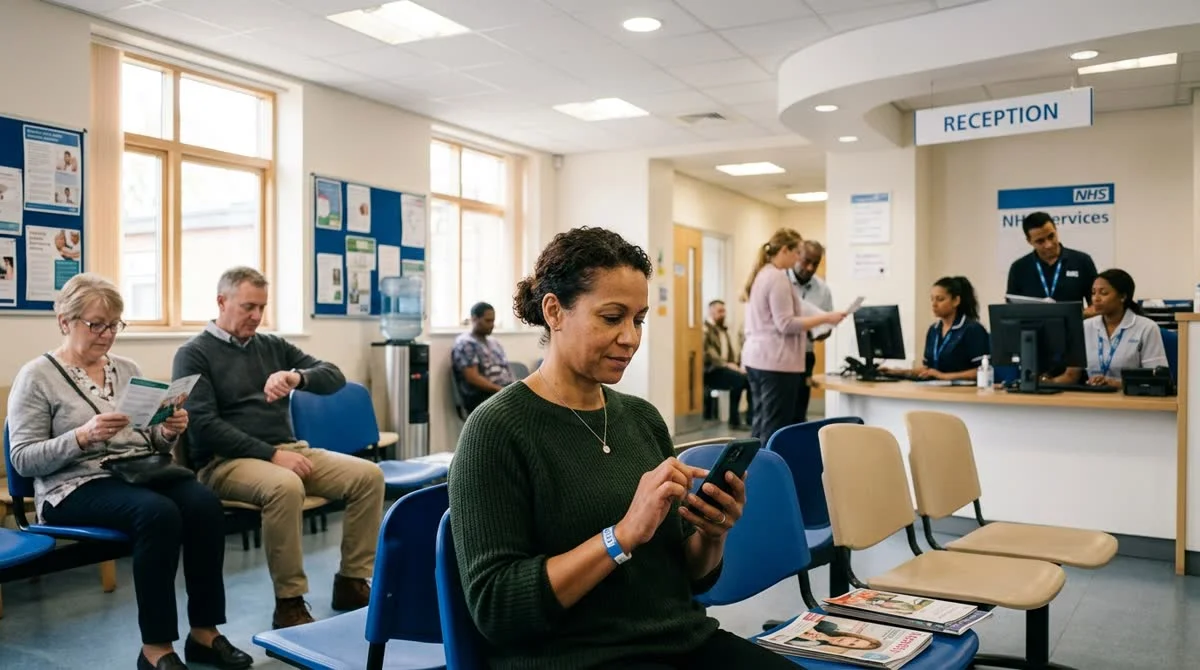
The UK's National Health Service (NHS) announced on 4 July 2026 that it is launching an AI tool in its official app. The algorithm will conduct an initial questionnaire with patients and direct them to the right care: a GP, a pharmacy or an emergency department. In its first year, the service will reach about 200,000 people in England; the launch is part of a package of NHS digital reforms worth £10 billion.
How does AI triage in the app work?
Before booking a doctor's appointment through the NHS app, patients will complete a built-in AI questionnaire. The algorithm will assess their complaints and determine the most suitable level of medical care, so that everyone ends up where their problem can be resolved fastest.
The system offers three routes:
- GP — for standard complaints that do not require urgent intervention
- Pharmacy — for mild symptoms that can be handled without a prescription
- Emergency department (A&E) — for signs of an acute or dangerous condition
Key launch parameters:
- Announcement date: 4 July 2026
- Coverage area: England
- First-year reach: about 200,000 patients
- Total budget of the NHS reform package: £10 billion
Important: the AI tool does not make a diagnosis. It determines where the patient will get help faster and more effectively. The final decision on treatment remains with a healthcare professional: a general practitioner, a pharmacist or A&E staff.
Why does the NHS need an AI filter at the front door?
The British healthcare system has been under systemic strain for years. In many areas, getting a GP appointment means waiting several weeks. A&E departments see patients with minor complaints instead of emergencies, which reduces the system's throughput and delays care for those who genuinely need it.
AI triage targets exactly this problem: some requests can be resolved at the pharmacy level without taking up doctors' time. Patients with mild symptoms will receive a recommendation to seek over-the-counter remedies. Those whose complaints point to an acute condition will be redirected immediately to emergency care. This should let GPs focus on patients who truly need a consultation.
The NHS app is already one of the most widely used health services in the country. Adding an AI layer at the entry point turns it into the first clinical checkpoint, a kind of digital nurse available around the clock. Unlike phone triage, the AI questionnaire involves no waiting on a hotline and is available at any time of day.
Pilot and scale of the programme
The rollout will be gradual: in the first year, AI triage will reach about 200,000 patients in England. This is a pilot stage that will make it possible to gather data on routing accuracy and assess the system's safety before extending it to the app's entire user base.
The update is funded as part of a large £10 billion reform package that the UK government has directed toward the digital transformation of the NHS. The government sees AI routing as a way to ease pressure on primary care, the most overloaded entry point for most patients. The pace of further deployment will depend on the pilot's results.
What this means
The NHS, the largest public healthcare system in the world, is moving to automated AI sorting at the very first point of contact. If the pilot with 200,000 patients confirms a reduction in workload without a decline in the quality of care, the model could become a template for other national health systems looking for ways to cope with a shortage of doctors' time and a growing number of requests.
Key Questions Answered
How does AI triage in the app work?
Before booking a doctor's appointment through the NHS app, patients will complete a built-in AI questionnaire. The algorithm will assess their complaints and determine the most suitable level of medical care, so that everyone ends up where their problem can be resolved fastest. The system offers three routes: GP — for standard complaints that do not require urgent intervention Pharmacy — for mild symptoms that can be handled without a prescription Emergency department (A&E) — for signs of an acute or dangerous condition Key launch parameters: Announcement date: 4 July 2026
Why does the NHS need an AI filter at the front door?
The British healthcare system has been under systemic strain for years. In many areas, getting a GP appointment means waiting several weeks. A&E departments see patients with minor complaints instead of emergencies, which reduces the system's throughput and delays care for those who genuinely need it. AI triage targets exactly this problem: some requests can be resolved at the pharmacy level without taking up doctors' time. Patients with mild symptoms will receive a recommendation to seek over-the-counter remedies. Those whose complaints point to an acute condition will be
What are the key details on Pilot and scale of the programme?
The rollout will be gradual: in the first year, AI triage will reach about 200,000 patients in England. This is a pilot stage that will make it possible to gather data on routing accuracy and assess the system's safety before extending it to the app's entire user base. The update is funded as part of a large £10 billion reform package that the UK government has directed toward the digital transformation of the NHS. The government sees AI routing as a way to ease pressure on primary care, the most overloaded entry point for most patients. The pace of further deployment will
Test Frontier LLMs & Autonomous Agents in One Workspace
Run Claude Opus 5.5, GPT-6, Gemini 3.1, and DeepSeek side-by-side in Nomad AI (nomadnet.ai) — unified model routing, deep research, and multimodal workflows under one subscription.
The AI world, distilled — once a week
Seven stories that actually mattered, hand-picked. No noise, no reposts, no press releases.
Done! Check your inbox for a confirmation.