Hong Kong cements its role as the main hub for AI chips in trade with China
Hong Kong has become a key transit hub for AI chips moving between Asia and China, one node in a $2 trillion trade network driven by the global AI boom. Its free-port status makes the city an attractive corridor for shipments into China despite US export sanctions on semiconductors. Hong Kong's role as a gateway to China is now firmly established.
AI-processed from Bloomberg Tech; edited by Hamidun News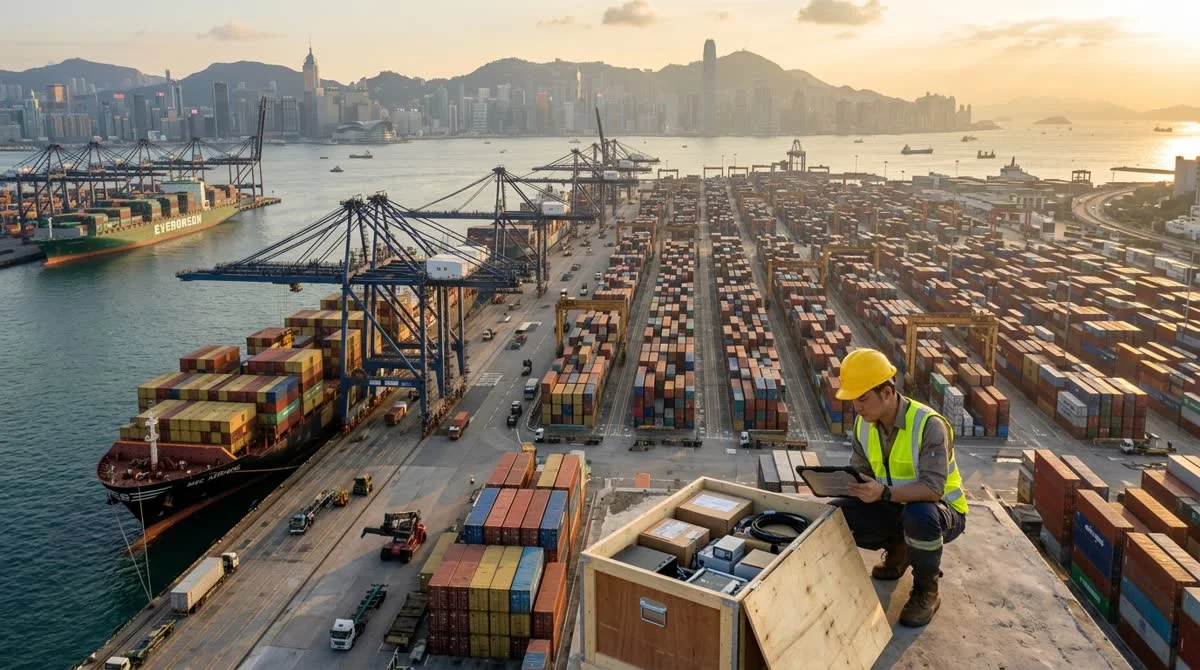
Hong Kong has strengthened its position as a key transit hub for AI chips and high-tech equipment in trade between Asia and China. According to Bloomberg on July 2, 2026, the city has become one of the most important nodes in a $2 trillion Asian trade network, one fueled by the global artificial intelligence boom.
Why did Hong Kong become the gateway to China?
Hong Kong's unique place in world trade rests on its legal and customs status. Since its handover to Chinese sovereignty in 1997, the city has remained a separate customs territory with a free-port regime: zero import tariffs and minimal restrictions on the movement of goods through its ports, airports and logistics centers. This regime differs fundamentally from the rules of mainland China.
Historically, a significant share of Western consumer goods and equipment entering China passed through Hong Kong. After the US-China trade war began in 2018, and then with the introduction of chip sanctions, the hub's role took on a strategic dimension: companies increasingly use Hong Kong warehouses and its banking and logistics infrastructure to arrange equipment shipments to China, relying on the territory's more flexible regulatory regime.
Scale and drivers of AI trade
Key data from the Bloomberg report:
- The Asian trade network that includes Hong Kong is valued at $2 trillion
- The main growth driver is global demand for AI computing chips: GPUs, specialized accelerators, server hardware and cooling systems
- Hong Kong acts as a two-way intermediary, for goods moving into and out of China
- Free-port status substantially lowers tariff and regulatory barriers to transit
Among the most actively traded categories are high-performance GPUs for training neural networks, server racks for data centers and networking equipment. The growth of AI clusters across China, from the hyperscalers Alibaba Cloud, Baidu and Tencent to a wave of independent AI startups, is creating steady demand, shaped by strategic investment in AI infrastructure that Beijing treats as a long-term priority.
Sanctions, gray zones and chip geopolitics
Hong Kong's growing role plays out against a backdrop of fierce geopolitical rivalry over control of the semiconductor supply chain. Since 2022, the US has steadily restricted exports of advanced chips from NVIDIA, AMD and other American manufacturers to Chinese companies, from the initial ban on the A100/H100 to the expanded sanctions lists of 2024–2025. Formally, Hong Kong, as part of China, falls under the same restrictions.
In practice, the transparency of trade flows through Hong Kong remains a subject of active dispute among regulators. American oversight bodies have repeatedly pointed to re-export risks: schemes in which prohibited equipment is officially shipped to a third jurisdiction and then forwarded to the final recipient in China. As Asia's largest financial and logistics hub, Hong Kong occupies a special place in these investigations.
Nevertheless, trade through Hong Kong keeps growing: structural demand for AI hardware is too high for administrative measures to stop it quickly, and rebuilding supply chains takes time.
What this means
Hong Kong is strengthening its role as trade infrastructure for the AI era: not a manufacturing or research center, but a key corridor between China and global markets. The durability of that role depends on two variables: the continuing global AI boom and the intensity of sanctions pressure. Growth in computing means growth in traffic through the city; a new round of tough export restrictions could change the picture sharply, faster than any long-term plan assumes.
Key Questions Answered
Why did Hong Kong become the gateway to China?
Hong Kong's unique place in world trade rests on its legal and customs status. Since its handover to Chinese sovereignty in 1997, the city has remained a separate customs territory with a free-port regime: zero import tariffs and minimal restrictions on the movement of goods through its ports, airports and logistics centers. This regime differs fundamentally from the rules of mainland China. Historically, a significant share of Western consumer goods and equipment entering China passed through Hong Kong. After the US-China trade war began in 2018, and then with the introduc
What are the key details on Scale and drivers of AI trade?
Key data from the Bloomberg report: The Asian trade network that includes Hong Kong is valued at $2 trillion The main growth driver is global demand for AI computing chips: GPUs, specialized accelerators, server hardware and cooling systems Hong Kong acts as a two-way intermediary, for goods moving into and out of China Free-port status substantially lowers tariff and regulatory barriers to transit Among the most actively traded categories are high-performance GPUs for training neural networks, server racks for data centers and networking equipment. The growth of AI cluster
What are the key details on Sanctions, gray zones and chip geopolitics?
Hong Kong's growing role plays out against a backdrop of fierce geopolitical rivalry over control of the semiconductor supply chain. Since 2022, the US has steadily restricted exports of advanced chips from NVIDIA, AMD and other American manufacturers to Chinese companies, from the initial ban on the A100/H100 to the expanded sanctions lists of 2024–2025. Formally, Hong Kong, as part of China, falls under the same restrictions. In practice, the transparency of trade flows through Hong Kong remains a subject of active dispute among regulators. American oversight bodies have
Test Frontier LLMs & Autonomous Agents in One Workspace
Run Claude Opus 5.5, GPT-6, Gemini 3.1, and DeepSeek side-by-side in Nomad AI (nomadnet.ai) — unified model routing, deep research, and multimodal workflows under one subscription.
The AI world, distilled — once a week
Seven stories that actually mattered, hand-picked. No noise, no reposts, no press releases.
Done! Check your inbox for a confirmation.