AI Adoption Creates Systemic Risk in Finance
Wall Street researchers are sounding the alarm: AI has turned out to be not a market wizard but a potential source of new instability. When hundreds of hedge funds use the same models trained on similar data, their trading decisions synchronize, and a single market shock can trigger a cascade that brings markets down. Several new academic papers ask exactly this question.
AI-processed from Bloomberg Tech; edited by Hamidun News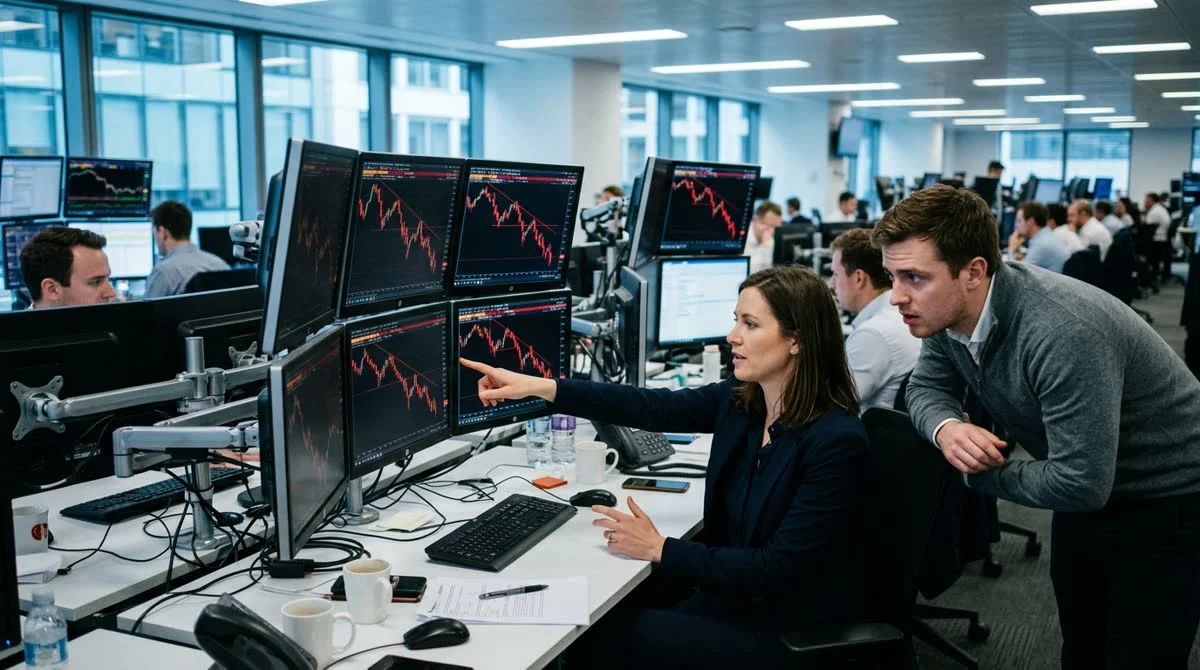
Wall Street researchers are warning about a dangerous scenario: AI adoption at hedge funds is creating a new type of systemic risk, in which widespread use of identical AI tools produces correlated trading decisions.
Why identical AI across thousands of funds is a systemic threat
When hundreds of hedge funds launch similar AI algorithms trained on similar datasets at the same time, their trading decisions become correlated. This is classic "herd behavior", only at a scale and with a degree of synchronization that were technically unattainable before.
Traditional financial models rest on a basic assumption: market participants make decisions independently. It is the diversity of strategies, analytical approaches and time horizons that creates liquidity and stabilizes prices. When buyers and sellers come to a trade with different views on an asset's value, the market works normally. AI tools undermine this assumption at its root: if models are trained on similar datasets, react to the same market signals and optimize similar objective functions, the market loses precisely the diversity of opinion that made it resilient to shocks.
Concentration makes matters worse: the market for AI trading tools is consolidating around a few large providers. Where each fund once had its own team of quant analysts with unique proprietary models, everyone can now subscribe to the same service.
What the new research shows
Bloomberg reports on several academic papers that try to model the consequences of mass AI adoption in trading. The researchers ask the same question: what happens to the market if all participants use the same AI tool?
The answers are preliminary so far, but worrying. When algorithms process the same signals in sync and reach similar conclusions, they begin to amplify market moves rather than smooth them. In moments of crisis, such as a sharp fall in indexes, unexpected geopolitical news or a regulatory surprise, AI algorithms can issue identical sell orders at the same moment, turning a manageable correction into an avalanche-like collapse.
Speed of reaction is an especially troubling aspect. Humans in a panic also make similar mistakes, but with different delays and in a different order. AI algorithms react to the same signal almost instantly and simultaneously, which radically changes the time dynamics of market shocks.
Another problem is behavior in extreme situations that were absent from the training data. In a moment of genuine market uncertainty, when human experience and intuition would be especially valuable, algorithms may behave unpredictably and counterproductively.
AI is not a wizard but a risk amplifier
The very title of the Bloomberg piece is ironic: AI "is not a market wizard". In practice, models work well enough under normal conditions, but they create new tail risks. Tail risks are rare but catastrophic events that standard probability distributions systematically underestimate.
Regulators are starting to take notice. Systemic risk, traditionally associated with too-big-to-fail banks, may now be reproduced through too-similar-to-fail algorithms: not one huge institution, but thousands of mid-sized ones making identical decisions at the same moment. The Fed, the SEC and their European counterparts are studying how AI affects asset correlation under stress, but have made no specific regulatory decisions so far.
What this means
The problem of AI homogeneity in finance is a special case of a broader question about the concentration of technology infrastructure. The more market participants rely on the same foundation models, the higher the risk of a synchronized cascading failure at exactly the moment when stability is needed most.
Why is identical AI in finance a risk?
When hundreds of hedge funds launch similar AI algorithms trained on similar datasets at the same time, their trading decisions become correlated. This is classic herd behavior, and it can worsen market volatility.
Key Questions Answered
Why is identical AI in finance a risk?
When hundreds of hedge funds launch similar AI algorithms trained on similar datasets at the same time, their trading decisions become correlated. This is classic herd behavior, and it can worsen market volatility.
Why identical AI across thousands of funds is a systemic threat?
When hundreds of hedge funds launch similar AI algorithms trained on similar datasets at the same time, their trading decisions become correlated. This is classic "herd behavior", only at a scale and with a degree of synchronization that were technically unattainable before. Traditional financial models rest on a basic assumption: market participants make decisions independently. It is the diversity of strategies, analytical approaches and time horizons that creates liquidity and stabilizes prices. When buyers and sellers come to a trade with different views on an asset's v
What the new research shows?
Bloomberg reports on several academic papers that try to model the consequences of mass AI adoption in trading. The researchers ask the same question: what happens to the market if all participants use the same AI tool? The answers are preliminary so far, but worrying. When algorithms process the same signals in sync and reach similar conclusions, they begin to amplify market moves rather than smooth them. In moments of crisis, such as a sharp fall in indexes, unexpected geopolitical news or a regulatory surprise, AI algorithms can issue identical sell orders at the same mo
Ship AI Faster with Founders, Engineers & Weekly Architecture Reviews
Inside Vibe Club (hamidun.com/club) — weekly live masterminds with Zhemal Khamidun, Tech Radar, full LMS access, and 370+ production Claude Code skills.
The AI world, distilled — once a week
Seven stories that actually mattered, hand-picked. No noise, no reposts, no press releases.
Done! Check your inbox for a confirmation.