Submarine Cable I-2SEA for AI: Microsoft Joins Lightstorm Consortium
Microsoft joined the Singapore-based Lightstorm consortium to build the undersea cable I-2SEA. The system will span 3,600 km, connecting India with Singapore and Malaysia. The project is designed specifically to serve AI, cloud, and hyperscale workloads — India has become one of the world's most competitive data center markets.
AI-processed from TNW; edited by Hamidun News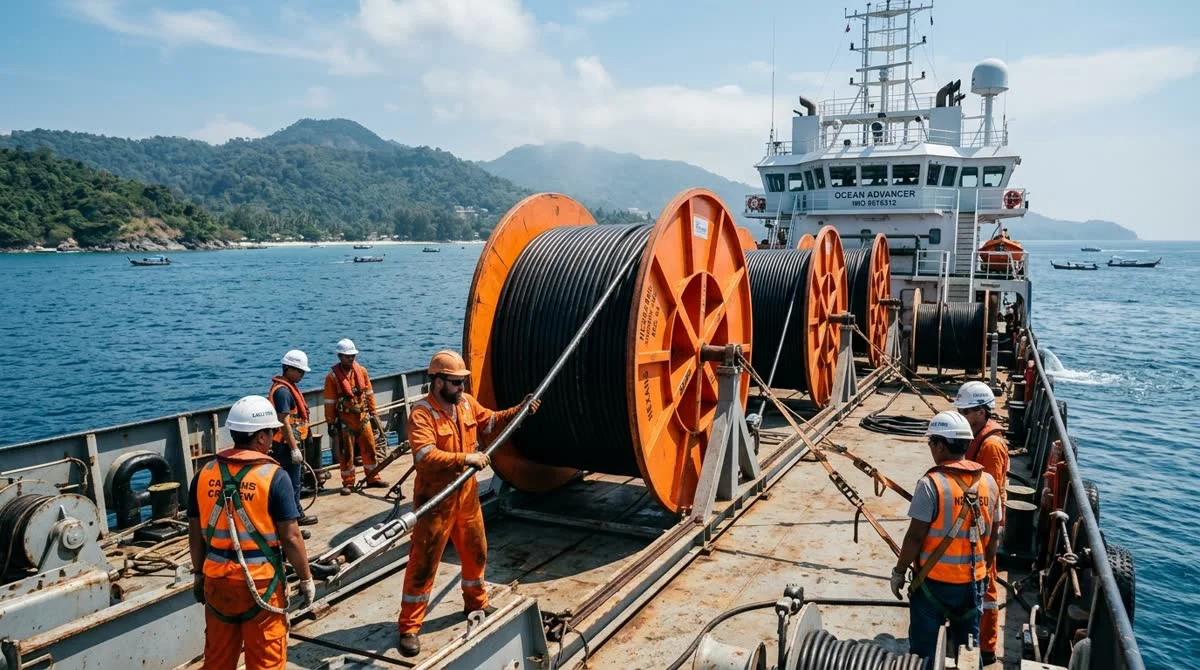
Microsoft joined the Lightstorm consortium on July 3, 2026 to build the I-2SEA submarine cable, designed for AI workloads on the India—Singapore—Malaysia route.
What is the I-2SEA system
The I-2SEA submarine cable system will span 3,600 kilometers and is being created specifically for workloads generated by AI services, cloud platforms, and hyperscale operations. This class of traffic stands out for its particular demands on bandwidth and latency: AI models serving requests in real time do not tolerate unstable channels.
Key project parameters:
- Name: I-2SEA
- Route: India — Singapore — Malaysia
- Length: 3,600 km
- Consortium leader: Lightstorm (Singapore)
- Announcement date: July 3, 2026
Lightstorm specializes in building and managing submarine cable systems in the Asia-Pacific region. The consortium model allows distributing colossal capital expenses — building such systems costs hundreds of millions of dollars — among several participants, each of whom receives guaranteed capacity proportional to its contribution.
Why Microsoft builds its own cables
Large technology companies have long gone beyond renting bandwidth from commercial telecommunications operators. Own cables or a guaranteed share in a consortium provide hyperscalers with predictable capacity, route control, and independence from third parties — three critically important properties for AI infrastructure, where connectivity disruptions directly impact service quality.
Microsoft already participates in several submarine cable consortiums linking the US with Europe and the Asia-Pacific region. I-2SEA will complement the infrastructure needed to support Azure cloud regions in India and Southeast Asia. Without sufficient submarine capacity between India and global network hubs, even the most powerful local data centers cannot operate at full capacity.
India has become one of the world's most competitive markets for data center placement. Several leading technology companies are simultaneously ramping up investments in local data centers, and rapid growth in domestic demand for AI services is creating sustained need for high-capacity cross-border channels.
Submarine infrastructure as a competition arena
Global competition for dominance in AI infrastructure is playing out on two levels: on land — in building hyperscale data centers, and underwater — in laying cables connecting these facilities to the rest of the world. The underwater level often remains in the shadow of public announcements, yet it is precisely what determines the real availability of cloud services for users in Asia.
Singapore has long been a key hub for submarine cables in the region: dozens of systems pass through it, linking Asia with Europe, the Middle East, and the Pacific. Adding a direct route to India through I-2SEA will strengthen the reliability and capacity of the Indo-Pacific segment of the global network.
Malaysia, the third endpoint of the cable, is also boosting its position as a regional node for hyperscale infrastructure: several major providers have already announced data center construction in the country.
What it means
Microsoft's entry into the Lightstorm consortium is another signal that leading AI companies view physical telecommunications infrastructure as a strategic asset, not just a utility. For India and Southeast Asia, the project means growing availability of AI services: more capacity — lower latency — wider reach. Ultimately, it is investments like these that determine where and how quickly next-generation AI tools will become available.
- Oct 26, 2026Synopsys Plans to Plug Chinese AI Models Into Chip Design in China
- Oct 26, 2026SpaceXAI Bundles Grok, Cursor and X Into a Single Subscription From $8 a Month
- Oct 26, 2026OpenAI Cuts 2026 Revenue Forecast to $50 Billion From $70 Billion
- Oct 26, 2026Anthropic Replaces Git With Its Own System, Scion: 7 Engineers and Claude in 5 Months
Key Questions Answered
What is the I-2SEA system?
The I-2SEA submarine cable system will span 3,600 kilometers and is being created specifically for workloads generated by AI services, cloud platforms, and hyperscale operations. This class of traffic stands out for its particular demands on bandwidth and latency: AI models serving requests in real time do not tolerate unstable channels. Key project parameters: Name: I-2SEA Route: India — Singapore — Malaysia Length: 3,600 km Consortium leader: Lightstorm (Singapore) Announcement date: July 3, 2026 Lightstorm specializes in building and managing submarine cable systems in t
Why Microsoft builds its own cables?
Large technology companies have long gone beyond renting bandwidth from commercial telecommunications operators. Own cables or a guaranteed share in a consortium provide hyperscalers with predictable capacity, route control, and independence from third parties — three critically important properties for AI infrastructure, where connectivity disruptions directly impact service quality. Microsoft already participates in several submarine cable consortiums linking the US with Europe and the Asia-Pacific region. I-2SEA will complement the infrastructure needed to support Azure
What are the key details on Submarine infrastructure as a competition arena?
Global competition for dominance in AI infrastructure is playing out on two levels: on land — in building hyperscale data centers, and underwater — in laying cables connecting these facilities to the rest of the world. The underwater level often remains in the shadow of public announcements, yet it is precisely what determines the real availability of cloud services for users in Asia. Singapore has long been a key hub for submarine cables in the region: dozens of systems pass through it, linking Asia with Europe, the Middle East, and the Pacific. Adding a direct route to In
Executive AI Consulting, Custom Agents & Team Workshops
Work directly with Zhemal Khamidun at hamidun.com — enterprise AI architecture, production RAG & multi-agent systems, and executive training.
The AI world, distilled — once a week
Seven stories that actually mattered, hand-picked. No noise, no reposts, no press releases.
Done! Check your inbox for a confirmation.