Meta weighs launching a cloud business to monetize its AI infrastructure
Meta is considering launching a cloud service to sell the AI capacity of its infrastructure to outside customers. Bloomberg reported the internal discussions on July 2, 2026. If the plan goes ahead, Meta would enter the cloud computing market and compete with AWS, Google Cloud and Azure. The company already has its own MTIA AI chips and a global network of data centers, and Llama has attracted millions of developers worldwide. *Meta has been designated an extremist organization and is banned in Russia.
AI-processed from Bloomberg Tech; edited by Hamidun News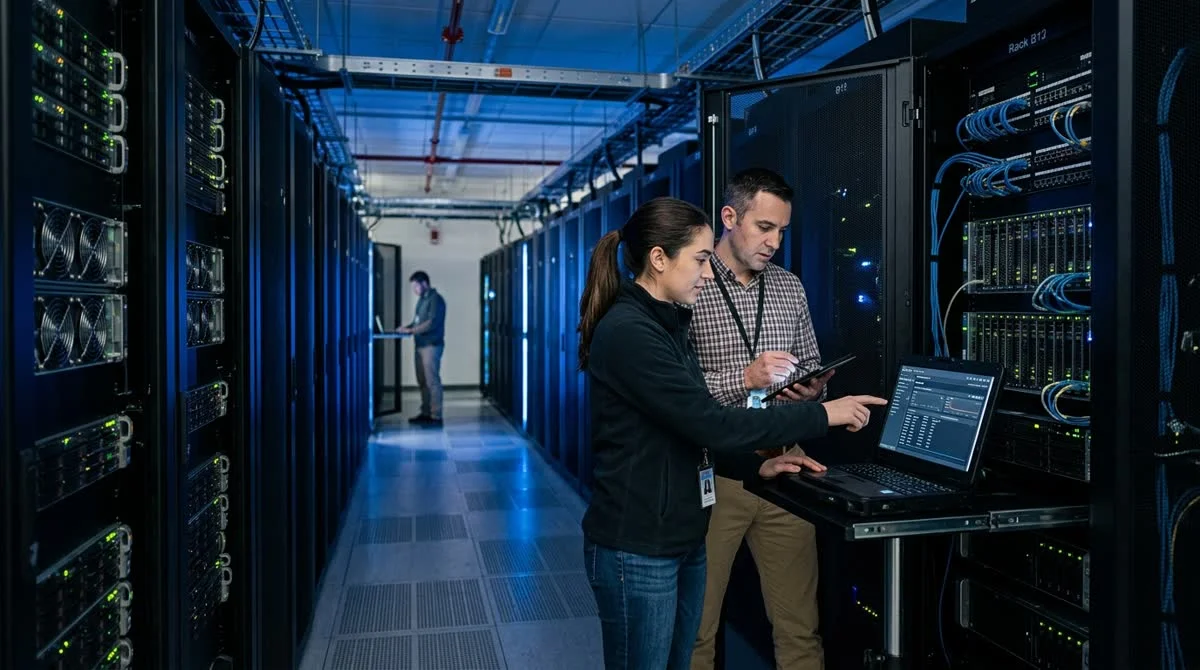
Meta is exploring the launch of a cloud business, Bloomberg reported on July 2, 2026. The company is internally discussing selling AI computing capacity to outside customers in order to monetize years of investment in servers, chips and data centers that, until now, have served only Meta's own needs.
Why is Meta looking at the cloud?
For several years, Meta has steadily expanded its computing infrastructure at a pace comparable to the largest cloud providers. It builds data centers on several continents, develops its own MTIA (Meta Training and Inference Accelerator) AI chips, and buys GPUs at industrial scale every year. Meta's capital expenditure on infrastructure runs to tens of billions of dollars a year and keeps growing with the company's AI ambitions.
Until now, all of this infrastructure has served internal needs exclusively: training the Llama family of language models, recommendation algorithms on Instagram and Facebook, and generative AI in WhatsApp and Messenger. The return on investment has been indirect. Smarter algorithms kept users in the ecosystem, which improved ad targeting, and advertising remains Meta's main source of revenue.
Now the company is asking a different question: why not sell this capacity directly? The precedent is well known. In the early 2000s, Amazon built server infrastructure for its own retail business, and when it realized it had excess capacity, it created AWS. Today AWS brings Amazon more than $100 billion a year and remains the world's largest cloud provider. Meta sees in this model a way to justify the scale of its AI capital spending to investors.
What does Meta have, and what does it still lack?
Most companies that tried to enter the cloud market after the "Big Three" (AWS, Azure, Google Cloud) took shape stumbled on scale and enterprise trust. Meta's situation is fundamentally different.
- Date of the Bloomberg report: July 2, 2026
- Status: internal discussion, no official statements
- Own AI chips: the MTIA series, offering partial independence from NVIDIA supply
- Open models: Llama, with millions of downloads and a broad global developer ecosystem
- Competitors: AWS, Google Cloud, Microsoft Azure, Oracle Cloud, CoreWeave
Meta has two structural advantages. The first is the MTIA chips, which reduce dependence on the NVIDIA supply chain and could potentially allow competitive pricing for inference workloads. The second is the Llama ecosystem: the open language models have already attracted developers worldwide, and that audience could become a ready entry point to enterprise cloud customers.
"The company is considering a cloud business to monetize AI capacity" —
Bloomberg, July 2, 2026
The weaknesses are just as obvious. Entering the cloud market is not the same as renting out servers. It takes SLAs with guaranteed uptime, round-the-clock technical support, enterprise sales, compliance and complex billing infrastructure. AWS spent almost twenty years building all of that. Meta has neither that experience nor a reputation as a reliable cloud provider in the enterprise segment.
What this means
The AI computing market is facing an acute shortage in 2025–2026: companies worldwide are looking for GPU capacity to train and run LLMs, and the largest providers cannot keep up with demand. In this context, Meta, with its own chips and global infrastructure, could carve out a significant niche, above all among developers already working with Llama.
For AWS and Google Cloud, it would be an unusual competitor: a company for which cloud is not the main business but a way to monetize a side asset. That means it could price aggressively without hurting its core P&L. For now, Bloomberg reports only internal discussions, but the logic is clear: Meta is preparing to turn infrastructure costs into a standalone source of revenue.
*Meta has been designated an extremist organization and is banned in Russia.
- Nov 1, 2026MoneyGate safety layer blocked all 42 fraudulent requests to local AI models
- Oct 31, 2026Open-source LLM gateway KTMS 1.0 plugs your own GPUs into the cloud and survives outages
- Oct 31, 202622B-Parameter LTX-2.5 Runs on a 10 GB RTX 3080, but Takes 5 Minutes per Shot
- Oct 29, 2026T-Tech Introduces LIMe, a Method That Trains Language Models With 15% Less Compute
Key Questions Answered
Why is Meta looking at the cloud?
For several years, Meta has steadily expanded its computing infrastructure at a pace comparable to the largest cloud providers. It builds data centers on several continents, develops its own MTIA (Meta Training and Inference Accelerator) AI chips, and buys GPUs at industrial scale every year. Meta's capital expenditure on infrastructure runs to tens of billions of dollars a year and keeps growing with the company's AI ambitions. Until now, all of this infrastructure has served internal needs exclusively: training the Llama family of language models, recommendation algorithm
What does Meta have, and what does it still lack?
Most companies that tried to enter the cloud market after the "Big Three" (AWS, Azure, Google Cloud) took shape stumbled on scale and enterprise trust. Meta's situation is fundamentally different. Date of the Bloomberg report: July 2, 2026 Status: internal discussion, no official statements Own AI chips: the MTIA series, offering partial independence from NVIDIA supply Open models: Llama, with millions of downloads and a broad global developer ecosystem Competitors: AWS, Google Cloud, Microsoft Azure, Oracle Cloud, CoreWeave Meta has two structural advantages. The first is
What this means?
The AI computing market is facing an acute shortage in 2025–2026: companies worldwide are looking for GPU capacity to train and run LLMs, and the largest providers cannot keep up with demand. In this context, Meta, with its own chips and global infrastructure, could carve out a significant niche, above all among developers already working with Llama. For AWS and Google Cloud, it would be an unusual competitor: a company for which cloud is not the main business but a way to monetize a side asset. That means it could price aggressively without hurting its core P&L. For now, B
Test Frontier LLMs & Autonomous Agents in One Workspace
Run Claude Opus 5.5, GPT-6, Gemini 3.1, and DeepSeek side-by-side in Nomad AI (nomadnet.ai) — unified model routing, deep research, and multimodal workflows under one subscription.
The AI world, distilled — once a week
Seven stories that actually mattered, hand-picked. No noise, no reposts, no press releases.
Done! Check your inbox for a confirmation.