Meta wants to rent out AI computing power and challenge AWS and Google Cloud
Meta, which has been buying AI servers on an industrial scale over the past two years, now plans to monetize the surplus by renting them to companies for training AI models and inference, according to sources. This would put Meta in direct competition with AWS, Google Cloud and Microsoft Azure. Wall Street has responded positively to the idea: for investors, it represents a chance to see returns on multi-billion dollar investments in AI hardware.
AI-processed from TNW; edited by Hamidun News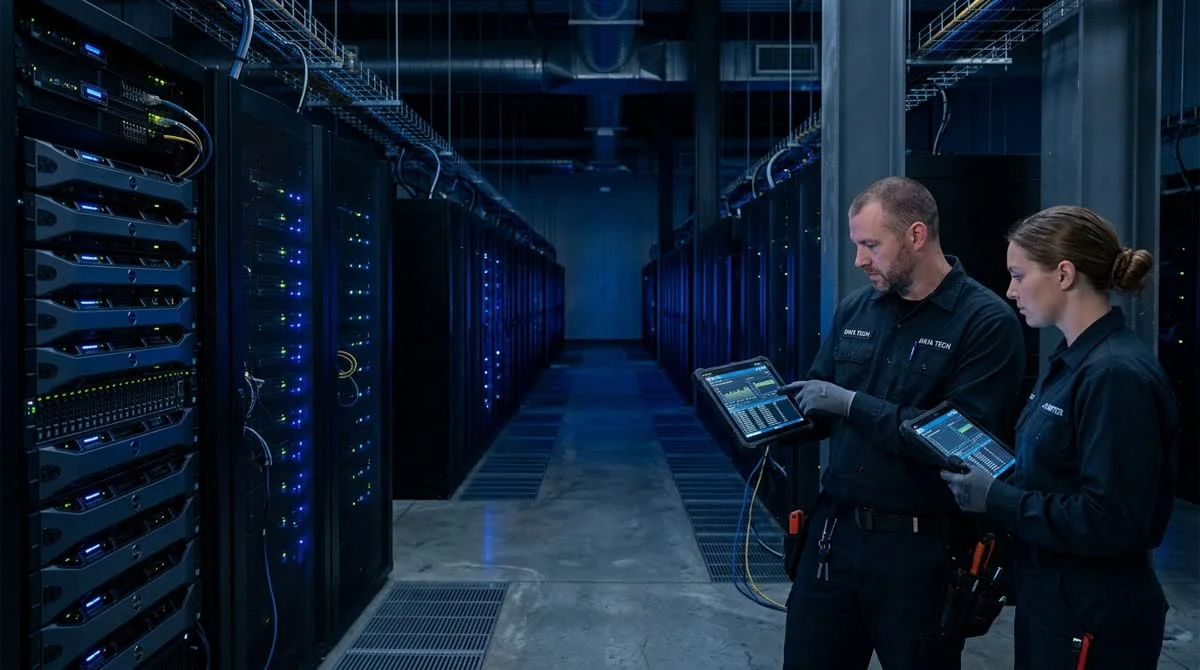
Meta, having spent the last two years on a large-scale accumulation of AI computing power, is considering renting out its excess capacity to third-party companies. If the plan is realized, it will put Meta in direct competition with cloud giants — AWS, Google Cloud, and Microsoft Azure — for the first time, and Wall Street has already received the idea positively.
Where So Much Free Capacity Came From
Starting around 2024, Meta aggressively expanded its AI infrastructure. The company was purchasing Nvidia H100-series GPUs and simultaneously developing its own AI chips, MTIA — they are needed for training Llama language models and optimizing advertising algorithms, which generate the bulk of revenue. Data centers were built with a buffer, ahead of current needs: the infrastructure was supposed to grow along with the company's ambitions in generative AI.
As a result, some of the purchased capacity turned out to be underutilized. According to sources, Meta is studying a cloud provider business model: corporate clients will be able to rent computing resources for training their own AI models or running inference. In this way, already-paid hardware becomes a source of income, requiring no additional investment.
Key facts:
- Meta accumulated AI infrastructure for at least two years
- Potential direct competitors — AWS, Google Cloud, and Microsoft Azure
- Wall Street received the idea positively
- The basis is monetization of underutilized capacity, not building a cloud platform from scratch
Why Investors Like This
Meta's capital investments in AI infrastructure have long caused mixed feelings among analysts. The company reports multi-billion dollar spending on GPUs and data center construction every quarter. While the market recognizes that AI is a strategic priority, the specific return on investment has long remained distant and unclear. Any scheme that turns heavy assets from ballast into a source of direct revenue significantly changes this narrative.
Amazon, Google, and Microsoft earn hundreds of billions of dollars per year from cloud services, and it's unlikely Meta will be able to enter this market as a full-fledged provider quickly: it requires a multi-year ecosystem of corporate products and established relationships with IT departments of large companies. However, precisely in the segment of AI computing — GPU clusters for training and inference of large models — demand chronically exceeds supply: companies around the world wait months for access to capacity. This is where Meta has a real competitive advantage: its own global network infrastructure, custom AI chips, and scale comparable to hyperscalers.
At the same time, the scheme is not new: specialized providers CoreWeave and Lambda Labs have already made GPU rental their core business. The principal difference for Meta is that it has no traditional corporate cloud business behind it — only huge underutilized capacity that needs to be monetized.
What This Means for the Market
If the project is realized, Meta will transform from a major consumer of AI infrastructure into one of its sellers. For companies without hyperscaler resources, there will be another major provider of GPU computing — potentially with different terms than AWS or Google Cloud. Greater competition in this segment in the long term puts pressure on prices and expands access to AI capacity for a wider range of players.
For Meta itself, this is an opportunity to change the narrative: transform the story of "a company that spends billions on AI" into the story of "a company that makes money from AI."
*Meta has been recognized as an extremist organization and is banned in the Russian Federation.
Want to stop reading about AI and start using it?
AI News is a curated feed of AI/tech news. Hamidun Academy teaches you to use AI systematically in your work.
The AI world, distilled — once a week
Seven stories that actually mattered, hand-picked. No noise, no reposts, no press releases.
Done! Check your inbox for a confirmation.