Data centers to consume 11% of Australia's electricity by 2035: Melbourne seeks solution
AI infrastructure is becoming one of the largest energy consumers: according to IEEE and CEFC forecasts, data centers will account for up to 11% of Australia's electricity by 2035. Melbourne positions itself as a global hub for solving this problem through the integration of research, clean energy, and digital infrastructure. In 2027, the city will host the IEEE PES GTD Asia conference, where engineers and regulators will discuss the future of power systems.
AI-processed from IEEE Spectrum AI; edited by Hamidun News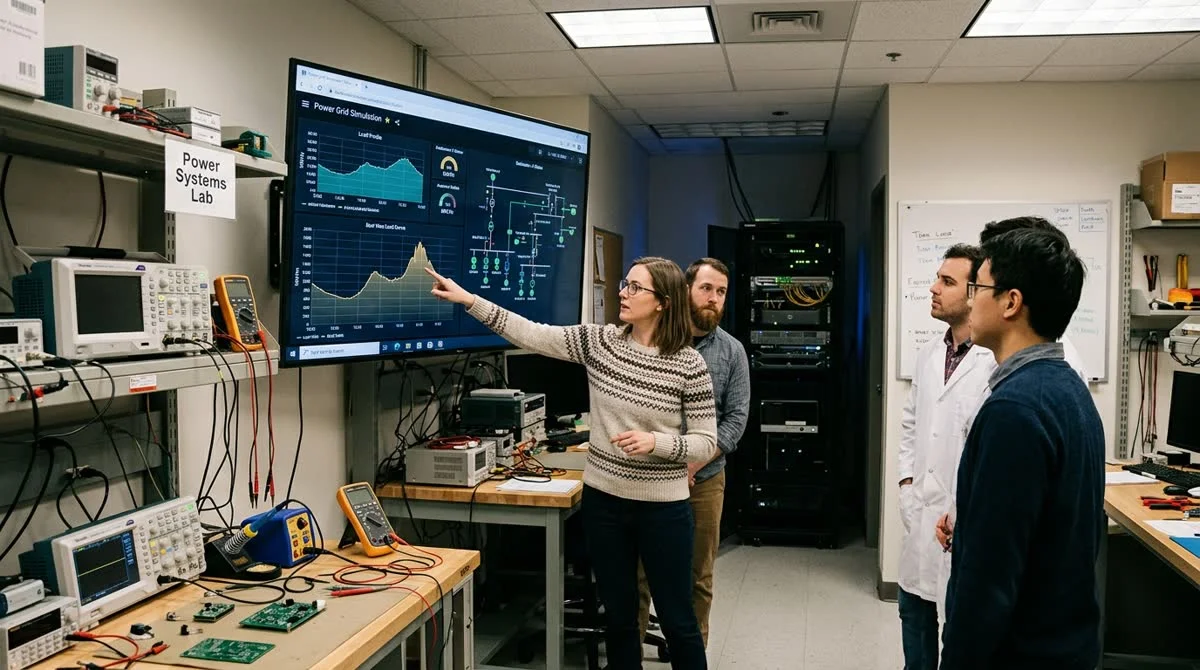
Data centres will consume up to 11% of Australia's entire electricity by 2035 — Melbourne is positioning itself as a global centre for developing engineering solutions to this problem, bringing together university research, clean energy, and digital infrastructure.
Why is 11% a systemic problem?
The growth of AI workloads transforms electricity from an operational expense into a strategic constraint. According to CEFC data and the IEEE Power and Energy Society 2026 survey, powering AI and digital infrastructure is one of the principal engineering challenges of the coming decade.
It's not just about generation volume. Data centres create new load patterns: sharp, unpredictable, and constantly growing. Traditional approaches to network design for such conditions don't fit — systems with dynamic flexibility, embedded storage, and real-time algorithmic optimization are needed.
Three priorities highlighted by engineers worldwide:
- Data centres — up to 11% of Australia's electricity consumption by 2035 (CEFC forecast)
- Aligning data centre placement with available network capacity and renewable energy sources
- Building in flexibility through energy storage and demand management
- Balancing digital infrastructure growth with decarbonization and grid reliability
What Melbourne offers
The University of Melbourne has become the Australian technical leader in the EPICS consortium (Electric Power Innovation for a Carbon-Free Society) — one of seven global centres for climate and clean energy. EPICS partners are Johns Hopkins University and Imperial College London. This is the only one of the seven centres focused directly on future energy infrastructure.
Based in the Department of Electrical and Electronic Engineering, the Smart Grid Lab operates as a real-time laboratory for simulating energy systems. Engineers test the interaction of solar panels, batteries, electric vehicles, and other distributed resources in a virtual environment before full deployment.
"AI workloads don't just increase computational requirements — they create new pressure on underlying power systems.
Designing them together is critical," — Glen Farivar, Senior Lecturer in Power Electronics at the University of Melbourne.
Victoria, the state where Melbourne is located, has developed one of Australia's most advanced energy sectors: renewable generation, industrial batteries, grid modernization — all working together rather than in isolation.
IEEE PES GTD Asia 2027 Conference
In 2027, Melbourne will host the IEEE PES Generation Transmission and Distribution Asia Conference and Exposition. This is one of the key international platforms for engineers, grid operators, researchers, and regulators working with energy systems.
The organizing committee includes specialists from the University of Melbourne, Monash University, and the Australian Energy Market Operator (AEMO). Professor Pierluigi Mancarella, EPICS director on the Australian side, describes the scale of the task:
"Developing future energy systems that are simultaneously affordable, resilient, and reliable — this is truly a global challenge.
Optimizing the interaction of electrical grids with AI and digitalization requires international collaboration."
What this means
Power supply ceases to be a background problem for the AI industry and becomes a key factor limiting its scaling. Centres that succeed in combining engineering competence, clean generation, and smart grids will determine the geography of the AI economy for the next decade.
Need AI working inside your business — not just in your newsfeed?
I build production AI for companies — custom CRM, internal tools, autonomous agents, workflow automation. Owned by you, shaped to your process, no per-seat tax. Built by Zhemal Khamidun, CPO of AlpinaGPT (AI platform, 6,000+ users).
The AI world, distilled — once a week
Seven stories that actually mattered, hand-picked. No noise, no reposts, no press releases.
Done! Check your inbox for a confirmation.