AI personalization in retail: how data is changing the customer experience in real time
Retailers are moving from static demographic templates to real-time AI personalization systems. Streaming data pipelines track shopper behavior during the session itself and modify the interface — product order, promotions, button placement — before the user leaves. Traditional segmentation no longer meets modern conversion goals.
AI-processed from AI News; edited by Hamidun News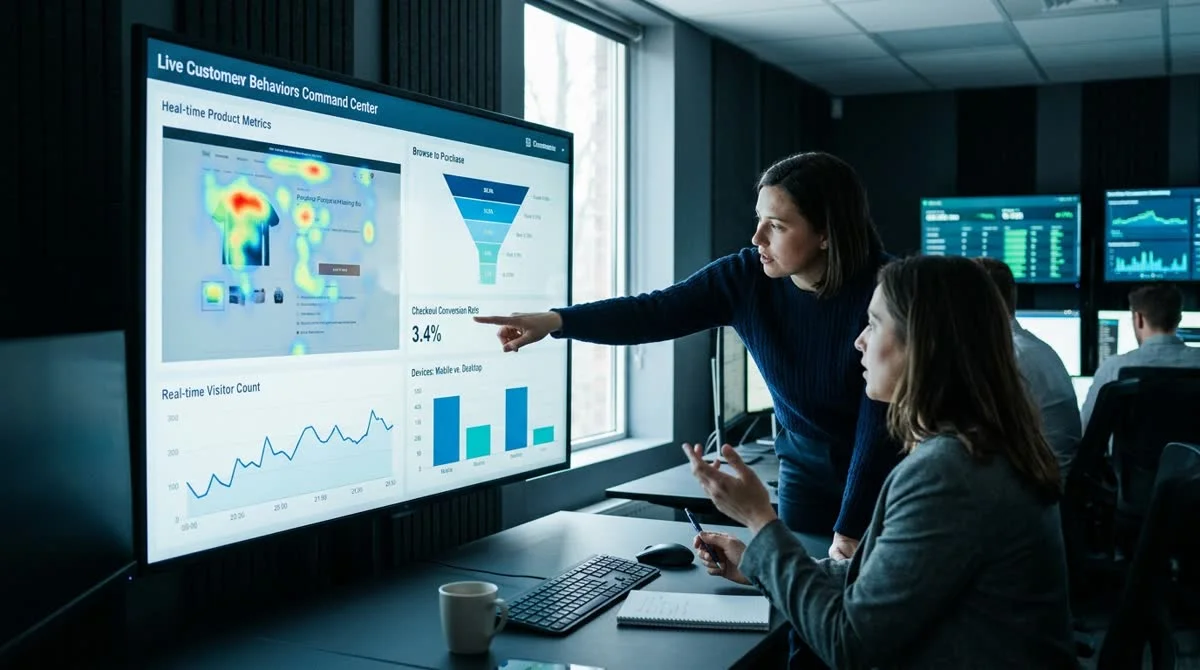
Retail companies are replacing static demographic segments with AI pipelines capable of modifying the user interface directly during an active customer session — not after it ends, but in real time.
Why Traditional Segmentation No Longer Works
Classical personalization in retail relied on demographic attributes: age, gender, geography, purchase history. This produced predictable broad segments but couldn't react to a specific user's behavior at a specific moment.
The customer journey has become unpredictable. One user within a single session transitions from casual browsing to urgent purchase — another explores in detail but delays the decision for days. A static layout and universal promotion rules work equally poorly for both.
Standard conversion goals are becoming increasingly difficult to achieve with predetermined rules: they don't account for session context and can't respond to intent signals in real time.
How Next-Generation Personalization Works
Next-generation retail AI is built on streaming pipelines that process behavioral signals as they arrive: clicks, time on page, scrolls, cart additions, abandonment. Based on this data, the system modifies the interface during the current session — changing product order, promotional offers, CTA element placement.
This is fundamentally different from classical A/B testing, where all variants are predetermined and the system simply selects one at page load. Dynamic personalization reacts to what the system learned about user intent during this specific visit.
Key components of such infrastructure:
- Streaming pipelines with real-time event processing
- Models for predicting user intent at the current session level
- Dynamic rendering of layouts, recommendations, and price offers
- Conversion monitoring systems with automatic feedback loops for algorithms
Where Infrastructure Barriers Emerge
Implementing real-time personalization runs up against architectural constraints. Traditional monolithic platforms aren't designed for parallel processing of behavioral streams and simultaneous interface modification for millions of users.
A separate challenge is latency. Personalization works only when changes happen fast enough: if processing takes seconds, the moment for impact is already lost. Retailers who successfully scaled such systems separate the layers of data collection, processing, and rendering — this allows each component to scale independently without rebuilding the entire platform.
What This Means
AI personalization in retail is ceasing to be a niche advantage and becoming a baseline infrastructure requirement. Users accustomed to adaptive interfaces from major platforms perceive static pages as outdated. Companies without streaming pipelines risk losing to competitors not only on price but on the quality of the shopping experience itself.
Need AI working inside your business — not just in your newsfeed?
I build production AI for companies — custom CRM, internal tools, autonomous agents, workflow automation. Owned by you, shaped to your process, no per-seat tax. Built by Zhemal Khamidun, CPO of AlpinaGPT (AI platform, 6,000+ users).
The AI world, distilled — once a week
Seven stories that actually mattered, hand-picked. No noise, no reposts, no press releases.
Done! Check your inbox for a confirmation.