Zuckerberg admits to Meta employees: AI agents are developing more slowly than expected
At an internal meeting with Meta employees, Mark Zuckerberg acknowledged that the company's development of AI agents is moving more slowly than he had expected. Despite billions of dollars invested in the open Llama models and the integration of Meta AI into WhatsApp, Instagram, and Facebook, the company's CEO does not hide his disappointment with the pace of progress. It is a rare public signal that the transition from language models to full-fledged agents has proved more difficult than the industry had assumed. *Meta is recognized as an extremist organization and banned in Russia.
AI-processed from TechCrunch; edited by Hamidun News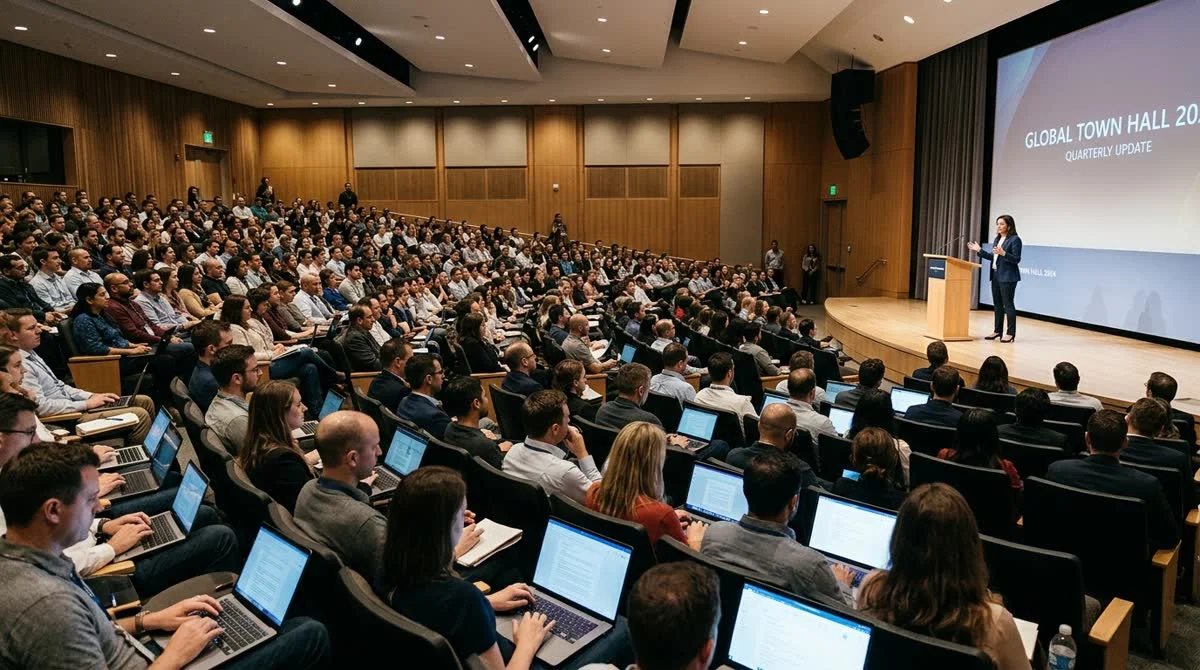
Mark Zuckerberg on July 2, 2026, at an internal meeting with Meta staff acknowledged: the development of AI agents at the company is moving slower than he had calculated. This is a rare public signal that even the largest AI companies are forced to reconsider their expectations of agentic systems.
What exactly was said at the closed meeting
According to sources familiar with the meeting's content, Meta's head told employees that the company's efforts to develop AI agents are not moving at the pace he expected. The discussion specifically concerned agentic systems — programs capable of independently executing multi-step tasks, managing tools, and making decisions without constant human involvement.
The specific technical reasons for the slowdown were not publicly disclosed. The fact that such an acknowledgment escaped beyond corporate walls is itself noteworthy: Meta traditionally keeps its internal strategic agenda closed. In recent years, the company has taken an increasingly aggressive stance in AI — from the open release of the Llama series to large-scale integration of Meta AI in WhatsApp, Instagram, and Facebook. Against this backdrop, publicly acknowledging development delays is an atypical move.
Why AI agents proved more difficult than the industry expected
In 2024–2025, major technology companies — Meta, OpenAI, Google, and Anthropic — collectively named 2025–2026 the "era of AI agents." The logic was compelling: language models had learned to reason and plan, and the next step was to teach them to act reliably. It seemed to be a matter of months of optimization on top of already-working models.
In practice, the transition from an "understanding" model to an "acting" agent turned out to be significantly more complex. The main problems are:
- Errors accumulate in long chains of actions — a failure at an early step breaks all subsequent logic
- Real user scenarios proved incomparably more diverse than laboratory tests and benchmarks
- Integration with external systems — banks, payment services, corporate tools — creates unpredictably difficult failures
- Users are not prepared to delegate important tasks to agents without reliable control of every step
Meta actively invested in this direction: the company develops the open Llama model series, embeds Meta AI in messengers and social networks with an audience of more than three billion users, and builds agentic tools for corporate clients. The fact that Zuckerberg speaks of disappointment precisely now testifies to this: the gap between ambitions and reality turned out to be wider than originally assumed.
What this means
Zuckerberg's words are not an admission of defeat nor a reversal of strategy. Meta remains one of the key players in the field of open AI: the company has its own computational resources, world-class teams, and an unprecedented user base for testing agentic systems under real conditions.
For companies and developers planning to build products on agentic technologies, this is a concrete reminder: the direction is correct, the pace is real — and it is slower than the headlines of previous years promised. It remains premature to rely today on fully autonomous "digital employees" reliably working without oversight. Rather, Zuckerberg is likely using this acknowledgment as a signal to restructure internal expectations — and to intensify work in the next cycle of agentic research.
*Meta is recognized as an extremist organization and is banned in the Russian Federation.
Need AI working inside your business — not just in your newsfeed?
I build production AI for companies — custom CRM, internal tools, autonomous agents, workflow automation. Owned by you, shaped to your process, no per-seat tax. Built by Zhemal Khamidun, CPO of AlpinaGPT (AI platform, 6,000+ users).
The AI world, distilled — once a week
Seven stories that actually mattered, hand-picked. No noise, no reposts, no press releases.
Done! Check your inbox for a confirmation.