ByteDance is building the largest data center outside China in Brazil for $39 billion
ByteDance is investing $39 billion to build a data center cluster in Brazil — the largest outside China. It is the main result of President Lula's policy of attracting Chinese capital: in recent years, Brazil has deliberately worked with investors from China. The company behind TikTok, Douyin and CapCut has chosen the country as a base for its overseas computing infrastructure.
AI-processed from Bloomberg Tech; edited by Hamidun News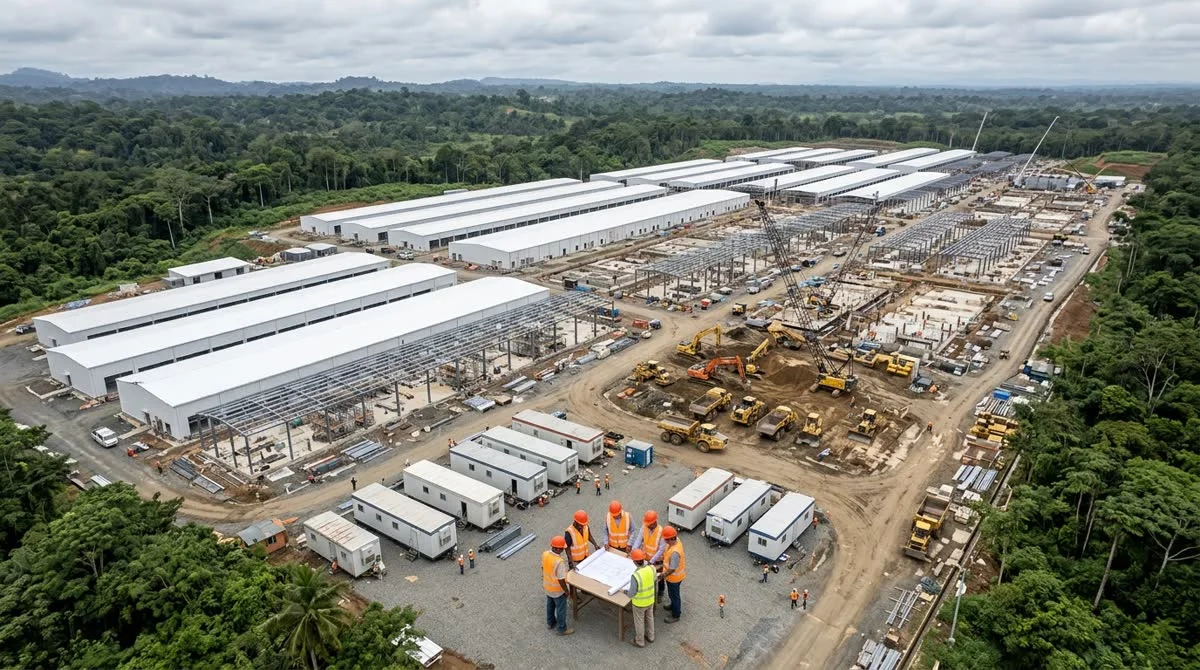
ByteDance, creator of TikTok, announced on July 1, 2026 the construction of Brazil's largest data center complex outside of China — total investments will amount to $39 billion.
What exactly is ByteDance building
By volume of funding, the project ranks among the largest foreign infrastructure investments in Brazil's history. The $39 billion sum is comparable to the largest data center construction programs that other major global technology companies have deployed in key regions over several years.
Key project parameters:
- Investment volume — $39 billion
- Status — ByteDance's largest data center cluster outside of China
- Location — Brazil
- Investor — ByteDance (parent company of TikTok, Douyin, CapCut)
- Announced — July 1, 2026
Data center complexes of this scale are not simply server rooms. They include proprietary power substations, industrial cooling systems, optical backbone networks and create a significant multiplier effect for the host economy — from construction and equipment supply to permanent operational infrastructure.
Why Brazil specifically?
President Luiz Inácio Lula da Silva is consistently building a policy of attracting Chinese capital, seeking to diversify foreign investments in the country. ByteDance's data center cluster is one of the most large-scale results of this course.
Brazil's selection is conditioned by a combination of factors that is rarely found in a single location. It is the largest market in Latin America with a population of over 215 million people, where TikTok ranks among the leading applications by daily audience. Placing infrastructure closer to users reduces latency and improves service quality.
The country has developed hydroelectric power, which provides relatively cheap and low-carbon electricity. This is fundamentally important: large data centers consume as much energy as small cities, and electricity cost directly affects operational economics.
Finally, Brazil has not imposed restrictions against Chinese technology companies — unlike the United States and a number of European states. For ByteDance this is particularly significant: the company has been under pressure in the United States for years with threats of forced TikTok bans and demands to sell the business to an American owner. Building large-scale independent infrastructure in a favorable jurisdiction significantly reduces vulnerability to such risks.
Connection to the global AI race
The scale of investments is not explained solely by the need to serve TikTok users. ByteDance is an active participant in the AI race: the company develops sophisticated recommendation algorithms, generative models and AI agent systems. The Brazilian cluster potentially provides the company with a computational base for training and deploying AI services oriented toward Portuguese-speaking audiences and the broader Latin American markets.
The race for computational infrastructure is one of the main vectors of competition in the global technology industry in 2026. Microsoft, Google, Amazon and Meta announced combined investments of hundreds of billions of dollars in new data center capacity worldwide. ByteDance is joining the same race, but pragmatically placing its bets on geographies where Western companies are traditionally weaker — and thereby gains structural competitive advantage in Global South markets.
What this means
ByteD's $39 billion investment is a symptom of a large-scale shift: global computational infrastructure for AI is ceasing to be concentrated exclusively in the United States and Europe. Chinese technology companies are building a parallel infrastructure network in Latin America, Asia and Africa. Host countries — including Brazil — gain infrastructure, jobs and technological competencies. At the same time, they are embedded in the geopolitical confrontation between two technology blocs, the long-term outcomes of which will manifest over a decade.
*Meta is recognized as an extremist organization and is banned in Russia.
Need AI working inside your business — not just in your newsfeed?
I build production AI for companies — custom CRM, internal tools, autonomous agents, workflow automation. Owned by you, shaped to your process, no per-seat tax. Built by Zhemal Khamidun, CPO of AlpinaGPT (AI platform, 6,000+ users).
The AI world, distilled — once a week
Seven stories that actually mattered, hand-picked. No noise, no reposts, no press releases.
Done! Check your inbox for a confirmation.