SpaceX shows investors a prototype AI gadget shaped like a smartphone
SpaceX showed prospective investors a prototype AI device resembling a smartphone, at a closed roadshow ahead of a possible IPO for Musk's company. The device's specifications were not disclosed. Analysts read it as a signal that SpaceX is preparing to enter the wireless gadget market, combining Starlink satellite connectivity with its own AI assistant.
AI-processed from TechCrunch; edited by Hamidun News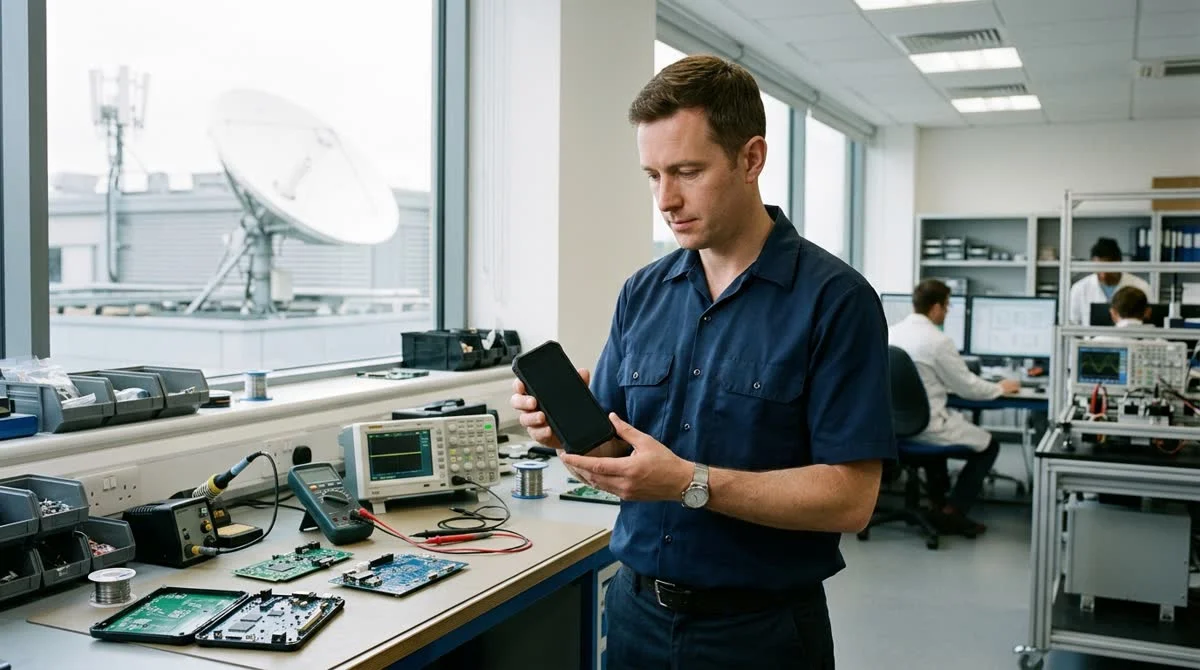
SpaceX showed prospective investors a prototype AI gadget resembling a smartphone. According to TechCrunch on July 1, 2026, the closed demonstration took place during an investment roadshow that Elon Musk's company is running ahead of a possible IPO.
What we know about the prototype
Sources describe the device as "handset-like": a form factor that looks like an ordinary phone. The exact specifications, operating system, AI engine and target audience have not been disclosed publicly: SpaceX showed the prototype to investors, not to journalists or buyers. The company has not officially commented on the report.
Showing concepts at closed investor meetings is standard practice before an IPO. Prospective shareholders want to see not only the current business but also a roadmap. The appearance of an AI device in this context suggests it is already part of the company's internal strategic plan.
- The prototype was shown in July 2026 at a closed investor roadshow
- The form factor is "handset-like", resembling a smartphone
- AI functionality is claimed, but technical details have not been disclosed
- SpaceX has neither officially confirmed nor denied the report
Why SpaceX is moving toward wireless devices
SpaceX has long been building infrastructure that makes its own smartphone a logical step. Starlink, a network of low-Earth-orbit satellites, also operates in a Direct to Cell mode, which lets ordinary smartphones receive a signal straight from a satellite, bypassing ground-based towers. In theory, that means SpaceX can offer coverage where there is not a single antenna: on the open ocean, in the mountains, in the desert.
Adding its own AI device would close the loop on the whole user experience: connectivity, hardware and the AI software layer, all under one company's control. Musk already has an AI asset, xAI with its Grok model, and the X platform with its audience of millions. Combining them in a single gadget is an understandable strategy of horizontal expansion.
Where SpaceX fits in the AI gadget market
The market for dedicated AI devices is going through a rough patch. Humane AI Pin and Rabbit r1, both released in 2024, drew hype and then disappointment: the devices proved slow, and their use cases limited. Mainstream players such as Apple, Google and Samsung are taking a different route, building AI into traditional smartphones instead of creating a separate form factor.
Unlike AI startups, SpaceX has a unique infrastructure asset: a satellite network. That offers a potential differentiator. It would not be a "smart" gadget that works wherever an iPhone works, but a device that wins precisely where an iPhone gets no signal.
What this means
A prototype is not yet a product. SpaceX has named no launch date, no price and no specific specifications. But a demonstration to investors on the eve of an IPO suggests AI devices are already locked into the company's strategy, and they will likely be worth looking for in a future prospectus.
- Nov 1, 202616 models tested on 7 search tools: Exa averaged 10.5 out of 14, SearXNG about 3
- Nov 1, 2026Google's StreamVibe video agent beats other models by 10.7% on response timing and quality
- Nov 1, 2026OpenAI Rewrites GPT Behavior Rules: Five Values and a Chain of Command
- Nov 1, 2026Voice bots built on LLMs turn to Jev, a fast classifier, for decisions in 200–500 ms
Key Questions Answered
What we know about the prototype?
Sources describe the device as "handset-like": a form factor that looks like an ordinary phone. The exact specifications, operating system, AI engine and target audience have not been disclosed publicly: SpaceX showed the prototype to investors, not to journalists or buyers. The company has not officially commented on the report. Showing concepts at closed investor meetings is standard practice before an IPO. Prospective shareholders want to see not only the current business but also a roadmap. The appearance of an AI device in this context suggests it is already part of th
Why SpaceX is moving toward wireless devices?
SpaceX has long been building infrastructure that makes its own smartphone a logical step. Starlink, a network of low-Earth-orbit satellites, also operates in a Direct to Cell mode, which lets ordinary smartphones receive a signal straight from a satellite, bypassing ground-based towers. In theory, that means SpaceX can offer coverage where there is not a single antenna: on the open ocean, in the mountains, in the desert. Adding its own AI device would close the loop on the whole user experience: connectivity, hardware and the AI software layer, all under one company's cont
Where SpaceX fits in the AI gadget market?
The market for dedicated AI devices is going through a rough patch. Humane AI Pin and Rabbit r1, both released in 2024, drew hype and then disappointment: the devices proved slow, and their use cases limited. Mainstream players such as Apple, Google and Samsung are taking a different route, building AI into traditional smartphones instead of creating a separate form factor. Unlike AI startups, SpaceX has a unique infrastructure asset: a satellite network. That offers a potential differentiator. It would not be a "smart" gadget that works wherever an iPhone works, but a devi
Ship AI Faster with Founders, Engineers & Weekly Architecture Reviews
Inside Vibe Club (hamidun.com/club) — weekly live masterminds with Zhemal Khamidun, Tech Radar, full LMS access, and 370+ production Claude Code skills.
The AI world, distilled — once a week
Seven stories that actually mattered, hand-picked. No noise, no reposts, no press releases.
Done! Check your inbox for a confirmation.