South Africa's grocery war: retailers move from search to AI conversation with shoppers
South Africa's online grocery market is moving to a new model. Players no longer compete on delivery speed, but on who can make shopping as invisible as possible with AI. Instead of searching a catalogue, shoppers hold a conversation: "Restock my usual list", and the order is ready in seconds. The winner is the retailer whose language model knows the individual customer best.
AI-processed from Bloomberg Tech; edited by Hamidun News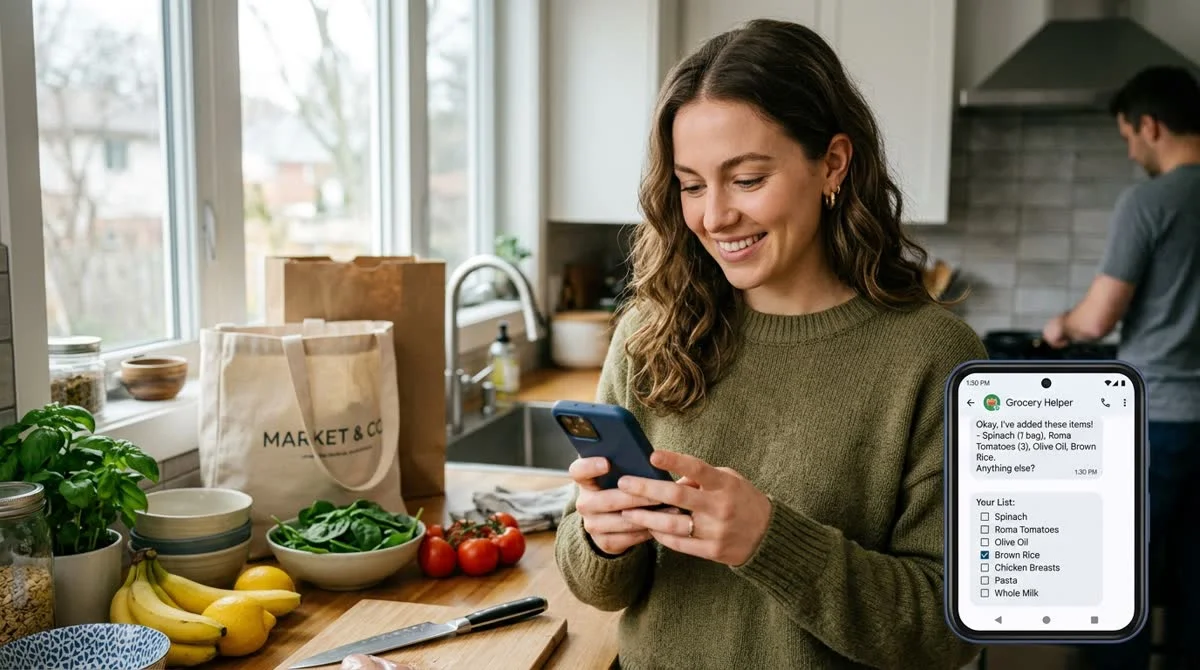
Competition in South African online grocery retail is entering a new phase. Players are no longer competing on delivery speed, but on the quality of the AI conversation, which makes buying almost invisible to the user. Delivery speed has stopped being a differentiator, since the leading players have already mastered it. Now the winner is the one whose AI is better at guessing what to buy before the shopper has thought of it.
What is changing in grocery competition
A traditional online supermarket demands constant effort from the shopper: type a query into the search bar, scroll through dozens of items, compare prices, add what you need to the basket. The new model offers a fundamentally different scenario. An AI assistant holds a conversation, remembers preferences and purchase history, and builds an order from a few phrases in a chat, without a single search query. This shift from a search interface to a conversational one is becoming the main front of competition: the search for "milk" gives way to the command "restock my usual list, but swap the milk for lactose-free".
Why South Africa became a testing ground for AI shopping
The shift fits the global trend of ambient commerce, or "background shopping", where buying goods is built into everyday routines: a voice assistant in the car, a chatbot in a messenger, automatic restocking on a schedule. For groceries, this transition is especially natural: people buy food regularly, patterns are stable, and AI predicts them well. South Africa is a convenient market for such trials: mobile internet penetration is high, messengers are widely used, and a growing urban middle class wants to save time. Instead of half an hour of scrolling through an app, the shopper types in a chat: "Order the standard weekly set", and the AI handles it in seconds, without a single click in the catalogue.
Because grocery purchases happen weekly or more often, the AI quickly builds a rich user profile: after just ten orders, the assistant knows that the shopper prefers organic eggs, doesn't buy beef and always picks one brand of coffee. For retailers, this changes the key competitive asset. Previously it was warehouses near residential areas, polished last-mile logistics and a wide assortment. Now a fourth dimension joins them: accumulated customer data and the quality of the language model that can put that data to use.
Where the risks of the new approach lie
Conversational interfaces create a new kind of loyalty, and at the same time a new kind of dependence. If an AI assistant is trained on a specific user's purchase history, switching to a competitor gets harder: accumulated habits and preferences stay with one provider. This is structural lock-in, which classic search catalogues have practically none of.
However, AI can make mistakes: recommend unsuitable substitutes, ignore allergens, miss promotions or suggest an outdated assortment. This creates reputational risks of a qualitatively different scale, because the shopper entrusts the assistant with their time, health and budget. Trust in an AI helper is a new competitive resource, and one that is easy to lose after a single bad order.
What this means
The South African grocery war has moved to a new level. The winner will not be whoever delivers faster, but whoever's AI understands the individual shopper best and makes shopping truly invisible.
What decides the outcome of competition in online grocery retail?
Not delivery speed, which the leading players have already mastered, but the quality of the AI conversation. The winner is the one whose assistant is better at guessing what the shopper needs to buy before the shopper has thought of it.
Why did
South Africa become a testing ground for AI shopping?
Because of a combination of high mobile internet penetration, widespread messenger use and a growing urban middle class that wants to save time. In addition, the regularity of grocery purchases lets AI quickly build up a user profile.
What is the risk of conversational AI assistants for the shopper?
An AI assistant trained on a specific user's purchase history creates lock-in: switching to a competitor gets harder. At the same time, AI can make mistakes, such as recommending unsuitable substitutes, ignoring allergens, missing promotions or suggesting an outdated assortment, which creates reputational risks for the service.
Key Questions Answered
What decides the outcome of competition in online grocery retail?
Not delivery speed, which the leading players have already mastered, but the quality of the AI conversation. The winner is the one whose assistant is better at guessing what the shopper needs to buy before the shopper has thought of it.
Why did South Africa become a testing ground for AI shopping?
Because of a combination of high mobile internet penetration, widespread messenger use and a growing urban middle class that wants to save time. In addition, the regularity of grocery purchases lets AI quickly build up a user profile.
What is the risk of conversational AI assistants for the shopper?
An AI assistant trained on a specific user's purchase history creates lock-in: switching to a competitor gets harder. At the same time, AI can make mistakes, such as recommending unsuitable substitutes, ignoring allergens, missing promotions or suggesting an outdated assortment, which creates reputational risks for the service.
Test Frontier LLMs & Autonomous Agents in One Workspace
Run Claude Opus 5.5, GPT-6, Gemini 3.1, and DeepSeek side-by-side in Nomad AI (nomadnet.ai) — unified model routing, deep research, and multimodal workflows under one subscription.
The AI world, distilled — once a week
Seven stories that actually mattered, hand-picked. No noise, no reposts, no press releases.
Done! Check your inbox for a confirmation.