Anthropic Meets the US Commerce Department: The Fable 5 and Mythos 5 Crisis Goes Political
Anthropic is sending senior technical specialists to Washington, where they will meet representatives of the US Department of Commerce on Monday. The agenda is the escalating crisis over the suspended Fable 5 and Mythos 5 models. According to Reuters and Bloomberg, in the space of a week the dispute has grown from a narrow cybersecurity question into one of the sharpest AI policy scandals in American history.
AI-processed from TNW; edited by Hamidun News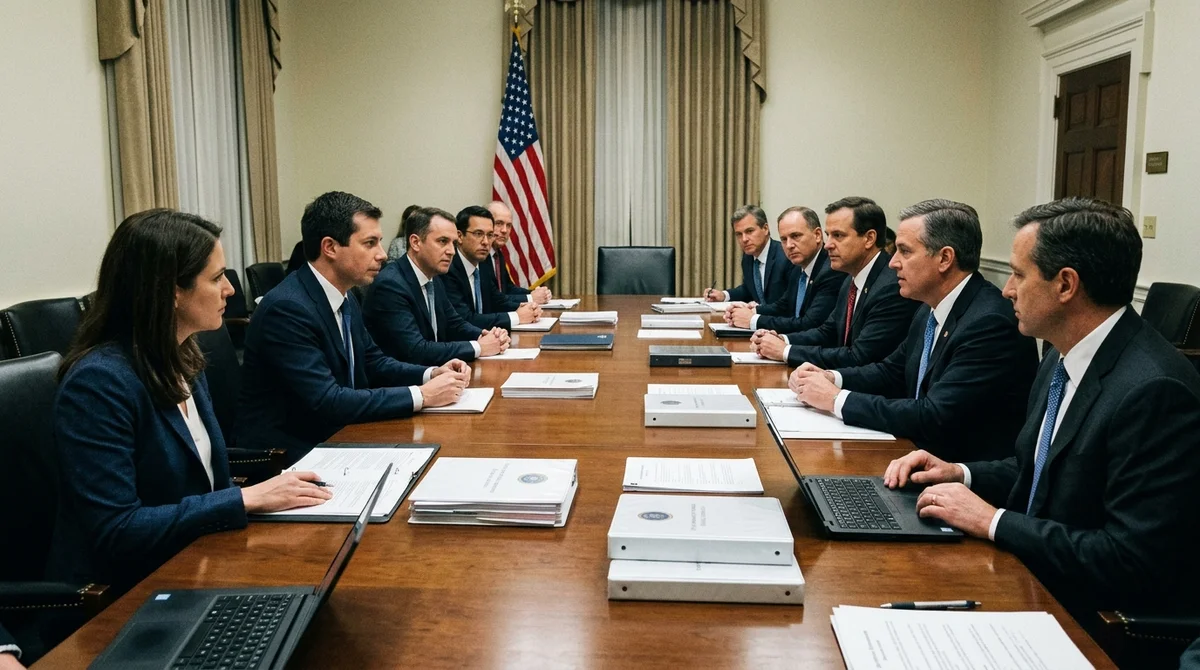
Senior Anthropic technical staff will meet officials from the US Department of Commerce in Washington on Monday. The goal of the emergency talks is to resolve the escalating crisis over the suspended Fable 5 and Mythos 5 models. Over the past week, the situation has grown into one of the sharpest AI conflicts in the history of American politics.
How it started and where it went
The conflict began as a narrow technical issue: the Department of Commerce voiced concern about the cybersecurity risks posed by two of Anthropic's flagship products. Within days, however, the standoff moved far beyond a specialized discussion and became a full-blown political scandal involving federal agencies, the expert community and major media outlets.
Reuters and Bloomberg confirmed the upcoming meeting. According to the outlets, it is the first direct dialogue between Anthropic's technical leadership and federal officials since the crisis began. Both sides want a settlement: the stakes are too high to let the situation drift any further.
It is especially telling that Anthropic is the company at the center of the scandal. It has consistently built its image as the most responsible of the major AI labs. Safety was not just a priority but its main competitive argument in conversations with investors and customers.
What is at stake
Fable 5 and Mythos 5 are Anthropic's flagship models and the most powerful it has publicly announced to date. The company bet on them in its competition with OpenAI and Google. Suspending their release has hit several groups at once:
- Enterprise customers who planned to integrate the new capabilities have to wait with no defined timeline
- Developers on the Anthropic API cannot plan their own releases and product launches
- Investors received an unambiguous signal about growing regulatory risks in the AI sector
- Competitors, above all OpenAI and Google DeepMind, gained extra time to strengthen their market positions
- The precedent threatens to become a template for future restrictions on other companies
In scale, what is happening has long since gone beyond the story of a single company. It is the first real test of how the US regulatory system intends to treat the most powerful language models and what control mechanisms it is prepared to use.
What to expect from the meeting
The talks are taking place under pressure from both sides. The Department of Commerce is seeking concrete guarantees: powerful models must not pose unacceptable risks to national security and must not be usable in cyberattacks, which is the issue that started the current conflict. Anthropic must either provide convincing technical evidence that its models are safe, or accept control measures that would at least partly unblock the situation. Both paths carry serious risks: the first requires disclosing confidential information about the model, the second amounts to effectively acknowledging its limitations.
Analysts note that the outcome of the meeting will matter far beyond Anthropic. If the company reaches a deal with the Department of Commerce, it will create a workable precedent for the whole industry. If not, the issue will likely go to Congress, which opens the way to long legislative debates and possibly strict new rules.
What this means
The Washington talks signal that AI regulation in the US has moved from declarations to real blocking instruments. For every company in the industry, this means relations with regulators are now as strategically important as technological leadership. The ability to work with the government is becoming a competitive advantage on a par with model quality.
- Nov 1, 2026OpenAI Rewrites GPT Behavior Rules: Five Values and a Chain of Command
- Nov 1, 2026Google admits AI Mode cuts search revenue, shares fall 15%
- Oct 31, 2026Author puts his script before an AI jury: the verdict cost 850 thousand tokens
- Oct 31, 2026Anthropic: Fold Subagents Back Into a Single Loop — One Customer's Tasks Ran Twice as Fast
Key Questions Answered
How it started and where it went?
The conflict began as a narrow technical issue: the Department of Commerce voiced concern about the cybersecurity risks posed by two of Anthropic's flagship products. Within days, however, the standoff moved far beyond a specialized discussion and became a full-blown political scandal involving federal agencies, the expert community and major media outlets. Reuters and Bloomberg confirmed the upcoming meeting. According to the outlets, it is the first direct dialogue between Anthropic's technical leadership and federal officials since the crisis began. Both sides want a set
What is at stake?
Fable 5 and Mythos 5 are Anthropic's flagship models and the most powerful it has publicly announced to date. The company bet on them in its competition with OpenAI and Google. Suspending their release has hit several groups at once: Enterprise customers who planned to integrate the new capabilities have to wait with no defined timeline Developers on the Anthropic API cannot plan their own releases and product launches Investors received an unambiguous signal about growing regulatory risks in the AI sector Competitors, above all OpenAI and Google DeepMind, gained extra time
What to expect from the meeting?
The talks are taking place under pressure from both sides. The Department of Commerce is seeking concrete guarantees: powerful models must not pose unacceptable risks to national security and must not be usable in cyberattacks, which is the issue that started the current conflict. Anthropic must either provide convincing technical evidence that its models are safe, or accept control measures that would at least partly unblock the situation. Both paths carry serious risks: the first requires disclosing confidential information about the model, the second amounts to effective
Test Frontier LLMs & Autonomous Agents in One Workspace
Run Claude Opus 5.5, GPT-6, Gemini 3.1, and DeepSeek side-by-side in Nomad AI (nomadnet.ai) — unified model routing, deep research, and multimodal workflows under one subscription.
The AI world, distilled — once a week
Seven stories that actually mattered, hand-picked. No noise, no reposts, no press releases.
Done! Check your inbox for a confirmation.