US Restricts Anthropic Access for Foreigners, Rattling Europe Ahead of G7
On the eve of VivaTech in Paris and the G7 summit in Évian, the US tightened foreign nationals' access to Anthropic's advanced models. Europe arrived at its own tech celebration, with 180,000 attendees, and immediately got a reminder of how much it depends on American AI platforms. Digital sovereignty became the main topic of conversation on the sidelines.
AI-processed from TNW; edited by Hamidun News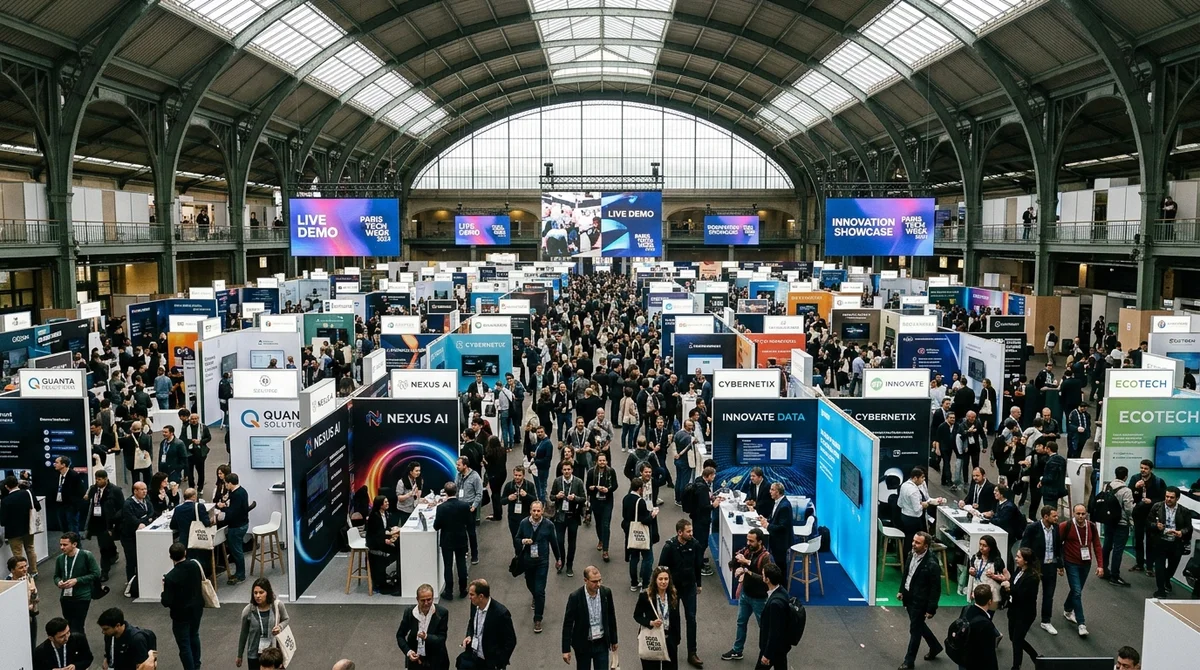
Just before two of Europe's biggest tech events, the VivaTech conference in Paris and the G7 summit in the resort town of Évian-les-Bains, the US tightened access to Anthropic's most advanced models for foreign nationals. The timing was too telling to ignore.
A double blow to Europe's self-image
A few days before more than 180,000 attendees filled VivaTech's exhibition halls, and while G7 leaders were still taking their seats at the table by the lake in Évian, Washington quietly tightened the rules: foreign nationals lost full access to Anthropic's most powerful tools. Europe showed up to its own tech party and was immediately reminded who actually sets the rules here.
This isn't the first such case, and it probably won't be the last. Export restrictions on American AI chips, tight control over language models, closed or conditionally open APIs: together they form a system that Americans themselves are in no hurry to call a policy, but which de facto is one. Each such move narrows the room for Europe's technological autonomy.
What Paris and Évian discussed
VivaTech isn't just a startup expo; it's a showcase for Europe's tech ambitions. This time, talk of digital sovereignty felt especially urgent, with the news from Washington barely a few days old. The event brought together European founders, venture investors, and representatives of American Big Tech, but this time the dependence issue moved to center stage instead of staying in hallway conversations.
- More than 180,000 attendees from more than 180 countries
- Dozens of sessions on the European AI Act and the EU regulatory agenda
- Heated debates over funding Europe's own compute infrastructure
- Calls to build a "European AI stack," from chip manufacturing to foundation models
- A parallel G7 track in Évian focused on AI safety and international technology governance
It was in Évian-les-Bains that G7 leaders discussed AI in a broader geopolitical context. Europe is pushing ever harder for a real say in technology decisions, rather than just the role of a regulator that studies other people's products and passes laws after the fact.
Anthropic as a mirror of dependence
The US decision to restrict foreign nationals' access to Anthropic's advanced models offered a concrete, tangible example of what dependence on American AI platforms means in practice. Anthropic is a private company, but US law, the investment climate, and export rules effectively turn it into an instrument of national technology policy. European companies that built Anthropic's API into their products found themselves in a position where the rules change without their input and without warning.
Notably, Anthropic is considered one of the most "open" American AI companies when it comes to EU-US relations. If restrictions hit its products, no American platform is safe from similar moves.
"Europe arrived at its own party having just received a reminder," as
The Next Web put it, capturing the moment.
What it means
AI sovereignty is no longer an academic question. Washington's concrete steps (export controls on chips, restrictions on model access, rules for infrastructure use) show that technological superiority is actively being used as a tool of geopolitical influence. Europe faces a choice: invest in its own technology stack, or remain a consumer with limited access rights and, accordingly, limited sovereignty.
- Nov 1, 2026Local models lose to Opus and Codex: 0.21 on a MacBook versus 1.00 for Codex
- Nov 1, 2026Kimi scores 96.2% on a 1C database analytics test and emerges as a fallback if Claude access is blocked
- Nov 1, 2026OpenAI Rewrites GPT Behavior Rules: Five Values and a Chain of Command
- Nov 1, 2026Google admits AI Mode cuts search revenue, shares fall 15%
Key Questions Answered
What are the key details on A double blow to Europe's self-image?
A few days before more than 180,000 attendees filled VivaTech's exhibition halls, and while G7 leaders were still taking their seats at the table by the lake in Évian, Washington quietly tightened the rules: foreign nationals lost full access to Anthropic's most powerful tools. Europe showed up to its own tech party and was immediately reminded who actually sets the rules here. This isn't the first such case, and it probably won't be the last. Export restrictions on American AI chips, tight control over language models, closed or conditionally open APIs: together they form
What Paris and Évian discussed?
VivaTech isn't just a startup expo; it's a showcase for Europe's tech ambitions. This time, talk of digital sovereignty felt especially urgent, with the news from Washington barely a few days old. The event brought together European founders, venture investors, and representatives of American Big Tech, but this time the dependence issue moved to center stage instead of staying in hallway conversations. More than 180,000 attendees from more than 180 countries Dozens of sessions on the European AI Act and the EU regulatory agenda Heated debates over funding Europe's own compu
What are the key details on Anthropic as a mirror of dependence?
The US decision to restrict foreign nationals' access to Anthropic's advanced models offered a concrete, tangible example of what dependence on American AI platforms means in practice. Anthropic is a private company, but US law, the investment climate, and export rules effectively turn it into an instrument of national technology policy. European companies that built Anthropic's API into their products found themselves in a position where the rules change without their input and without warning. Notably, Anthropic is considered one of the most "open" American AI companies w
Ship AI Faster with Founders, Engineers & Weekly Architecture Reviews
Inside Vibe Club (hamidun.com/club) — weekly live masterminds with Zhemal Khamidun, Tech Radar, full LMS access, and 370+ production Claude Code skills.
The AI world, distilled — once a week
Seven stories that actually mattered, hand-picked. No noise, no reposts, no press releases.
Done! Check your inbox for a confirmation.