Amazon Quick generates incident RCA brief from a single prompt via New Relic and Asana
AWS has published a guide to building an incident triage agent on Amazon Quick. From a single prompt, the agent connects to New Relic via MCP Server, investigates the cause of an outage, generates an RCA brief with links to supporting evidence, and creates an Asana task for handoff to the team. It is one of the first practical examples where MCP integration is built into a real on-call workflow.
AI-processed from AWS Machine Learning Blog; edited by Hamidun News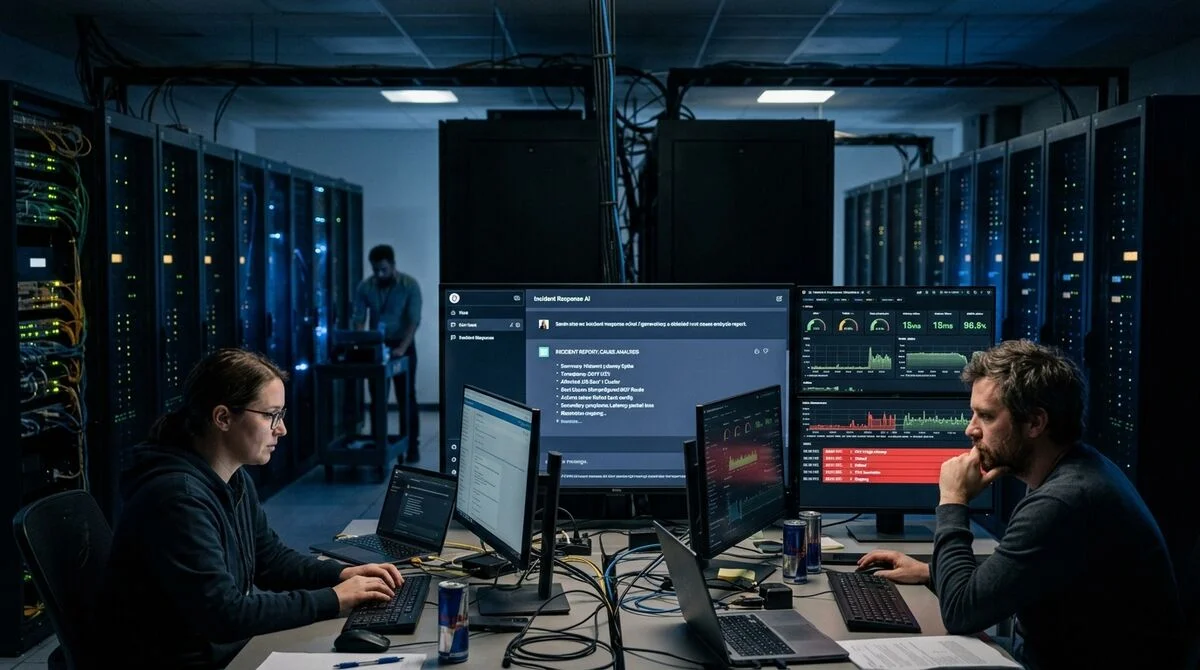
AWS published a step-by-step tutorial on building an AI agent for incident triage based on Amazon Quick—a service for creating agents with native integrations in the AWS ecosystem.
The Problem the Agent Solves
When something breaks in production, the on-call engineer faces pressure: you need to quickly find the cause, gather context from different tools, write an analysis, and hand off the task to the team. Usually this process takes from 20 minutes to several hours—and the whole time the service is unavailable or degraded. AWS proposes delegating the routine part of the investigation to an AI agent. The solution is built on top of three products:
- Amazon Quick — agent orchestrator that takes a prompt and manages a chain of tool calls
- New Relic MCP Server — monitoring data source: metrics, traces, logs, alerts in real time
- Asana — task tracker for recording the RCA brief and handing off to the engineering team
How the Agent Investigates an Incident
The user describes the problem in a single freeform prompt. The Amazon Quick agent launches the investigation: it knows which tools to contact and does so independently. First, the agent connects to the New Relic MCP Server: requests data for the needed time range, searches for anomalies in metrics, correlates traces with alerts. The MCP protocol allows the agent to communicate with the monitoring tool in the same way a human engineer does—but without tab switching and manual data copying.
Once the agent has enough signals, it forms an RCA brief: incident description, timeline of events, probable root cause, direct links to specific logs and metrics as evidence. As the final step, the agent creates a task in Asana through native integration—with ready-made context, no manual filling required.
"From a single prompt, the
Amazon Quick agent investigates the incident, compiles an RCA brief with links to evidence, and creates a trackable task in Asana ready for handoff," the AWS guide states.
What Makes This Approach Significant
Several details set this tutorial apart from similar ones:
- MCP as enterprise standard — New Relic became one of the first major monitoring platforms with native MCP Server. This signals to the market: the protocol goes beyond chatbot demos.
- Native integrations without code — Amazon Quick connects the agent to Asana and New Relic through built-in connectors. No custom webhook wrappers.
- Audit trail by default — An RCA brief with direct links to evidence is not just convenience, but documentation for postmortems and compliance audits.
- One prompt instead of 40 minutes — automating the first hour of response frees the engineer from routine data collection. Agents of this type are especially demanded in teams where on-call burns out from repetitive investigations. The standard template "check metrics → find anomaly → formulate hypothesis → create ticket" can be fully automated, leaving the engineer only decision-making.
What This Means
The MCP protocol is moving into production tools: New Relic, Asana, and Amazon Quick—no longer an experimental combination, but a working pattern. For teams already using these products, deploying an AI agent in the on-call process becomes configuration, not development from scratch.
Want to stop reading about AI and start using it?
AI News is a curated feed of AI/tech news. Hamidun Academy teaches you to use AI systematically in your work.
The AI world, distilled — once a week
Seven stories that actually mattered, hand-picked. No noise, no reposts, no press releases.
Done! Check your inbox for a confirmation.