Tidal stops paying royalties on AI-generated music and adds track labels
Tidal has introduced new rules for AI-generated music. Tracks that the platform identifies as 100% AI-generated will no longer earn royalties, and monetization for them is switched off as of today. The tracks are not banned from upload or playback, but starting July 15 they will carry a special badge. The goal is simple: send payouts only to real musicians, not to algorithms.
AI-processed from The Verge; edited by Hamidun News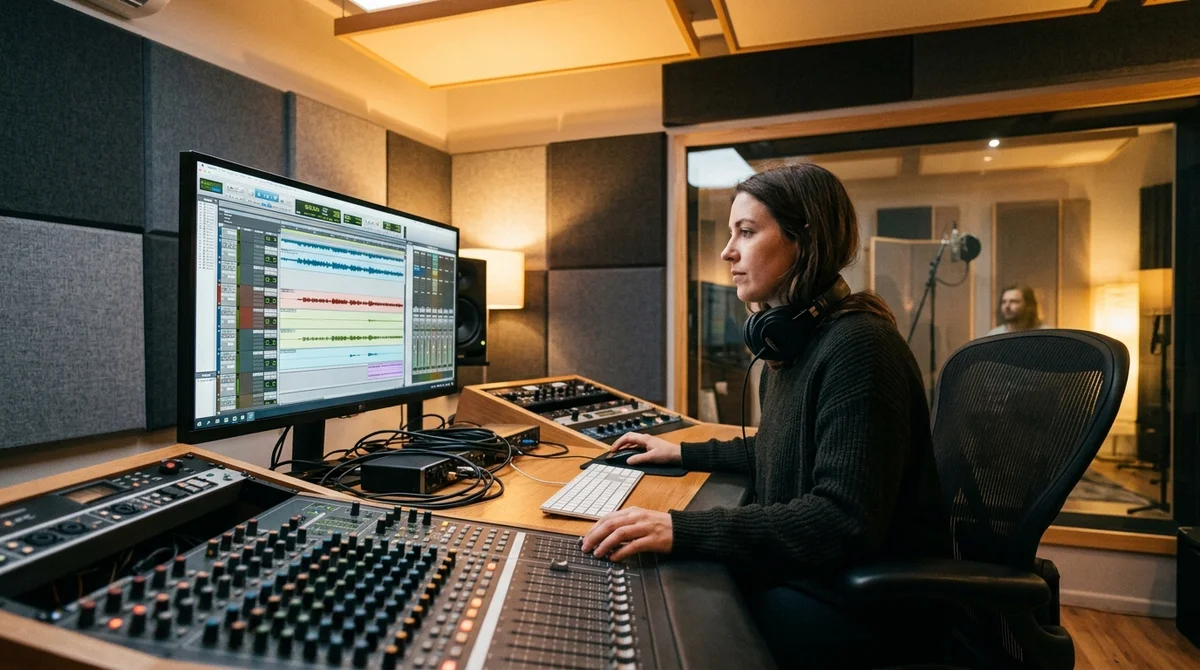
Tidal has announced a new policy on AI-generated music. Tracks that the platform identifies as 100% AI-generated lose monetization immediately, and starting July 15 they will carry a special label icon for listeners.
Money goes to people only
The core principle of the policy is stated plainly: royalties should go to the artists who actually created, wrote, and performed the music.
"Tidal is primarily committed to ensuring that royalties flow to original works directly created, written, and performed by humans. That is why we will not knowingly pay royalties on music we identify as fully AI-generated," the company said in an official statement.
Monetization for fully AI-generated music is switched off as of today. The tracks are not banned from upload or playback; they simply stop earning money for the account holders who posted them. This is not a block, but a financial disqualification.
The music industry has long worried that AI tracks are cluttering streaming platforms and siphoning royalties away from real artists. The volume of uploaded AI content has surged over the past two years, and pressure on streaming services to act has grown significantly.
Labels from July 15
Alongside the monetization change, Tidal is rolling out a labeling system for listeners. Starting July 15, tracks that the platform's algorithms have recognized as entirely AI-generated will display a special icon. Users can then decide for themselves whether they want to listen to that content before they even hit Play.
Key points of the new policy:
- Monetization of AI tracks is switched off as of today
- A visible badge will appear starting July 15
- The rules apply only to tracks that are 100% AI-generated
- Partially AI-generated tracks are not subject to the restrictions
- The platform has not publicly disclosed its detection tools
That last point matters: how exactly Tidal determines what counts as a "fully AI-generated track" remains an open question. Detection technology is imperfect, and the line between "a human using an AI tool" and "pure AI" is a matter of debate in the industry. Artists who use AI as one of several tools in their work are not affected by the restrictions.
No outright ban — and that's a choice
Tidal's approach differs fundamentally from an outright ban: the platform isn't kicking AI music off its service, but it isn't willing to pay for it either. It's a deliberate compromise between content availability and financial fairness.
On one side are listeners, who want access to any content. On the other are musicians, who worry that automatically generated tracks dilute the royalty pool and cut payouts to human artists. That's how the pro-rata streaming model works: the more plays any one track gets, the less everyone else receives.
"Tidal is primarily committed to ensuring that royalties flow to
original works directly created, written, and performed by humans," — from the company's official statement.
By demonetizing AI music rather than banning it, Tidal is trying to strike a balance: avoid alienating its audience with harsh restrictions while protecting the financial interests of professional musicians.
What it means
Tidal is setting out a model that could become an industry standard: AI content stays on the platform, but only human creativity gets monetized. If Spotify, Apple Music, and YouTube Music adopt the same approach, the "mass-upload AI tracks and collect royalties" scheme would effectively be shut down.
For artists who use AI as a tool in their creative process, nothing changes for now: the restrictions apply only to content generated by AI without human involvement.
- Oct 29, 2026Claude Code Edits Video From a Transcript: How the video-use Skill With 30 000 Stars Works
- Oct 29, 2026Stanford AI tool verifies part of Signal's code in half a day for under $500, versus five months of expert work
- Oct 29, 2026Liquid AI releases LFM3: six multimodal 2B models with a 256K context window
- Oct 29, 20268B iOS agent beats Gemini-3.5-Flash on UINavBench and matches Gemini-3.1-Pro
Key Questions Answered
What are the key details on Money goes to people only?
The core principle of the policy is stated plainly: royalties should go to the artists who actually created, wrote, and performed the music. "Tidal is primarily committed to ensuring that royalties flow to original works directly created, written, and performed by humans. That is why we will not knowingly pay royalties on music we identify as fully AI-generated," the company said in an official statement. Monetization for fully AI-generated music is switched off as of today. The tracks are not banned from upload or playback; they simply stop earning money for the account ho
What are the key details on Labels from July 15?
Alongside the monetization change, Tidal is rolling out a labeling system for listeners. Starting July 15, tracks that the platform's algorithms have recognized as entirely AI-generated will display a special icon. Users can then decide for themselves whether they want to listen to that content before they even hit Play. Key points of the new policy: Monetization of AI tracks is switched off as of today A visible badge will appear starting July 15 The rules apply only to tracks that are 100% AI-generated Partially AI-generated tracks are not subject to the restrictions The
What are the key details on No outright ban — and that's a choice?
Tidal's approach differs fundamentally from an outright ban: the platform isn't kicking AI music off its service, but it isn't willing to pay for it either. It's a deliberate compromise between content availability and financial fairness. On one side are listeners, who want access to any content. On the other are musicians, who worry that automatically generated tracks dilute the royalty pool and cut payouts to human artists. That's how the pro-rata streaming model works: the more plays any one track gets, the less everyone else receives. "Tidal is primarily committed to en
Test Frontier LLMs & Autonomous Agents in One Workspace
Run Claude Opus 5.5, GPT-6, Gemini 3.1, and DeepSeek side-by-side in Nomad AI (nomadnet.ai) — unified model routing, deep research, and multimodal workflows under one subscription.
The AI world, distilled — once a week
Seven stories that actually mattered, hand-picked. No noise, no reposts, no press releases.
Done! Check your inbox for a confirmation.