Omen AI raised $31M for cooling water monitoring in AI data centers
The AI boom hides an unexpected problem: bacteria are proliferating in data centers. When GPU racks operate at their limit, the cooling liquid overheats — and microorganisms start to grow in it. Omen AI startup raised $31M to monitor water quality inside data centers using sensors and real-time AI analytics.
AI-processed from TNW; edited by Hamidun News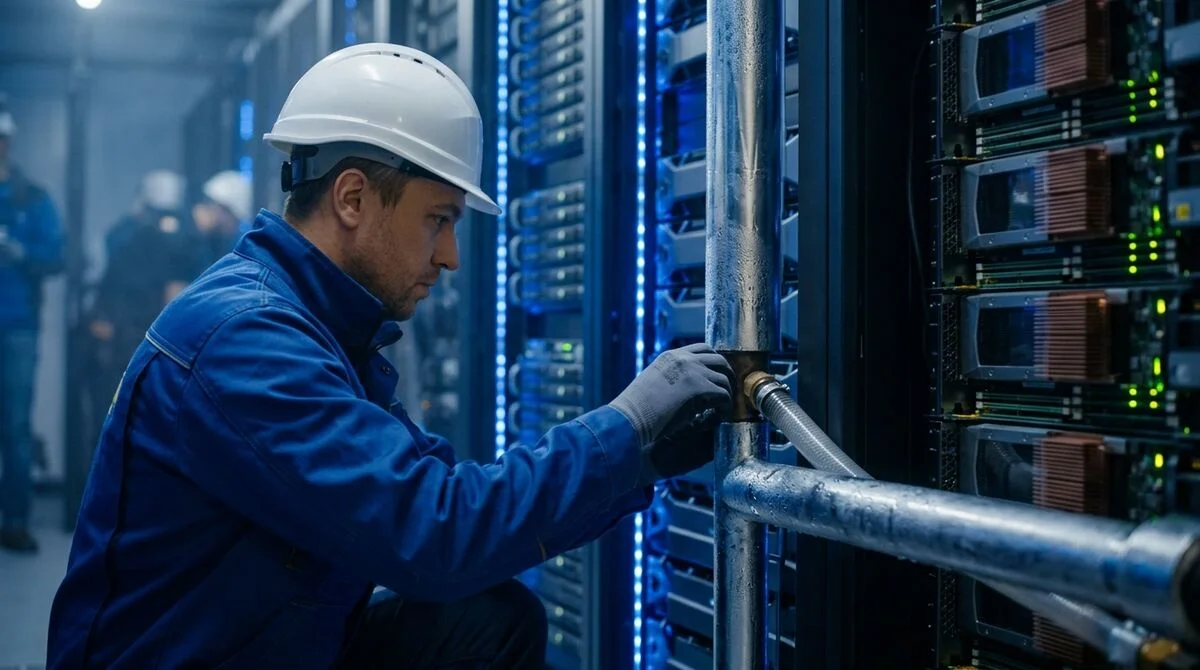
Startup Omen AI raised $31 million for a cooling liquid monitoring system in data centers. The task is niche, but critically acute: as GPU racks become denser and hotter, cooling water occasionally becomes a breeding ground for bacteria — and no one has yet monitored this systematically enough.
Bacteria as a side effect of the GPU race
The AI boom has an unglamorous underbelly: some of its most complex problems are literally about plumbing. While the industry discusses language model parameters and inference costs, engineers in machine halls face an entirely different reality. When data centers pack more and more GPUs into each rack and push them to maximum loads, cooling liquid overheats — and microorganisms begin to multiply in it.
Contaminated cooling liquid is not a theoretical risk. Bacterial biofilms clog tubes and heat exchanger channels, reducing cooling efficiency. In severe cases, this leads to emergency server shutdowns.
In an environment where a single rack with H100s costs tens of thousands of dollars per day in downtime, this is a critical vulnerability — one that has until now been mostly addressed through manual inspections every few weeks.
The problem has intensified with the industry's transition from air to liquid cooling. Racks with densities of 30–100 kW have become the norm in next-generation data centers — air systems simply cannot handle such thermal loads. But liquid cooling brings new operational risks that the infrastructure market proved unprepared for.
What Omen AI builds
The company is developing a platform for continuous monitoring of cooling circuits. Sensors in real time track water parameters — temperature, chemical composition, signs of biological activity — and transmit data to a machine learning-based system. The goal is to replace rare manual inspections with constant automatic control.
Key capabilities of the platform:
- Continuous measurement of cooling liquid quality without manual sampling
- Early detection of bacterial hotspots at the stage when they are easy to eliminate
- Thermal analytics broken down by individual racks and sections of the data center
- Integration with DCIM infrastructure management systems
- Automatic alerts when parameters exceed acceptable thresholds
Data center operators have historically treated cooling water as an auxiliary system without active management. Omen AI wants to change this — making liquid quality control as mandatory a practice as CPU temperature monitoring.
The $31 million raised will go toward expanding commercial pilots and developing the product.
Why the market was waiting for this
Cloud providers and hyperscalers invest billions in physical infrastructure, yet monitoring the cooling liquid itself remains a weak link. Most systems measure temperature and pressure, but not water quality — this is precisely where the risk lies. Omen AI is betting that as rack density grows, this gap will become unacceptable.
"The most complex problems of the AI boom turned out to be pipeline
problems" — in this formulation by the founders there is more accuracy than meets the eye.
What this means
Omen AI is an example of how the physical infrastructure layer of the AI industry creates niche yet critically important markets. While attention is focused on models and chips, the real operational competition unfolds over cooling, power supply, and water supply reliability — and over companies that know how to control all of this before a problem becomes an emergency.
Want to stop reading about AI and start using it?
AI News is a curated feed of AI/tech news. Hamidun Academy teaches you to use AI systematically in your work.
The AI world, distilled — once a week
Seven stories that actually mattered, hand-picked. No noise, no reposts, no press releases.
Done! Check your inbox for a confirmation.