Neuron Soundware: Czech Startup Detects Drones by Sound for €150
Czech startup Neuron Soundware unveiled Sound Shield — an AI system for detecting drones by engine sound. Each microphone sensor costs €100–150 — several times cheaper than radar. The company plans primarily to equip power plants and electrical grids.
AI-processed from TNW; edited by Hamidun News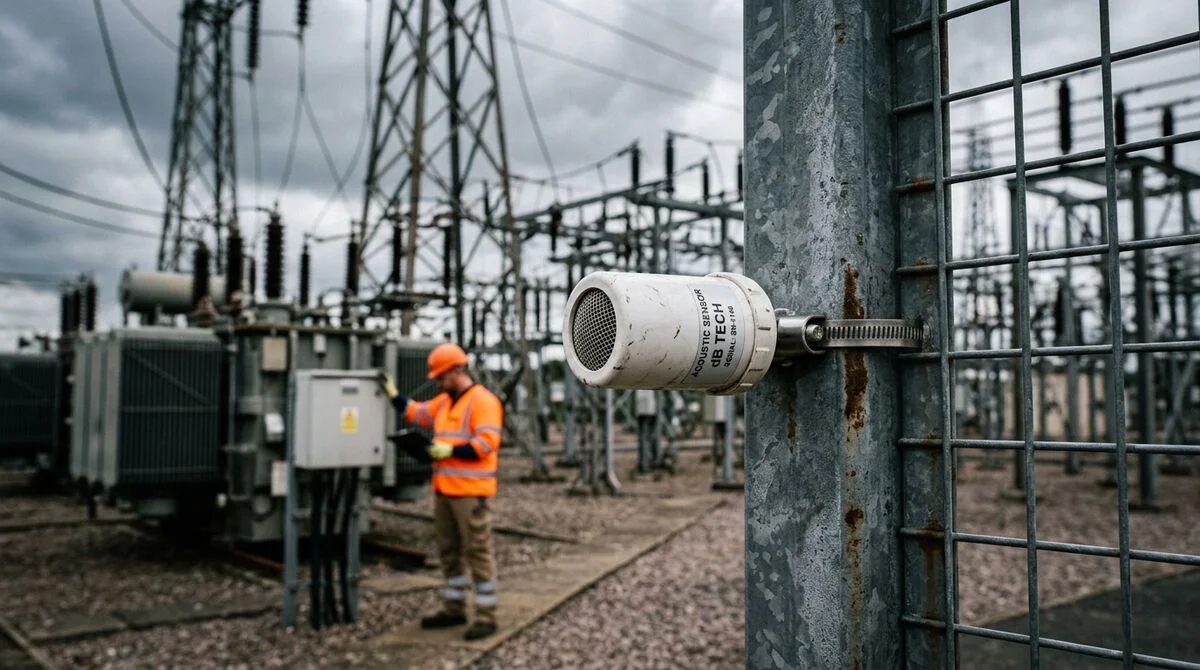
Czech startup Neuron Soundware presented Sound Shield — an AI-powered acoustic drone detection system capable of identifying unmanned aerial vehicles by engine sound. The cost of a single sensor is just €100–150.
How Sound Shield Works
The system is based on passive microphone sensors that continuously monitor airspace. Built-in AI analyzes acoustic signatures: each drone model creates a unique acoustic profile, determined by propeller configuration, engine RPM, and chassis construction. The key difference from radar systems is passivity. Sound Shield emits nothing, so a drone cannot detect the fact of observation itself. This is especially important in military and counterintelligence contexts.
- Cost per sensor: €100–150
- Principle: real-time analysis of engine acoustic signatures
- Mode: passive, without radio signal emission
- Target: low-flying drones over cities, infrastructure, and military facilities
- First market: power grids and power plants
Why Starting with Power Grids
Neuron Soundware chose energy infrastructure protection as its primary market. Power plants, substations, and transmission lines are simultaneously vulnerable and critically important facilities that in recent years have increasingly become targets of reconnaissance drones. Traditional radar systems for such facilities cost tens of thousands of euros just for equipment and require regulatory approval for radio frequency use. Sound Shield requires neither. Several dozen sensors arranged around the perimeter of an industrial facility provide continuous acoustic coverage at a fraction of the cost of a radar solution. Another argument: power grids are decentralized infrastructure with numerous remote facilities where installation of expensive stationary radars is economically unfeasible. Cheap autonomous Sound Shield sensors fit particularly well here.
Counter-UAS Market
The global market for drone detection and counter-UAS (Counter-Unmanned Aerial Systems) is growing faster than most security segments. Existing solutions fall into several categories.
Radar systems — most accurate and long-range, but expensive and requiring radio frequency licenses.
RF detectors — intercept control signals between operator and drone. Useless against autonomous unmanned vehicles with pre-loaded flight paths.
Optical and thermal systems — depend on lighting and weather, poorly scalable to large perimeters.
Acoustic systems were historically considered less accurate: sound depends on background noise and wind. But here AI provides a qualitative leap — modern neural networks have learned to isolate characteristic frequencies of drone engines even from urban noise. Neuron Soundware claims to have accumulated an extensive database of acoustic data for various drone models.
What This Means
The emergence of quality acoustic detectors at the price of a consumer video camera changes the logic of perimeter protection: instead of one expensive installation — a network of dozens of cheap nodes with overlapping detection zones. If the claimed effectiveness is confirmed in practice, Sound Shield could become a baseline level of protection for facilities that cannot afford radar — and that is a significant portion of European infrastructure.
Delegate Deep Research, Coding & Workflows to an AI Agent
Deploy autonomous multi-step execution with NomadNet Agent (agent.nomadnet.ai) — automated web research, data synthesis, code generation, and complex task orchestration.
The AI world, distilled — once a week
Seven stories that actually mattered, hand-picked. No noise, no reposts, no press releases.
Done! Check your inbox for a confirmation.