Fix Price launches VLM-based shelf and price-tag monitoring across 8,000 stores
Fix Price has automated shelf and price-tag checks across its 8,000+ stores with a computer vision service built on external VLMs. Instead of training its own neural networks, the retailer uses off-the-shelf multimodal models that look at a photo of a shelf and flag empty spots and price-tag errors. The Fix Price data analytics center team described how it launched a production service without a long ML development cycle.
AI-processed from Habr AI; edited by Hamidun News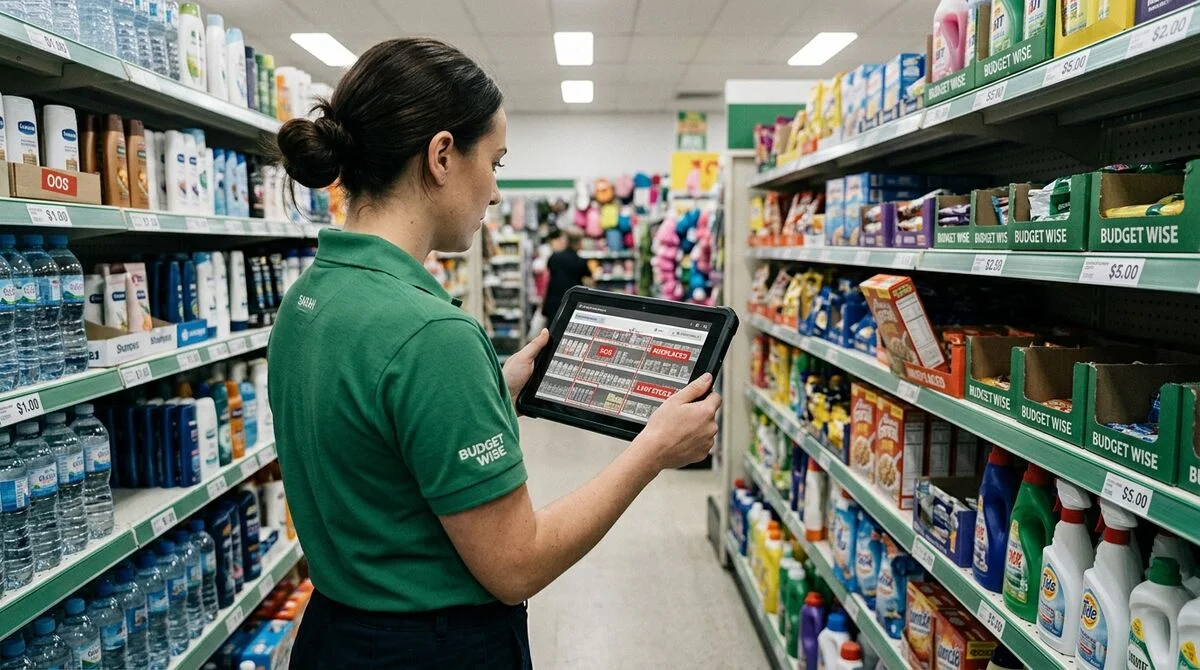
Fix Price has automated checks of product displays and price tags across its 8,000+ stores by deploying a computer vision service built on external Vision Language Models, with no custom ML models built from scratch and no multi-year training cycle.
8,000 stores, one task
Fix Price is a fixed-price retail chain serving tens of millions of customers in Russia and the CIS. More than 8,000 points of sale mean thousands of shelves that must be checked every day: are products arranged according to the planogram, does every item have a price tag, are there any empty spots.
Manual control at this scale is unrealistic: you cannot send an auditor to each of 8,000 stores every day. The cost of an error is direct: an empty shelf or a wrong price tag means a lost sale right now, plus a negative customer experience that people remember for a long time. In a chain this size, even a small percentage of such cases adds up to noticeable financial losses.
The Fix Price data analytics center faced a clear task: detect display violations and price-tag errors automatically, quickly, at industrial scale and without excessive investment in its own CV infrastructure.
Why a VLM instead of a custom model
The classic route in retail computer vision is to train a custom neural network on labeled shelf photos. It works, but it requires thousands of annotated images, a team of ML engineers, training infrastructure and a long cycle whenever the assortment changes.
Fix Price chose an alternative: external Vision Language Models (VLMs). These are multimodal models that can analyze an image and answer questions about it in natural language, the same principle as GPT-4o Vision or Claude with image support.
Key advantages of the VLM approach in this case:
- Fast start without a large labeled dataset
- One model checks displays, price tags and product availability at the same time
- New types of checks are added by changing the prompt, without retraining
- Flexibility when expanding to new categories and store formats
- Lower development and maintenance costs compared with custom CV
How the service works
Images come from surveillance cameras or from store employees' mobile devices. The VLM receives the photo and analyzes the frame against a set of criteria: compliance with the planogram, a price tag for every item, no empty spots on the shelf.
The output is a structured list of violations tied to a specific store. The responsible employee gets an alert and fixes the problem before a customer runs into it. Response speed goes up, and manual walk-throughs with a notepad shrink.
"I think all of us know how customers react to a missing price tag or a wrong price on it, and what an empty shelf feels like when the product you came for isn't there," said
Kristina Istratova, head of the data analytics center at Fix Price.
What this means
The Fix Price case shows that VLMs have lowered the barrier to industrial computer vision so far that a large retailer launched a working service without a multi-year ML project. 8,000 stores is not a pilot but a real production workload. For the rest of retail, it is a clear signal: automating shelf control no longer requires an in-house ML lab.
- Nov 1, 2026OpenAI Rewrites GPT Behavior Rules: Five Values and a Chain of Command
- Nov 1, 2026Google admits AI Mode cuts search revenue, shares fall 15%
- Oct 31, 2026Author puts his script before an AI jury: the verdict cost 850 thousand tokens
- Oct 31, 2026Anthropic: Fold Subagents Back Into a Single Loop — One Customer's Tasks Ran Twice as Fast
Key Questions Answered
What are the key details on 8,000 stores, one task?
Fix Price is a fixed-price retail chain serving tens of millions of customers in Russia and the CIS. More than 8,000 points of sale mean thousands of shelves that must be checked every day: are products arranged according to the planogram, does every item have a price tag, are there any empty spots. Manual control at this scale is unrealistic: you cannot send an auditor to each of 8,000 stores every day. The cost of an error is direct: an empty shelf or a wrong price tag means a lost sale right now, plus a negative customer experience that people remember for a long time. I
Why a VLM instead of a custom model?
The classic route in retail computer vision is to train a custom neural network on labeled shelf photos. It works, but it requires thousands of annotated images, a team of ML engineers, training infrastructure and a long cycle whenever the assortment changes. Fix Price chose an alternative: external Vision Language Models (VLMs). These are multimodal models that can analyze an image and answer questions about it in natural language, the same principle as GPT-4o Vision or Claude with image support. Key advantages of the VLM approach in this case: Fast start without a large l
How the service works?
Images come from surveillance cameras or from store employees' mobile devices. The VLM receives the photo and analyzes the frame against a set of criteria: compliance with the planogram, a price tag for every item, no empty spots on the shelf. The output is a structured list of violations tied to a specific store. The responsible employee gets an alert and fixes the problem before a customer runs into it. Response speed goes up, and manual walk-throughs with a notepad shrink. "I think all of us know how customers react to a missing price tag or a wrong price on it, and what
Test Frontier LLMs & Autonomous Agents in One Workspace
Run Claude Opus 5.5, GPT-6, Gemini 3.1, and DeepSeek side-by-side in Nomad AI (nomadnet.ai) — unified model routing, deep research, and multimodal workflows under one subscription.
The AI world, distilled — once a week
Seven stories that actually mattered, hand-picked. No noise, no reposts, no press releases.
Done! Check your inbox for a confirmation.