Банк Кореи предупредил: AI-бонусы в полупроводниковом секторе могут разогнать инфляцию
Банк Кореи (BOK) забил тревогу: AI-бум в полупроводниковом секторе принёс сотрудникам крупных tech-гигантов рекордные бонусы — и это запускает цепную реакцию…
AI-processed from Bloomberg Tech; edited by Hamidun News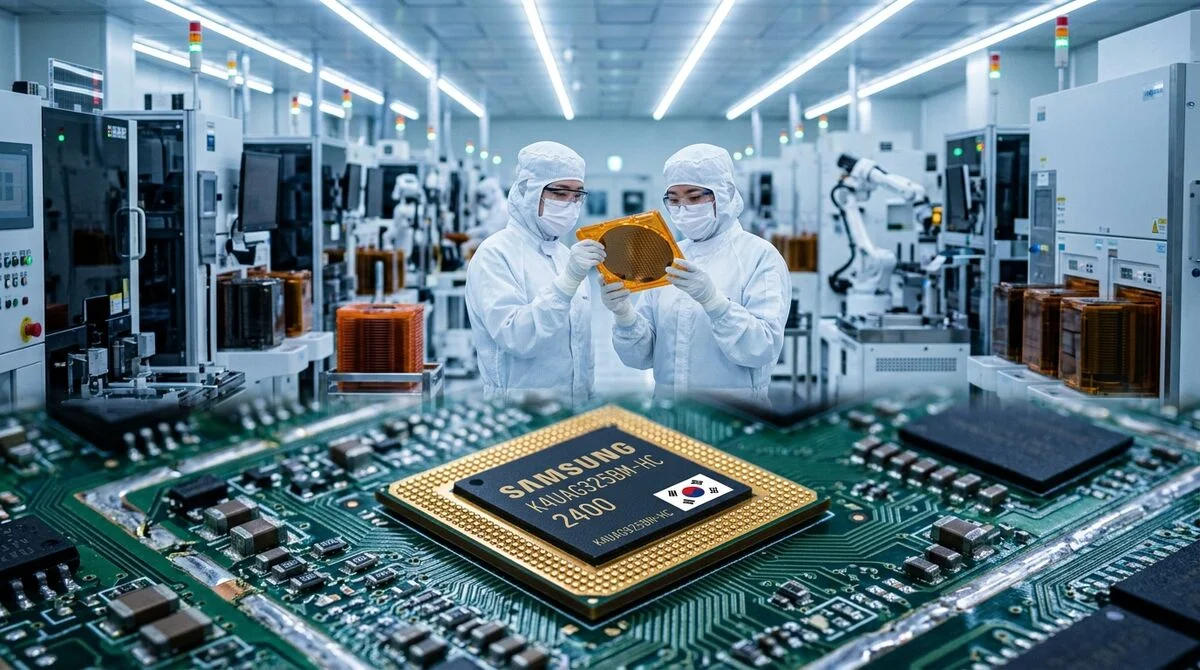
South Korea's central bank warned that an AI-boom in the semiconductor industry could unexpectedly complicate the fight against inflation: record bonuses at major tech companies risk pulling up wages across the economy and heating up consumer demand.
Where Record Bonuses Come From
South Korea is the world's largest producer of memory chips. Samsung Electronics and SK Hynix found themselves at the epicenter of the global AI race: data centers at Microsoft, Google, Amazon, and Meta are buying high-speed HBM memory faster than manufacturers can produce it. A supply shortage amid record demand naturally led to a sharp increase in margins and revenues. Part of these results are traditionally distributed through a bonus system — and in the last cycle, payouts in several divisions, according to industry sources, exceeded several months' salaries for employees. This involves tens of thousands of highly paid engineers and managers — people with high consumption levels and low propensity to save unexpected income.
Domino Effect on the Labor Market
The problem highlighted by the BOK is not the IT bonuses themselves, but their ripple effect on the broader labor market. Employers in other sectors — from manufacturing to retail and construction — face pressure from employees who see income growth among peers and reassess their own wage expectations. According to the central bank's assessment, the chain looks like this:
- Record bonuses in semiconductor companies raise the average income level in the economy
- Workers in other sectors reassess wage expectations upward
- Employers are forced to increase payroll funds to retain talent
- Growth in real household income spurs consumer spending
- Pressure on prices intensifies across a broad basket of goods and services
Economists call this mechanism a "wage-price spiral" — exactly what central banks seek to prevent after a period of high inflation.
The Regulator's Dilemma
The BOK found itself in a classic trap. The export boom in semiconductors is an obvious positive for GDP and the trade balance. But if domestic inflation starts to accelerate again due to labor market overheating, the bank will need to tighten monetary policy.
Rate increases in the current situation are painful: Korean households carry one of the highest debt burdens among developed economies — primarily in the form of mortgages with floating interest rates. Rising rates sharply increase monthly payments for millions of families and cool domestic demand just when the economy needs balance. This is why the BOK's warning is not just a technical comment in a financial report, but a signal of real tension within the regulator.
What This Means
The AI boom is increasingly moving beyond the tech sector and beginning to reshape the macroeconomic picture. Central banks — not only in Korea — will need to account for AI-driven incomes in their inflation models. This is a new class of risk that simply did not exist in standard economic scenarios just a few years ago.
*Meta is recognized as an extremist organization and banned in the Russian Federation.
Need AI working inside your business — not just in your newsfeed?
I build production AI for companies — custom CRM, internal tools, autonomous agents, workflow automation. Owned by you, shaped to your process, no per-seat tax. Built by Zhemal Khamidun, CPO of AlpinaGPT (AI platform, 6,000+ users).
The AI world, distilled — once a week
Seven stories that actually mattered, hand-picked. No noise, no reposts, no press releases.
Done! Check your inbox for a confirmation.