Mistral AI unveils industrial AI stack and Vibe agent at AI Now Summit
Mistral AI held its AI Now Summit and announced several major moves at once. The company is building an industrial AI stack with Airbus, BMW Group and ASML for simulation, design and manufacturing optimization. The Vibe agent has been updated: it now runs long-term, multistep tasks, works with email, calendar and code, and can take a job from the initial request to a finished pull request. Mistral also announced its own 10 MW data center in Les Ulis, scheduled to open in Q3 2026.
AI-processed from Mistral AI News; edited by Hamidun News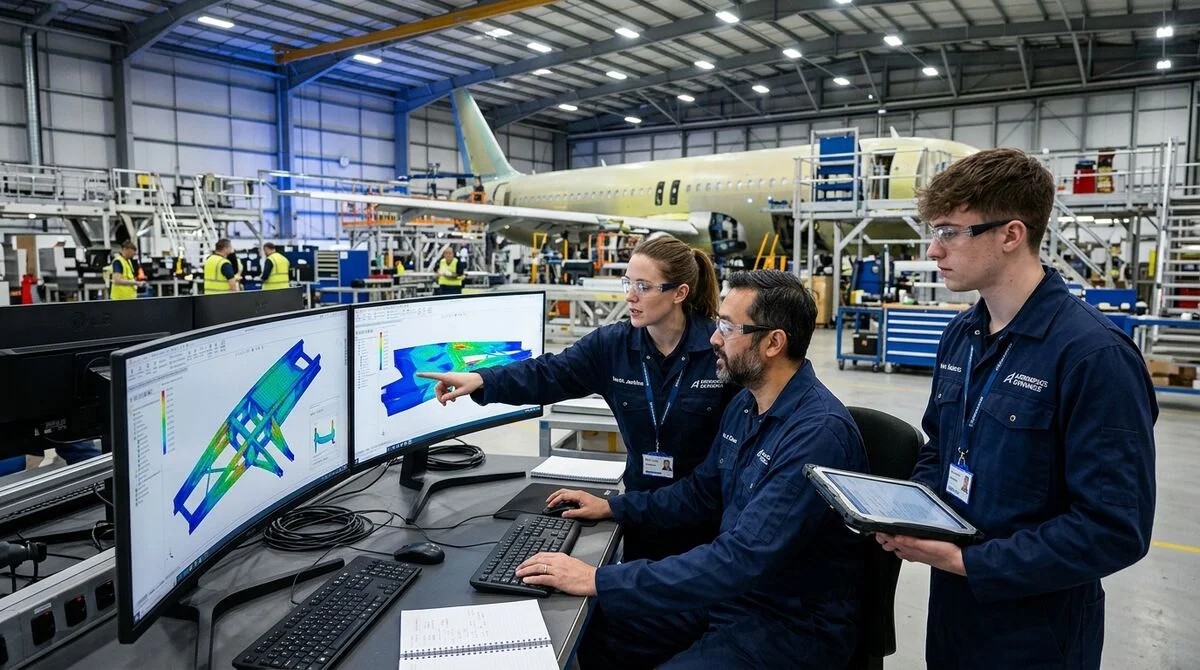
Mistral AI held its AI Now Summit, where it presented a major package of updates: an integrated AI stack for industrial engineering built with world-class partners, a substantially upgraded Vibe agent, and plans for its own data center in France.
Industrial AI: Airbus, BMW, ASML
Mistral has launched a solution for industrial engineering: an integrated stack of advanced physics models, engineering expertise and robotics. The goal is to help engineers speed up design, remove bottlenecks in simulations and optimize equipment performance, while customers keep full control over their proprietary data and intellectual property.
Three major partners from different sectors join at launch:
- Airbus: AI is being embedded in the company's operational processes at every level, from initial design to onboard capabilities. The partnership will cover commercial aircraft, helicopters, and defense and space programs over the next decade, with an emphasis on flight safety and full control over critical data.
- BMW Group: joint development of a "Large Industry Model" (LIM), multimodal reasoning models trained on engineering data for complex tasks, including crash simulations in vehicle development.
- ASML: optimization of high-performance components, surrogate models and control loops in semiconductor manufacturing, where precision requirements are extremely high.
On May 22, Mistral announced the acquisition of Emmi, a startup specializing in advanced scientific computing. The deal strengthens physical AI modeling in the company's stack, which is exactly what aerospace, automotive and semiconductor manufacturers need for real engineering problems.
Vibe: from assistant to autonomous agent
Vibe has moved beyond being a code-writing tool and become a full agent for long-running, multistep work. It now runs long work sessions on its own: it monitors incoming email and calendar events, conducts in-depth research, prepares documents and draft reports, and orchestrates recurring processes, without constant user intervention.
On the development side, Vibe carries a task from the first request to a finished pull request: it builds new features, fixes bugs, refactors the codebase and submits changes for review. It works through a web app, an editor and a terminal, letting users switch between interfaces without losing context.
The agent runs on Mistral's flagship models, optimized for reasoning, agentic scenarios, tool calling and coding.
Data center in Les Ulis
Mistral announced it will build its own 10 MW data center in Les Ulis (Essonne region, about 25 km south of Paris). The facility is intended for inference operations and is due to open in the third quarter of 2026. The strategic goal is to reduce dependence on third-party compute and gain direct control over infrastructure. As training and inference hardware converge technically, owning a facility gives the company more flexibility in managing workloads and gives customers a higher level of security and transparency.
"We are focused on helping organizations deploy AI where it matters
most: critical workflows, measurable results, and full control over data and operations," the company said in an official statement.
What this means
Mistral is positioning itself as a full-cycle enterprise AI company: not just language models, but industry-specific solutions, autonomous agent tools and its own infrastructure. The industrial sector (aerospace, automotive, semiconductor manufacturing) is becoming a priority market for the company. That puts it in direct competition with tech giants and specialized AI platforms, which are moving ever more actively into heavy industry.
- Oct 30, 2026Mistral opens Large 4 weights: strong at code, but Chinese models score 32 to its 26
- Oct 30, 2026Claude Enterprise Gets Smart Reports: Who Uses AI How, and What It Costs
- Oct 30, 2026SkyRL and vLLM Fine-Tune Mistral Large 4 with RL: AIME Score Rises from 64% to 75%
- Oct 29, 2026Mistral Releases Large 4 Weights: Open 1T-Parameter Model for Coding
Key Questions Answered
What are the key details on Industrial AI: Airbus, BMW, ASML?
Mistral has launched a solution for industrial engineering: an integrated stack of advanced physics models, engineering expertise and robotics. The goal is to help engineers speed up design, remove bottlenecks in simulations and optimize equipment performance, while customers keep full control over their proprietary data and intellectual property. Three major partners from different sectors join at launch: Airbus: AI is being embedded in the company's operational processes at every level, from initial design to onboard capabilities. The partnership will cover commercial air
What are the key details on Vibe: from assistant to autonomous agent?
Vibe has moved beyond being a code-writing tool and become a full agent for long-running, multistep work. It now runs long work sessions on its own: it monitors incoming email and calendar events, conducts in-depth research, prepares documents and draft reports, and orchestrates recurring processes, without constant user intervention. On the development side, Vibe carries a task from the first request to a finished pull request: it builds new features, fixes bugs, refactors the codebase and submits changes for review. It works through a web app, an editor and a terminal, le
What are the key details on Data center in Les Ulis?
Mistral announced it will build its own 10 MW data center in Les Ulis (Essonne region, about 25 km south of Paris). The facility is intended for inference operations and is due to open in the third quarter of 2026. The strategic goal is to reduce dependence on third-party compute and gain direct control over infrastructure. As training and inference hardware converge technically, owning a facility gives the company more flexibility in managing workloads and gives customers a higher level of security and transparency. "We are focused on helping organizations deploy AI where
Test Frontier LLMs & Autonomous Agents in One Workspace
Run Claude Opus 5.5, GPT-6, Gemini 3.1, and DeepSeek side-by-side in Nomad AI (nomadnet.ai) — unified model routing, deep research, and multimodal workflows under one subscription.
The AI world, distilled — once a week
Seven stories that actually mattered, hand-picked. No noise, no reposts, no press releases.
Done! Check your inbox for a confirmation.