G7 обсуждает схему «доверенных партнёров» для доступа к американским AI-моделям
На саммите G7 во французском Эвиане союзники США предложили схему «доверенных партнёров» — специальный статус, дающий доступ к передовым американским AI-моделям. Идею неформально представили министру торговли США Говарду Латнику прямо за ужином на открытии саммита. Схема могла бы стать альтернативой жёстким экспортным ограничениям для проверенных союзников.
AI-processed from TNW; edited by Hamidun News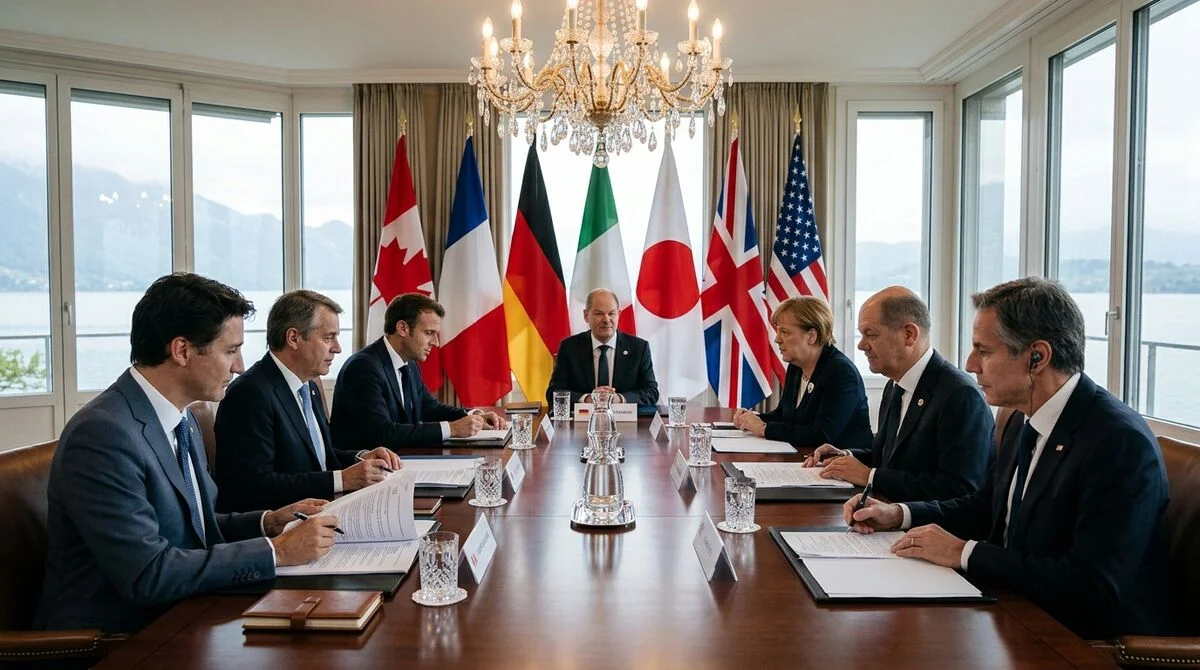
At the margins of the G7 summit in Evian-les-Bains, France, US allies have raised an idea that could change the rules for accessing American AI technologies: a "trusted partners" scheme for privileged access to top-tier models.
Conversation at the Summit's Margins
This is where the most important questions are decided—over dinner. At the opening of the G7 summit on Monday, at a mountain resort on the shores of Lake Geneva, representatives of several member countries approached Howard Lutnick, the US Secretary of Commerce. The idea they proposed is simple: "trusted partners."
It is a scheme under which allied states—G7 members and those close to them—would receive a special level of access to American AI models that are currently limited or blocked by export legislation. This is not just about chips: the restrictions also cover advanced language models and access to cloud AI infrastructure for government sectors. The initiative is still informal—without official communiques or signed documents.
This is typically how negotiations begin that eventually grow into international agreements.
Why Access to American AI Is a Problem for Allies
Since 2022–2023, the US has consistently tightened export controls on advanced AI chips and software systems. The official goal is to prevent technology transfer to China and other potentially hostile states. The logic is clear. But the side effect has been painful for Washington's closest partners. European, Japanese, Canadian, and Australian companies have faced restrictions that work against them:
- Procurement of advanced chips for government AI projects requires special licenses and lengthy approval processes
- Commercial access to some American AI platforms is restricted for strategic sectors
- Defense and intelligence programs within Western alliances are stalled due to bureaucratic barriers
- Allied companies lag behind American competitors in AI development speed, who face no such restrictions
- G7 national AI strategies are built around American models, but access to them is uneven
As a result, G7 partners find themselves in a paradoxical situation: they publicly support American technological policy against China, but themselves bear the costs of that same policy.
A Model Already Working in Defense
The concept of "trusted partners" is not new. In a defense context, it has been working for a long time: the AUKUS agreement gives Australia access to nuclear submarine technologies from the US and UK, the "Five Eyes" partnership regulates the exchange of intelligence data between five countries, NATO mechanisms determine who gets access to sensitive military systems. Now the G7 is trying to apply the same logic to AI.
The essence is the same: create a closed club of verified allies, within which export control norms are relaxed—while maintaining strict barriers for everyone else. The details are the most complex part. Who makes the list of "trusted" partners?
How is the end use of technologies verified—especially in defense or dual-use projects? Who bears responsibility for violations? These are precisely the questions that need to be negotiated with Washington.
What This Means
If the US supports the "trusted partners" scheme, the global AI market will gain a new structural line of division: one level for allies with special status and broad access to American technologies, another for everyone else. For European and Japanese companies, this could mean real acceleration of AI development. For the global market, it means another layer of geopolitical segmentation, where a country's place in the alliance determines access to cutting-edge technologies.
Need AI working inside your business — not just in your newsfeed?
I build production AI for companies — custom CRM, internal tools, autonomous agents, workflow automation. Owned by you, shaped to your process, no per-seat tax. Built by Zhemal Khamidun, CPO of AlpinaGPT (AI platform, 6,000+ users).
The AI world, distilled — once a week
Seven stories that actually mattered, hand-picked. No noise, no reposts, no press releases.
Done! Check your inbox for a confirmation.