Critical Energy raises $22M for geothermal turbines to power AI
Los Angeles-based Critical Energy has raised $22 million for modular geothermal turbines to power AI data centers. The problem is simple: the sun doesn't shine at night, the wind may not blow, and servers run around the clock. Geothermal energy from beneath the earth is always available. The bottleneck has shifted from drilling wells to the turbines themselves, and that is the cost the startup, founded by a SpaceX alumnus, is setting out to cut.
AI-processed from TNW; edited by Hamidun News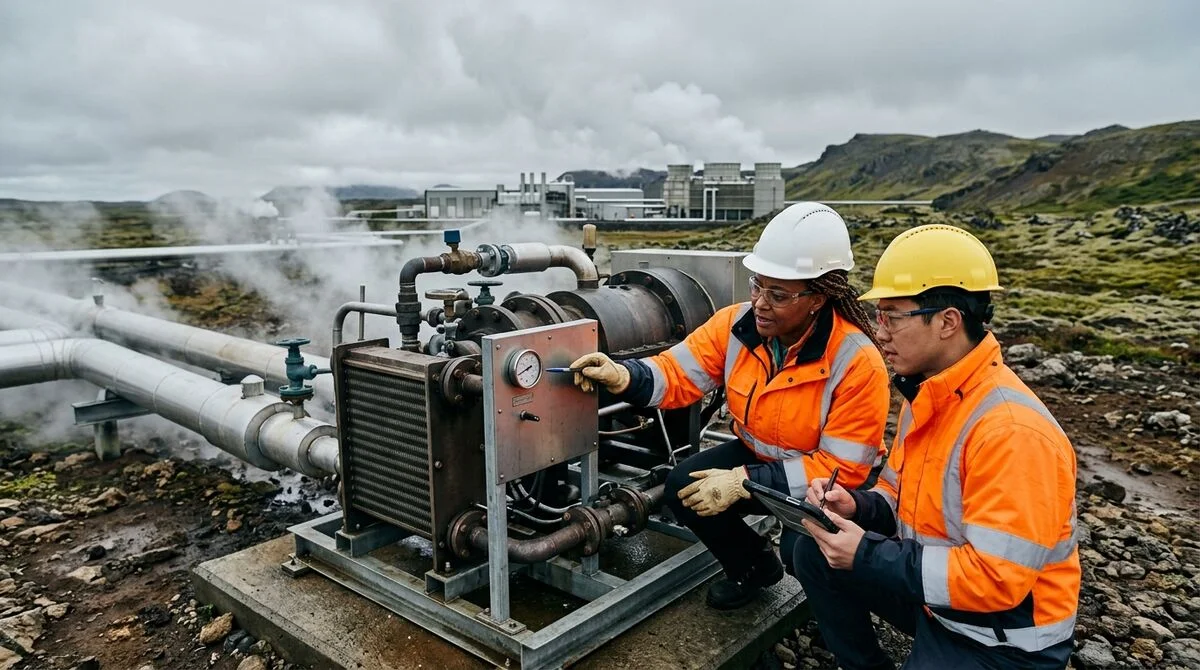
Los Angeles startup Critical Energy has raised $22 million to develop modular geothermal turbines, a technology that can give AI data centers what neither sun nor wind can: stable electricity at any time of day.
Why geothermal is relevant again
The AI boom has created unprecedented demand for electricity. Large data centers consume hundreds of megawatts, and unlike factories or offices they can't "wait" for the sun to come out or the wind to pick up: servers run nonstop, at three in the morning just as at noon.
Solar and wind are cheap but intermittent. Batteries help smooth out peaks, but they cannot replace baseload power through a week of clouds and calm. Geothermal energy removes this flaw at its root: heat from the earth's interior is available constantly, regardless of weather and time of day.
The technology is not new: geothermal power plants have operated for decades in Iceland, Kenya and California. The new question is how to make it cheaper and more scalable for the needs of AI.
Where development got stuck
Until recently, drilling was considered the main barrier: boring a well several kilometers deep cost tens of millions of dollars. But progress in drilling, largely thanks to oil and gas technologies and pioneering companies, has begun to bring these costs down.
The next bottleneck turned out to be the turbines themselves. Standard equipment was designed for large centralized plants: it is expensive, bulky and built for capacities from tens to hundreds of megawatts. A small, flexible geothermal source of 1–10 MW that could be installed next to a data center simply has no suitable equipment on the market. This is what Critical Energy is aiming to change:
- Smaller-scale modular turbines that can be installed quickly
- Parallel operation of several units to scale up capacity
- Flexible siting: next to the data center, not at the end of the earth
- Lower cost through serial production
- Compatibility with infrastructure for accelerated well drilling
The team and the money
The company was founded by an engineer who came from SpaceX. In the tech industry, alumni of that team are traditionally seen as able to handle extremely hard engineering problems under tight deadline pressure, and they attract serious investors.
The $22 million round will let Critical Energy move from prototypes to its first commercial pilots. The company has not yet disclosed details of the turbine design or its investors, but the amount raised is enough to build several demonstration units and run endurance testing.
The geothermal sector as a whole is going through a renaissance. Google signed an agreement with Fervo Energy for geothermal electricity for its data centers, and Microsoft is studying deep geothermal as part of its carbon neutrality program. This creates fertile ground for startups like Critical Energy: a buyer with money and clear requirements already exists.
What this means
Geothermal power is turning from a niche technology into a strategic asset for Big Tech. Whoever first learns to deploy small geothermal units quickly and cheaply next to data centers will gain a long-term advantage in a market where reliable electricity has become more expensive than computing chips.
- Nov 1, 202616 models tested on 7 search tools: Exa averaged 10.5 out of 14, SearXNG about 3
- Nov 1, 2026Google's StreamVibe video agent beats other models by 10.7% on response timing and quality
- Nov 1, 2026OpenAI Rewrites GPT Behavior Rules: Five Values and a Chain of Command
- Nov 1, 2026Voice bots built on LLMs turn to Jev, a fast classifier, for decisions in 200–500 ms
Key Questions Answered
Why geothermal is relevant again?
The AI boom has created unprecedented demand for electricity. Large data centers consume hundreds of megawatts, and unlike factories or offices they can't "wait" for the sun to come out or the wind to pick up: servers run nonstop, at three in the morning just as at noon. Solar and wind are cheap but intermittent. Batteries help smooth out peaks, but they cannot replace baseload power through a week of clouds and calm. Geothermal energy removes this flaw at its root: heat from the earth's interior is available constantly, regardless of weather and time of day. The technology
Where development got stuck?
Until recently, drilling was considered the main barrier: boring a well several kilometers deep cost tens of millions of dollars. But progress in drilling, largely thanks to oil and gas technologies and pioneering companies, has begun to bring these costs down. The next bottleneck turned out to be the turbines themselves. Standard equipment was designed for large centralized plants: it is expensive, bulky and built for capacities from tens to hundreds of megawatts. A small, flexible geothermal source of 1–10 MW that could be installed next to a data center simply has no sui
What are the key details on The team and the money?
The company was founded by an engineer who came from SpaceX. In the tech industry, alumni of that team are traditionally seen as able to handle extremely hard engineering problems under tight deadline pressure, and they attract serious investors. The $22 million round will let Critical Energy move from prototypes to its first commercial pilots. The company has not yet disclosed details of the turbine design or its investors, but the amount raised is enough to build several demonstration units and run endurance testing. The geothermal sector as a whole is going through a ren
Ship AI Faster with Founders, Engineers & Weekly Architecture Reviews
Inside Vibe Club (hamidun.com/club) — weekly live masterminds with Zhemal Khamidun, Tech Radar, full LMS access, and 370+ production Claude Code skills.
The AI world, distilled — once a week
Seven stories that actually mattered, hand-picked. No noise, no reposts, no press releases.
Done! Check your inbox for a confirmation.