Google ограничила Meta доступ к Gemini из-за нехватки вычислительных мощностей
Google ограничила Meta доступ к AI-моделям Gemini из-за нехватки вычислительных ресурсов — компания не смогла обеспечить запрошенные объёмы. Об этом сообщает…
AI-processed from Bloomberg Tech; edited by Hamidun News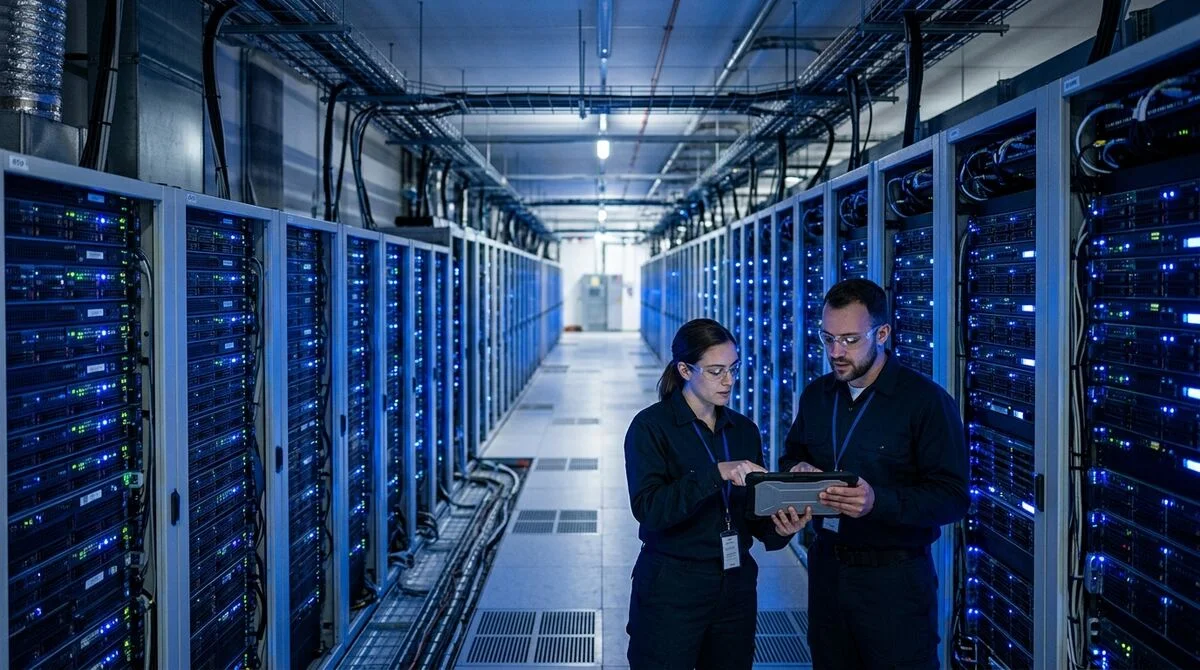
Google has limited Meta Platforms' access to its AI-models Gemini — the reason is a shortage of computing capacity that Google was unable to allocate in the requested volume. This is reported by the Financial Times citing its own sources.
What Happened
According to the Financial Times, Google has imposed strict limits on Meta's use of Gemini models. The restrictions are not related to commercial disputes or contract violations — the reason is purely technical: Google simply lacks computational infrastructure to meet Meta's requests in full. Details of specific limits are not disclosed. It is unknown what volume of capacity Meta requested and how significant the reduction turned out to be. Bloomberg, citing FT, only confirms the fact of the introduced restrictions.
The situation looks paradoxical: one of the world's largest AI providers is forced to cut off access to another technology giant — and not for strategic reasons, but due to a simple lack of resources. This is a clear illustration of how rapidly demand for computing capacity has grown over the past two years — and how far the production base has lagged behind this growth.
GPU Deficit as a Systemic Problem
What happened is a symptom of a structural crisis in the entire AI industry. Several key factors:
- Demand for GPUs for training and inference of AI models grows exponentially, outpacing the production capacity of chip factories
- Even the largest cloud providers face acute shortages of NVIDIA H100 and H200 accelerators
- Queues for server equipment deliveries from leading manufacturers stretch for many months
- Restrictions affect both small startups and corporate clients with multi-billion-dollar contracts
- Companies are increasingly competing not only for model quality, but for access to basic infrastructure
Notably, this is happening against the backdrop of record investments in AI infrastructure. Google, Microsoft, and Amazon have announced combined investments of hundreds of billions of dollars in building new data centers. However, the fruits of these investments have not yet materialized in actually available capacity — building and commissioning a large data center takes from two to four years.
Meta is developing its own AI chips MTIA (Meta Training and Inference Accelerator) and expanding manufacturing cooperation with TSMC. The company has also released the Llama series under a conditionally open license, which allows partners to deploy AI inference on their own equipment and reduce dependence on external providers. Google's restrictions only strengthen this internal course.
Google, Meta and Complex Interdependence
Google and Meta are simultaneously partners and competitors. Meta uses Google's cloud infrastructure for some of its computing tasks, but at the same time competes with it for the advertising market, AI services users, and the developer ecosystem. For Google, access to the Gemini API is a strategically important source of B2B revenue and a tool for positioning Gemini as a corporate standard. News that the company failed to provide the necessary volumes to one of its largest customers potentially damages its reputation as a reliable provider — especially against the backdrop of Microsoft Azure OpenAI Services and Amazon Bedrock's aggressive promotion, which are actively poaching corporate clients by betting on guaranteed scalability.
The situation also raises questions about the limits of Google's B2B AI strategy. If even Meta, with its negotiating power and scale, could not get the needed volumes, this is a signal to thousands of smaller clients across the market.
What This Means
Computing capacity shortage is turning into a strategic resource, no less significant than the quality of AI models themselves. Companies that manage to build their own infrastructure or secure priority access to new production capacity will gain long-term competitive advantages — regardless of the quality of their algorithms. The AI race is increasingly becoming a hardware race.
*Meta is recognized as an extremist organization and is banned in the Russian Federation.
Want to stop reading about AI and start using it?
AI News is a curated feed of AI/tech news. Hamidun Academy teaches you to use AI systematically in your work.
The AI world, distilled — once a week
Seven stories that actually mattered, hand-picked. No noise, no reposts, no press releases.
Done! Check your inbox for a confirmation.