India: AI will help UPI reach 1 billion transactions a day
India’s UPI payment system already processes 750 million transactions a day, and that is not the limit. Speaking at Mumbai Tech Week, NPCI chief Dilip Asbe said AI will power the next leap — to 1 billion transactions a day. Key areas include service personalization, real-time anti-fraud, and credit scoring based on payment history.
AI-processed from TNW; edited by Hamidun News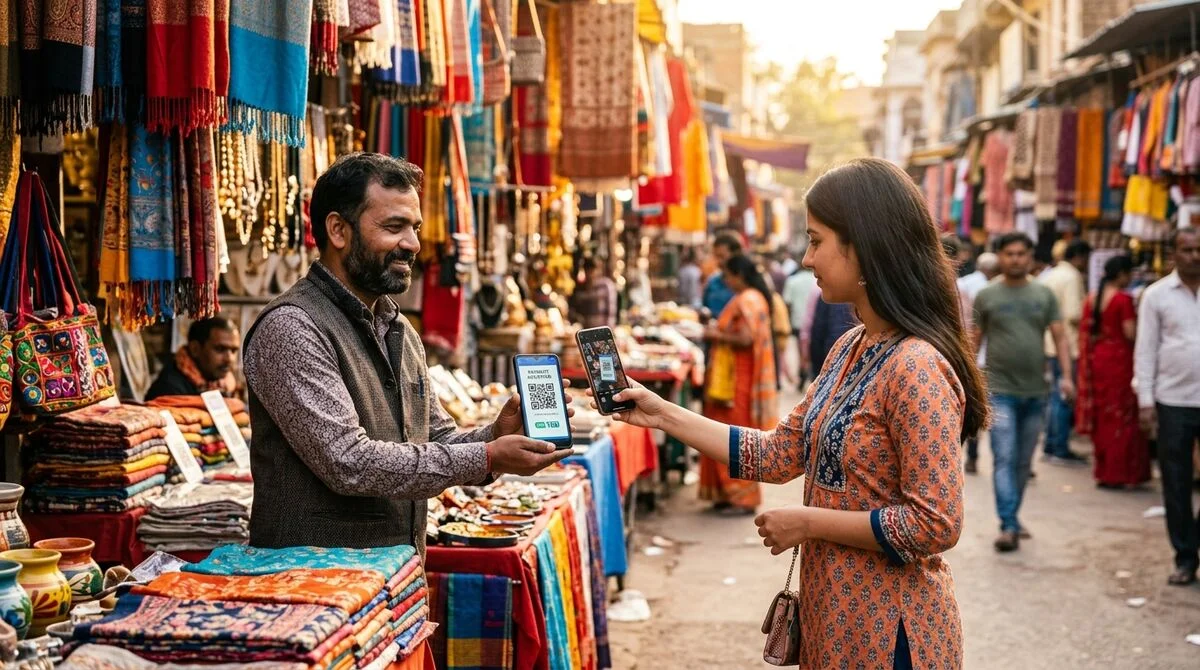
The UPI payment system (Unified Payment Interface) already processes over 750 million transactions per day — and this is not yet the limit. Dilip Asbe, head of India's National Payments Corporation (NPCI), announced at Mumbai Tech Week that artificial intelligence will become the main tool to reach the next milestone — one billion operations per day.
Scale That's Hard to Comprehend
UPI was launched in 2016 essentially from scratch. Over ten years, the system has evolved from an experimental project into one of the world's largest retail payment infrastructures. Today, it handles over 60% of all digital retail transactions in India — approximately 24 billion operations per month.
To put the scale in perspective: the combined daily transaction volume of Visa and Mastercard worldwide is around 600–700 million. India alone has exceeded this figure on its domestic market. The foundation of success is the open platform model.
NPCI developed the protocols and standards, and on top of them private companies — PhonePe, Google Pay, Paytm, and hundreds of others — build their own products. This architecture has enabled reaching hundreds of millions of users, including those who gained access to financial services through UPI for the first time in their lives, rather than through traditional banks.
What AI Should Change
At Mumbai Tech Week, Asbe described specific areas where AI will help accelerate growth and improve service:
- Personalization — adapting financial products for different user categories: students, self-employed, farmers, small business owners
- Fraud prevention — accurate detection of fraudulent transactions in real time without excessive blocking of legitimate payments
- Credit scoring — assessing creditworthiness based on UPI transaction history for those without traditional credit history
- Voice interfaces — expanding payment access for low-literacy users and rural residents in regional languages
- Predictive scaling — automatic management of infrastructure load during holidays and peak trading periods
The key intent of NPCI is to embed AI directly into the infrastructure layer of the platform, rather than placing this responsibility on individual applications. This way, all ecosystem participants will simultaneously gain access to smarter service without needing to invest in their own AI development.
International Expansion Will Add Volume
Alongside growing domestic traffic, India is actively promoting UPI in foreign markets. The system already operates in the UAE, Singapore, France, the United Kingdom, Nepal, and Sri Lanka. NPCI International, created specifically for international development, is negotiating with dozens more countries. Currently, international transactions represent a small share, but are growing rapidly along with the Indian diaspora and tourist flows. Analysts believe the international segment could become a meaningful contribution to overall volume long before AI tools reach full capacity.
What This Means
India has created a payment infrastructure that other countries are increasingly taking as a model — similar UPI-inspired systems are being developed in Brazil, Saudi Arabia, and several African nations. If NPCI manages to embed AI at the protocol level, not just in individual applications, it will change industry expectations across the board. One billion transactions per day — no longer a hypothetical goal, but a matter of timeframe.
Want to stop reading about AI and start using it?
AI News is a curated feed of AI/tech news. Hamidun Academy teaches you to use AI systematically in your work.
The AI world, distilled — once a week
Seven stories that actually mattered, hand-picked. No noise, no reposts, no press releases.
Done! Check your inbox for a confirmation.