Robotaxis hit the streets: how Waymo, Tesla, and Baidu are handling glitches
Robotaxis are no longer a “technology of the future” — they are already carrying people. Waymo logs 100,000+ rides a week in the U.S., while Baidu Apollo Go has completed 8 million commercial rides in China. Tesla promises Cybercab at $0.20 per mile in 2026. But heavy rain, fog, and regulators still keep the industry from operating at full scale.
AI-processed from Bloomberg Tech; edited by Hamidun News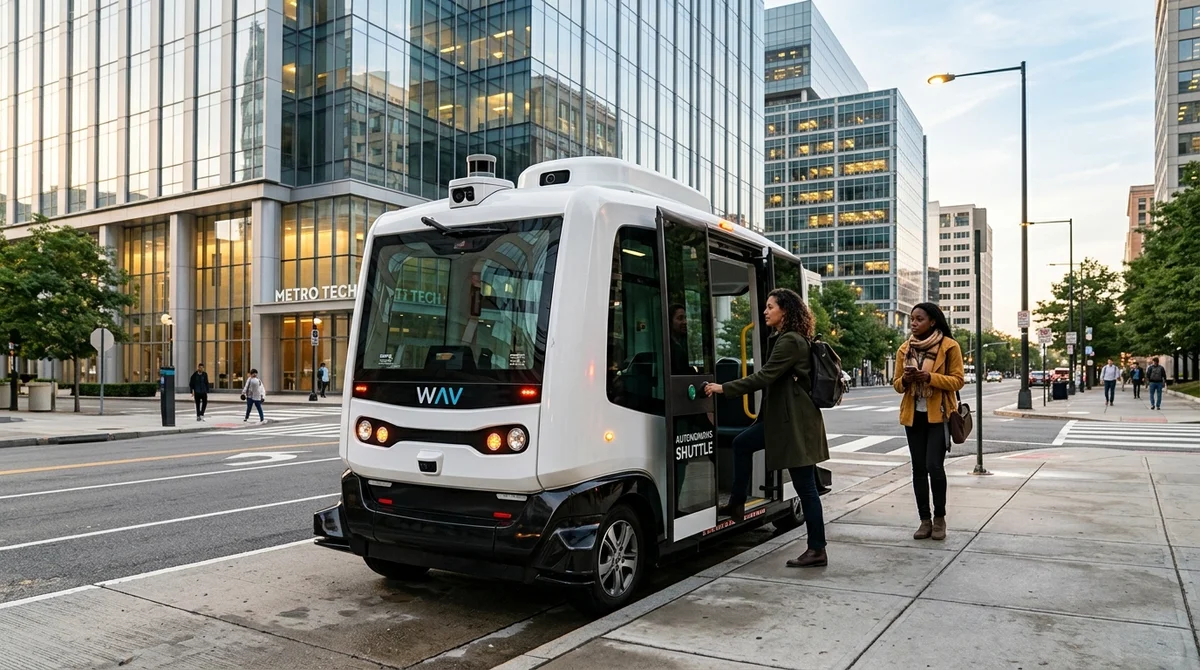
Robotaxis have stopped being an eternal "coming soon" — Waymo, Baidu, and other companies are already transporting real passengers through the streets of American and Chinese cities. The technology has finally reached the roads, albeit with caveats.
What's Already Working
Waymo is the undisputed leader in the US. The company completes over 100,000 rides per week in San Francisco, Phoenix, and Los Angeles without a driver behind the wheel. Users order a car through an app—and ride while Lidar sensors and roof-mounted cameras do the rest.
Baidu's Apollo Go operates on a similar model in China. In Wuhan alone, hundreds of vehicles transport passengers daily, with some rides already happening without an operator in the car. The service is gradually expanding to major cities—Shenzhen, Chongqing, Beijing.
The ecosystem is expanding through partnerships: Uber and Lyft have integrated their partners' robotaxis into their own apps, turning autonomous vehicles into an option within familiar services.
Key market figures:
- Waymo has driven over 50 million miles in autonomous mode
- Baidu Apollo Go—over 8 million commercial rides
- Tesla plans Cybercab—a two-seater electric vehicle without pedals—by the end of 2026
- Amazon Zoox is testing a bidirectional robotic van in San Francisco
Why There Are Still Failures
The industry still faces systemic problems. Autonomous vehicles struggle with non-standard situations: dense fog, heavy rain, torn-up roads, pedestrians crossing against the light. In such scenarios, the vehicle can freeze in the middle of an intersection and wait for instructions from a remote operator—which ruins the user experience and creates traffic jams.
Reputational setbacks have occurred. In late 2023, GM Cruise lost its license in California after one of its vehicles dragged a hit pedestrian several meters instead of stopping immediately. The incident set back industry trust for months.
Waymo appears more careful—the company publishes detailed safety statistics and expands coverage gradually.
The regulatory environment adds complexity. Some states require a separate license for each route, and in some cities, authorities insist on an operator being in the vehicle—which immediately eliminates the main savings from automation.
"The technology really works.
The question now is how to make it economically viable at scale," — Bloomberg source close to one of the operators.
Race of Business Models
Tesla is taking a fundamentally different path. Cybercab is a specialized electric vehicle without a steering wheel or pedals for two passengers. Elon Musk names a target price of $0.20 per mile—several times cheaper than today's Waymo. Skeptics doubt the timeline and the company's ability to simultaneously scale production and develop the autonomous driving software stack, but if Cybercab launches in announced volumes, the market dynamics will change.
Waymo has attracted several billion dollars from Alphabet, Toyota, and sovereign wealth funds and continues to invest in safety and coverage.
Baidu is betting on state partnerships and subsidized fares—a strategy to capture the market before it became profitable that has already worked in other Chinese industries.
Both companies expect that scale will gradually make the economics converge.
What This Means
Robotaxis have moved from the stage of "eternal prototype" to "works, but not everywhere." The next two to three years will show which players can turn technological leadership into a sustainable business—and which ones won't stumble over the next regulatory ban or high-profile incident.
Need AI working inside your business — not just in your newsfeed?
I build production AI for companies — custom CRM, internal tools, autonomous agents, workflow automation. Owned by you, shaped to your process, no per-seat tax. Built by Zhemal Khamidun, CPO of AlpinaGPT (AI platform, 6,000+ users).
The AI world, distilled — once a week
Seven stories that actually mattered, hand-picked. No noise, no reposts, no press releases.
Done! Check your inbox for a confirmation.