OpenAI limited the GPT-5.6 release at the government's request and called it an undesirable precedent
OpenAI limited the release of GPT-5.6 at the government's request, but it openly pushed back against the arrangement itself. The company said: "This kind of government access process should not become a long-term standard — it deprives users, developers, enterprises, and cyber defenders of the best tools." OpenAI complied voluntarily, but it considers systemic control over AI model releases an undesirable precedent.
AI-processed from TechCrunch; edited by Hamidun News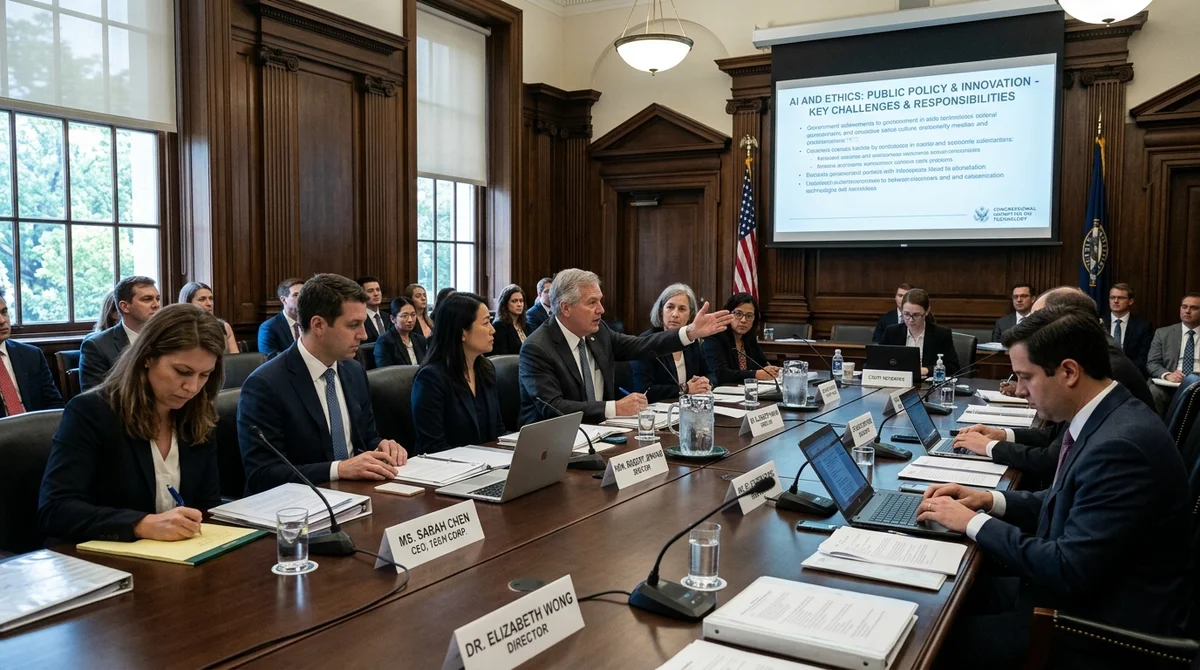
OpenAI temporarily limited the release of its new GPT-5.6 model after an official request from the US government. The company complied, but it publicly stated that this kind of government control should not become a permanent norm for the industry.
What happened with GPT-5.6
GPT-5.6 is the latest iteration of OpenAI's flagship model family. Its release was restricted: the model did not get full public distribution on standard terms. Some users, developers, and business partners could not access it in the usual way, or got access later than expected.
OpenAI did not specify which agency made the request or on what grounds. The company also did not disclose whether the restriction was temporary or amounted to a delay of the full launch. All that is known is that OpenAI complied voluntarily: it had no legal obligation to do so.
This is not the first time US authorities have influenced what tech companies do in AI. Until now, though, the pressure mostly targeted infrastructure, such as export restrictions on Nvidia chips and data center hardware. Now control is moving to the level of specific software products.
Why OpenAI is criticizing the arrangement itself
The company's response is telling: instead of staying quiet, OpenAI chose to openly criticize the mechanism itself, even after complying with it.
"We do not believe this kind of government access process should
become a long-term standard," the company said in a statement. "It deprives the users, developers, enterprises, cybersecurity professionals, and global partners who need them of the best tools."
According to OpenAI, restrictions on AI model releases create a chain of losses for several groups at once:
- End users, who wait longer for new capabilities
- Developers, who can't keep up building products on current models
- Enterprise customers, whose competitive positions weaken
- Cybersecurity professionals, who need the most advanced tools
- International partners, who risk falling behind the technology curve
A new front of pressure on the AI industry
The GPT-5.6 episode is part of a broader trend. Governments around the world are looking for leverage over frontier models: some want early access for safety testing, others want to slow down competitors or protect domestic players.
Notably, OpenAI didn't just comply with the request; it also made it public, which is unusual in itself. Most companies prefer not to disclose the details of their dealings with regulators. A public statement criticizing the mechanism signals that the company is deliberately taking an open stance in the debate over AI governance.
So far, regulatory measures have mostly targeted hardware infrastructure. A shift to controlling specific models is a qualitatively different situation. If companies are forced to clear every release with government agencies, it will slow the pace of innovation and create a new category of operational risk.
What it means
The GPT-5.6 incident is a political precedent, not a technical glitch. If governments start routinely intervening in frontier model launches, the competitive dynamics will shift: US companies will spend time on approvals while players in other jurisdictions operate without restrictions. By openly refusing to accept this as the norm, OpenAI is trying to stop the precedent before it takes hold.
Key Questions Answered
What happened with GPT-5.6?
GPT-5.6 is the latest iteration of OpenAI's flagship model family. Its release was restricted: the model did not get full public distribution on standard terms. Some users, developers, and business partners could not access it in the usual way, or got access later than expected. OpenAI did not specify which agency made the request or on what grounds. The company also did not disclose whether the restriction was temporary or amounted to a delay of the full launch. All that is known is that OpenAI complied voluntarily: it had no legal obligation to do so. This is not the firs
Why OpenAI is criticizing the arrangement itself?
The company's response is telling: instead of staying quiet, OpenAI chose to openly criticize the mechanism itself, even after complying with it. "We do not believe this kind of government access process should become a long-term standard," the company said in a statement. "It deprives the users, developers, enterprises, cybersecurity professionals, and global partners who need them of the best tools." According to OpenAI, restrictions on AI model releases create a chain of losses for several groups at once: End users, who wait longer for new capabilities Developers, who ca
What are the key details on A new front of pressure on the AI industry?
The GPT-5.6 episode is part of a broader trend. Governments around the world are looking for leverage over frontier models: some want early access for safety testing, others want to slow down competitors or protect domestic players. Notably, OpenAI didn't just comply with the request; it also made it public, which is unusual in itself. Most companies prefer not to disclose the details of their dealings with regulators. A public statement criticizing the mechanism signals that the company is deliberately taking an open stance in the debate over AI governance. So far, regulat
Test Frontier LLMs & Autonomous Agents in One Workspace
Run Claude Opus 5.5, GPT-6, Gemini 3.1, and DeepSeek side-by-side in Nomad AI (nomadnet.ai) — unified model routing, deep research, and multimodal workflows under one subscription.
The AI world, distilled — once a week
Seven stories that actually mattered, hand-picked. No noise, no reposts, no press releases.
Done! Check your inbox for a confirmation.