Intercall builds AI for simultaneous interpreters that supports them instead of replacing them
Intercall has released a real-time AI assistant built specifically for professional simultaneous interpreters. The principle is simple: human and machine work together, and the machine doesn't take the human's place. Interpreters who have already tried the tool say the same thing: someone finally built it around how the profession actually works.
AI-processed from TNW; edited by Hamidun News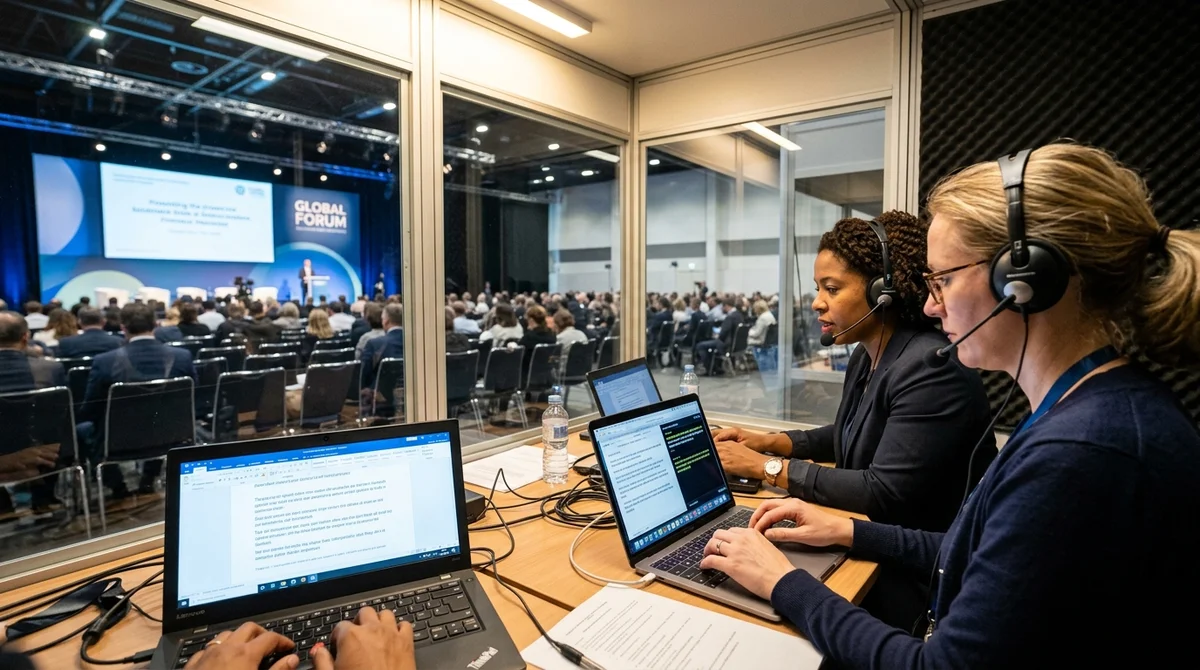
Simultaneous interpreting is one of the most demanding cognitive tasks a person performs in real time. Startup Intercall has built an AI assistant that helps professional simultaneous interpreters handle the load, and it doesn't try to take their place. Interpreters already using the tool are unanimous: finally, something built around how they actually work.
Why simultaneous interpreting is different
Simultaneous interpreting means multitasking at the limit of human ability. The interpreter listens to the speaker, holds the meaning in working memory, builds a grammatically correct sentence in another language, and speaks it aloud, all at once and with a lag of just a few seconds. The brain is literally operating on two linguistic tracks in parallel.
That is why international standards recommend rotating interpreters every 20–30 minutes: past that point without a break, quality inevitably drops. This isn't a weakness of any individual interpreter; it's physiology. Working memory has limited neural resources, and they drain quickly under this kind of load.
Mistakes are costly. At UN conferences, international court proceedings, and state-level negotiations, a single mistranslated word can distort the entire meaning or trigger a diplomatic incident. So any tool that enters an interpreter's workflow has to meet professional standards.
What Intercall does differently
Intercall built the product together with working professional interpreters, not in isolation from them. That sets it apart from most attempts to automate translation, which are typically designed to replace the human specialist. Intercall set the opposite goal: reduce cognitive load without changing the workflow itself.
The system runs alongside the interpreter in real time. It doesn't dictate a finished text; it offers prompts for terms, proper names, numbers, and abbreviations. These are exactly the elements that eat up the most mental resources in fast-moving speech.
- The tool fits into the existing workflow without replacing equipment
- The system adds no noticeable latency, a critical requirement for simultaneous interpreting
- The interpreter keeps full control and decides whether to accept or reject each prompt
- The product was developed with input from working professionals, not by going around them
- Less load on working memory means fewer errors and less fatigue
Machines won't replace simultaneous interpreters
Fully automating simultaneous interpreting is a problem AI hasn't fully solved yet. Machine translation handles written text, but live speech, with accents, slips of the tongue, pauses, cultural references, and nonstandard grammar, is a fundamentally different story.
A professional interpreter brings an understanding of context, tone, and the speaker's intent. They notice when a speaker pauses deliberately for effect or stumbles out of nervousness, and they adapt the interpretation accordingly. No neural network today reproduces these nuances reliably.
That makes the "AI alongside, not instead" approach not only ethically sound but technically honest. Promising to fully replace simultaneous interpreters today means promising something that doesn't exist yet.
What it means
Intercall shows a viable model of AI support for professions where any hint of "automation" has traditionally met resistance. The unanimously positive reaction from interpreters, the people who understand better than anyone what gets lost in machine translation, speaks for itself. If the tool really does reduce fatigue and errors, the next question for the market is how quickly it becomes standard equipment for international conferences, legal hearings, and corporate negotiations.
Key Questions Answered
Why simultaneous interpreting is different?
Simultaneous interpreting means multitasking at the limit of human ability. The interpreter listens to the speaker, holds the meaning in working memory, builds a grammatically correct sentence in another language, and speaks it aloud, all at once and with a lag of just a few seconds. The brain is literally operating on two linguistic tracks in parallel. That is why international standards recommend rotating interpreters every 20–30 minutes: past that point without a break, quality inevitably drops. This isn't a weakness of any individual interpreter; it's physiology. Workin
What Intercall does differently?
Intercall built the product together with working professional interpreters, not in isolation from them. That sets it apart from most attempts to automate translation, which are typically designed to replace the human specialist. Intercall set the opposite goal: reduce cognitive load without changing the workflow itself. The system runs alongside the interpreter in real time. It doesn't dictate a finished text; it offers prompts for terms, proper names, numbers, and abbreviations. These are exactly the elements that eat up the most mental resources in fast-moving speech. Th
What are the key details on Machines won't replace simultaneous interpreters?
Fully automating simultaneous interpreting is a problem AI hasn't fully solved yet. Machine translation handles written text, but live speech, with accents, slips of the tongue, pauses, cultural references, and nonstandard grammar, is a fundamentally different story. A professional interpreter brings an understanding of context, tone, and the speaker's intent. They notice when a speaker pauses deliberately for effect or stumbles out of nervousness, and they adapt the interpretation accordingly. No neural network today reproduces these nuances reliably. That makes the "AI al
Ship AI Faster with Founders, Engineers & Weekly Architecture Reviews
Inside Vibe Club (hamidun.com/club) — weekly live masterminds with Zhemal Khamidun, Tech Radar, full LMS access, and 370+ production Claude Code skills.
The AI world, distilled — once a week
Seven stories that actually mattered, hand-picked. No noise, no reposts, no press releases.
Done! Check your inbox for a confirmation.