Bank of England Declares War on Deepfake Scams After Fake Farage Video
The Bank of England has warned of a new wave of deepfake fraud. Governor Andrew Bailey found an AI-generated video showing him brawling with politician Nigel Farage in the Question Time studio. The fake clip spread widely on X. The Bank urged the public to check social media content more carefully and to report fake material about financial regulators.
AI-processed from Guardian; edited by Hamidun News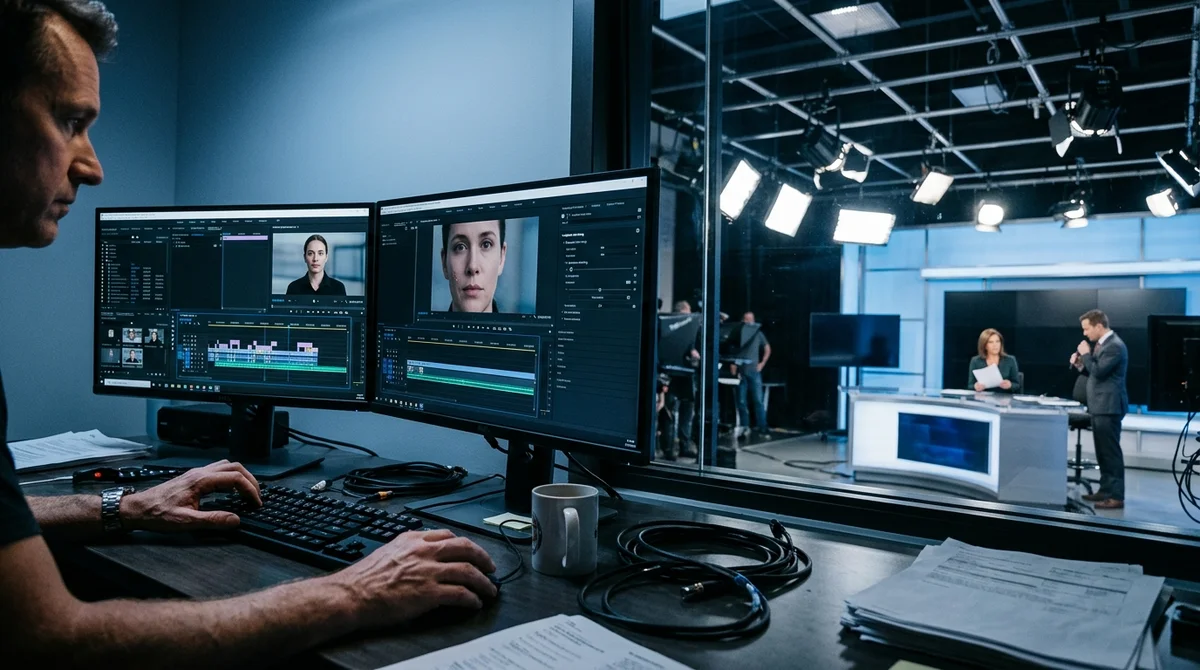
The Bank of England has issued a sharp warning about a global-scale threat after a fake video appeared showing the regulator's head, Andrew Bailey, in a physical altercation with politician Nigel Farage on the set of Question Time.
The fake video incident
A deepfake clip supposedly showing Bailey and Farage fighting in the BBC Question Time studio spread on X (formerly Twitter) at striking speed, quickly piling up views and reposts. It was made with modern AI tools and looked convincing enough to mislead ordinary users. Many people watched it without trying to check the source, believed it was real and began sharing it on their own profiles.
Andrew Bailey, Governor of the Bank of England, personally appealed to X users, urging them to report such fakes to the relevant authorities and to the Bank of England itself. Having to publicly deny a fake video is a rare and baffling event for the head of a financial regulator. It points to a new and dangerous reality: even the most authoritative figures, including central bank governors, can now fall victim to deepfake fraud and information attacks.
A global threat to the financial sector
The Bailey–Farage incident pointed to a broader and more worrying problem: AI content imitating senior officials of financial regulators is becoming a tool of organized fraud worldwide. In his comments, Andrew Bailey noted that fake content purporting to come from central banks and financial regulators is already being actively used by international criminal networks in targeted campaigns.
According to the Bank of England's head, modern AI has reached a dangerous level of development that lets scammers produce fully convincing videos in which officials supposedly explain the benefits of a new financial scheme, announce supposedly new rules or directly ask citizens to transfer money to supposedly official accounts. Such material is especially dangerous for elderly people and less educated groups, who are less familiar with video synthesis and more likely to trust video content.
Criminals use deepfake videos for a range of purposes:
- Persuading people to send money to fake accounts under the guise of regulatory payments, fines or mandatory fees
- Creating panic in financial markets through fake statements by officials about critical events
- Undermining trust in official communications from central banks and financial regulators
- Extracting personal data, passwords and confidential account information through social engineering
- Running targeted phishing campaigns against specific population groups and businesses
How to protect yourself
The Bank of England and other financial regulators worldwide recommend maximum caution and healthy skepticism when watching video content supposedly from officials and regulators. If a video looks unusual, shows odd mismatches between facial movement and audio, inconsistent lighting or unnatural scene transitions, that is reason enough to doubt it is genuine.
People should also always verify important information about financial decisions directly on regulators' official websites, through their secure channels, rather than relying on information from video content. Never treat social media content as a reliable source on money, investments or official central bank decisions.
What this means
Deepfake fraud is rapidly moving from a rare, exotic phenomenon to a systemic threat to the global financial system as a whole. For the financial sector, it means video can no longer be considered sufficient, reliable proof of identity or of an official's authority. For the public, it is a clear signal to treat any internet content supposedly from officials and state financial regulators with critical, analytical scrutiny.
- Nov 1, 2026Pika Labs releases open video model H3 Flex: 6 steps instead of 50
- Nov 1, 2026Google's StreamVibe video agent beats other models by 10.7% on response timing and quality
- Oct 31, 2026AI cartoon series: a 24-second episode built ten ways, the best cost 162 credits
- Oct 31, 2026Anthropic: Fold Subagents Back Into a Single Loop — One Customer's Tasks Ran Twice as Fast
Key Questions Answered
What are the key details on The fake video incident?
A deepfake clip supposedly showing Bailey and Farage fighting in the BBC Question Time studio spread on X (formerly Twitter) at striking speed, quickly piling up views and reposts. It was made with modern AI tools and looked convincing enough to mislead ordinary users. Many people watched it without trying to check the source, believed it was real and began sharing it on their own profiles. Andrew Bailey, Governor of the Bank of England, personally appealed to X users, urging them to report such fakes to the relevant authorities and to the Bank of England itself. Having to
What are the key details on A global threat to the financial sector?
The Bailey–Farage incident pointed to a broader and more worrying problem: AI content imitating senior officials of financial regulators is becoming a tool of organized fraud worldwide. In his comments, Andrew Bailey noted that fake content purporting to come from central banks and financial regulators is already being actively used by international criminal networks in targeted campaigns. According to the Bank of England's head, modern AI has reached a dangerous level of development that lets scammers produce fully convincing videos in which officials supposedly explain th
How to protect yourself?
The Bank of England and other financial regulators worldwide recommend maximum caution and healthy skepticism when watching video content supposedly from officials and regulators. If a video looks unusual, shows odd mismatches between facial movement and audio, inconsistent lighting or unnatural scene transitions, that is reason enough to doubt it is genuine. People should also always verify important information about financial decisions directly on regulators' official websites, through their secure channels, rather than relying on information from video content. Never tr
Test Frontier LLMs & Autonomous Agents in One Workspace
Run Claude Opus 5.5, GPT-6, Gemini 3.1, and DeepSeek side-by-side in Nomad AI (nomadnet.ai) — unified model routing, deep research, and multimodal workflows under one subscription.
The AI world, distilled — once a week
Seven stories that actually mattered, hand-picked. No noise, no reposts, no press releases.
Done! Check your inbox for a confirmation.