AI Data Centers Demand Water and Power: The Environmental Bill for the Revolution
A Guardian column criticizes the environmental cost of data centers built for AI. Huge server complexes need excess electricity and water, drain local resources, pollute the air and speed up the climate crisis. The author asks, with irony, whether the neural-network revolution is worth such sacrifices. The column argues that the cost of innovation is barely discussed, even though communities near data centers bear it.
AI-processed from Guardian; edited by Hamidun News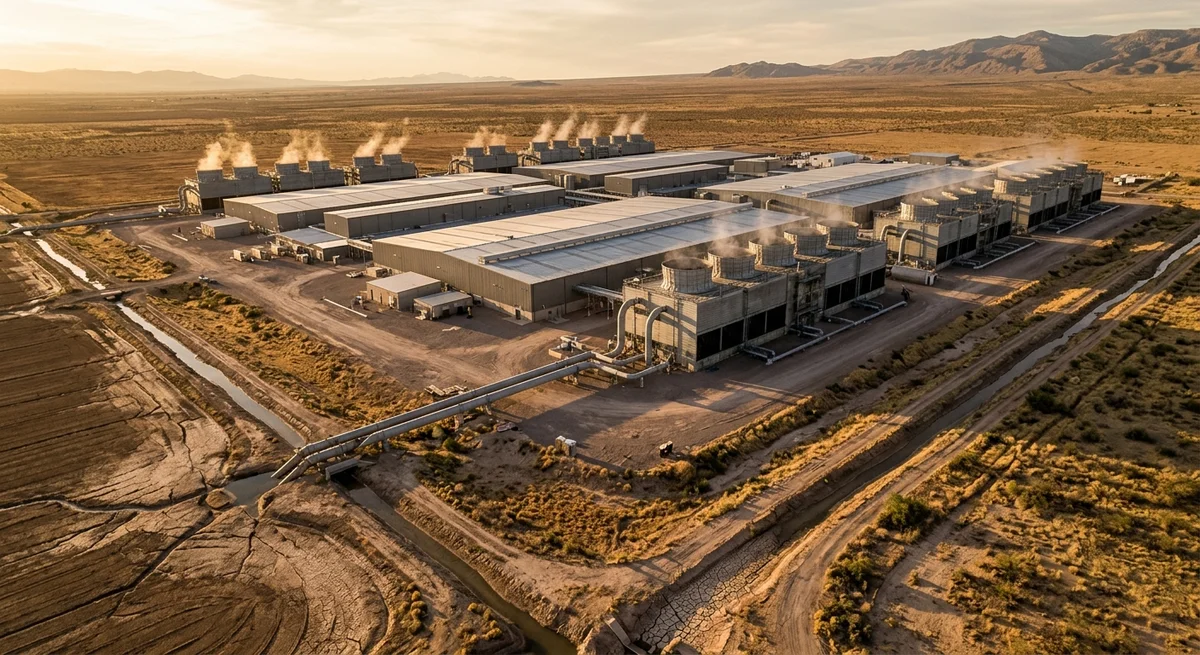
The environmental movement is not exactly greeting AI with gratitude. The giant data centers that power modern neural networks consume as much electricity as entire cities, drain local water resources and leave a carbon footprint that accelerates climate change.
The shadow of the big server
A single large data center can draw 100–300 megawatts of electricity continuously, roughly what the population of a small town requires. But the main problem is cooling. The hardware generates enormous amounts of heat that has to be removed, and that takes millions of liters of water a day. Some data centers in the southern United States consume as much water as entire agricultural districts.
Ecology under the load
Local communities near data centers suffer most. Water consumption depletes groundwater sources, which is especially critical in arid regions where water is already scarce. Heat emissions raise the ambient temperature. If a data center runs on fossil-fuel electricity, a significant volume of CO₂ emissions is added. The result: air pollution and faster global warming.
Growing problems:
- Water consumption — millions of gallons a day to cool equipment
- Energy hunger — what's needed is not just electricity but green electricity, and there isn't enough of it
- Carbon emissions — the carbon footprint of each query is more serious than users imagine
- Local pollution — generator exhaust and heat emissions pollute the air
- Resource conflicts — in arid regions, water consumption competes with the needs of agriculture
The price of the revolution
The critics ask whether the price is justified. In exchange for the environmental damage, we get the ability to ask AI to draw a funny dancing cabbage, write a poem or solve a real problem. But the point is not that AI is bad. The point is that the environmental cost of innovation is hardly discussed, and it is borne by the communities next to data centers.
What this means
AI's environmental cost rarely makes the covers of tech publications. When everyone talks about the risks and opportunities of neural networks, few remember that every query requires computing power that has to be run and cooled somewhere physical. And that 'somewhere' is real places with real people and a real ecosystem. The question is whether we are ready to pay this price, and who exactly pays the most.
Key Questions Answered
What are the key details on The shadow of the big server?
A single large data center can draw 100–300 megawatts of electricity continuously, roughly what the population of a small town requires. But the main problem is cooling. The hardware generates enormous amounts of heat that has to be removed, and that takes millions of liters of water a day. Some data centers in the southern United States consume as much water as entire agricultural districts.
What are the key details on Ecology under the load?
Local communities near data centers suffer most. Water consumption depletes groundwater sources, which is especially critical in arid regions where water is already scarce. Heat emissions raise the ambient temperature. If a data center runs on fossil-fuel electricity, a significant volume of CO₂ emissions is added. The result: air pollution and faster global warming. Growing problems: Water consumption — millions of gallons a day to cool equipment Energy hunger — what's needed is not just electricity but green electricity, and there isn't enough of it Carbon emissions — the
What are the key details on The price of the revolution?
The critics ask whether the price is justified. In exchange for the environmental damage, we get the ability to ask AI to draw a funny dancing cabbage, write a poem or solve a real problem. But the point is not that AI is bad. The point is that the environmental cost of innovation is hardly discussed, and it is borne by the communities next to data centers.
Test Frontier LLMs & Autonomous Agents in One Workspace
Run Claude Opus 5.5, GPT-6, Gemini 3.1, and DeepSeek side-by-side in Nomad AI (nomadnet.ai) — unified model routing, deep research, and multimodal workflows under one subscription.
The AI world, distilled — once a week
Seven stories that actually mattered, hand-picked. No noise, no reposts, no press releases.
Done! Check your inbox for a confirmation.