Gopuff and xAI launch Go, a Grok-powered personal shopper that delivers in minutes
Gopuff has launched an integration with Grok AI models from Elon Musk's company. The Go assistant understands a user's text, voice and images, quickly finds products and arranges delivery within minutes. The system learns from the user's preferences and shopping habits.
AI-processed from @xAI; edited by Hamidun News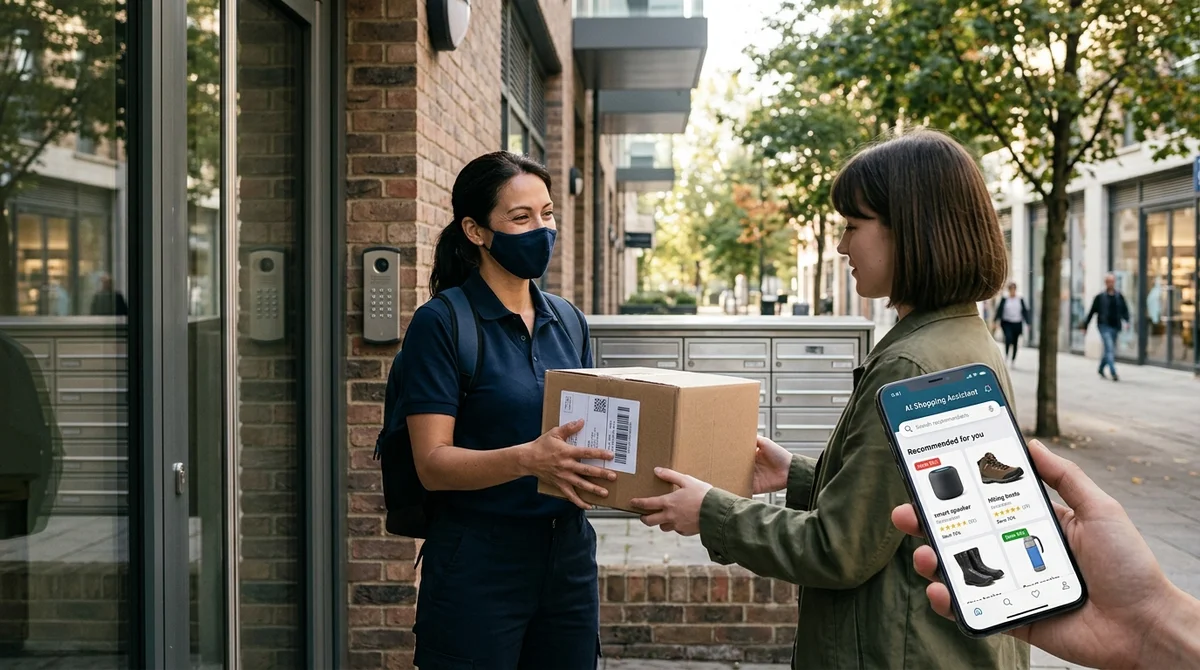
Gopuff and xAI have announced the launch of Go, a next-generation AI assistant that will buy products and arrange their delivery in a matter of minutes. The assistant runs on an integration with xAI's Grok models, including text, voice and vision models, so it can understand users in several ways.
How Go buys products
The assistant works as a personal shopper available 24/7. A user can type a message, send a voice note or show a photo of the item they want, and Go will work out what to buy.
The system learns from the user's preferences: habits, favorite brands, diet and lifestyle. Over time, the assistant begins to give personalized recommendations, like an experienced store clerk who already knows what you like.
Once the product is found, Go places the order automatically and starts the delivery process. The user sees the status in real time. The whole process, from request to delivery, takes minutes because Gopuff specializes in ultra-fast delivery in large US cities.
- Understands text, voice and images
- Learns preferences and recommends products
- Places the order fully automatically
- Starts delivery within minutes
Why Grok
The integration with Grok models is not just PR. The voice model is critical for people who don't want to type when they're busy. The vision model lets users show a photo, for example from a recipe, a catalog or a social network, and get a ready order based on that image.
This approach opens the service to an audience that avoids complex mobile apps. Instead of seven clicks through a menu, you simply say or show what you need. It is a current trend in AI products: as much natural interaction as possible, as little interface as possible.
"This turns natural communication into action"
A new wave in e-commerce
Fast grocery delivery (15-30 minutes) has been the main trend in retail for the past two years. Competitors such as Wonder, Getir and Instacart are also adding AI to their platforms, but Gopuff chose to fully integrate a ready-made, powerful model. This may become a deciding factor in a crowded, competitive quick-delivery market.
For Gopuff's retail partners it is also a new opportunity: products are now searched for and ordered by AI, which gives them a sales channel that was previously impossible.
What this means
Go shows how powerful AI models are being built into real business processes. It is not concept art or a lab project but a live service that makes money. For xAI, putting Grok into Gopuff is proof that its models are needed not only on social networks but also in transactional services.
- Nov 1, 202616 models tested on 7 search tools: Exa averaged 10.5 out of 14, SearXNG about 3
- Nov 1, 2026OpenAI Rewrites GPT Behavior Rules: Five Values and a Chain of Command
- Oct 29, 2026Gemini 4 Carbon tops independent rankings, but only cyber defenders can use it
- Oct 29, 2026Study: A Single Random Failure Makes AI Agents Abandon a Working Tool 11.6% of the Time
Key Questions Answered
How Go buys products?
The assistant works as a personal shopper available 24/7. A user can type a message, send a voice note or show a photo of the item they want, and Go will work out what to buy. The system learns from the user's preferences: habits, favorite brands, diet and lifestyle. Over time, the assistant begins to give personalized recommendations, like an experienced store clerk who already knows what you like. Once the product is found, Go places the order automatically and starts the delivery process. The user sees the status in real time. The whole process, from request to delivery,
Why Grok?
The integration with Grok models is not just PR. The voice model is critical for people who don't want to type when they're busy. The vision model lets users show a photo, for example from a recipe, a catalog or a social network, and get a ready order based on that image. This approach opens the service to an audience that avoids complex mobile apps. Instead of seven clicks through a menu, you simply say or show what you need. It is a current trend in AI products: as much natural interaction as possible, as little interface as possible. "This turns natural communication int
What are the key details on A new wave in e-commerce?
Fast grocery delivery (15-30 minutes) has been the main trend in retail for the past two years. Competitors such as Wonder, Getir and Instacart are also adding AI to their platforms, but Gopuff chose to fully integrate a ready-made, powerful model. This may become a deciding factor in a crowded, competitive quick-delivery market. For Gopuff's retail partners it is also a new opportunity: products are now searched for and ordered by AI, which gives them a sales channel that was previously impossible.
Test Frontier LLMs & Autonomous Agents in One Workspace
Run Claude Opus 5.5, GPT-6, Gemini 3.1, and DeepSeek side-by-side in Nomad AI (nomadnet.ai) — unified model routing, deep research, and multimodal workflows under one subscription.
The AI world, distilled — once a week
Seven stories that actually mattered, hand-picked. No noise, no reposts, no press releases.
Done! Check your inbox for a confirmation.