Warner Music Acquired Sureel AI — Startup for Tracking Songs in AI
Warner Music Group has acquired Sureel AI, a startup specializing in tracking the use of music in AI-generated content and for neural network training. The platform enables copyright holders to control where their compositions are used and receive fair compensation. This is an important step in protecting musicians' rights in the era of generative AI, when models are trained on millions of songs without authors' permission.
AI-processed from TechCrunch; edited by Hamidun News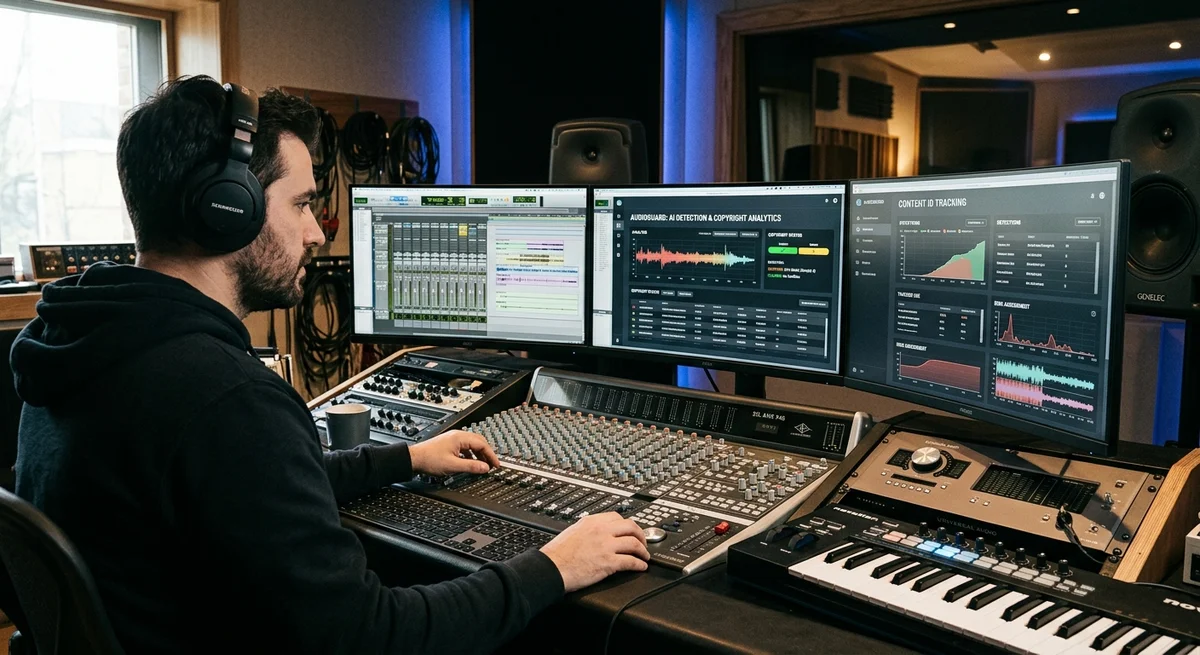
Warner Music Group has acquired Sureel AI startup, which specializes in tracking the use of music in AI-generated content and for training neural networks. This is a strategic step to protect copyright in the era of generative artificial intelligence.
What Sureel AI Does
Sureel AI has developed technology to track when and where artists' music is used in AI content or serves as training data for models. The platform scans the internet, AI services, streaming platforms, and databases, identifying compositions and automatically notifying copyright holders about usage. The system operates based on audio identification and can recognize songs even in processed or synthesized form — for example, when AI translates a song into a different style or changes its pitch.
This allows musicians and labels to track unauthorized use, document violations, and demand compensation. The technology is especially relevant in the context of training large language models and generative AI systems, which are trained on billions of songs from open sources, YouTube, streaming services — often without the consent of authors and without paying royalties.
The Scale of the Problem
The music industry has been struggling for years with the fact that its catalog is used for AI training without the consent of authors and copyright holders. Major services like Spotify, YouTube, Apple Music, and other platforms store billions of songs — an ideal dataset for next-generation neural networks. The problem is massive: tens of millions of compositions end up in training datasets without notifying the author or signing a license agreement. Copyright holders don't know their work is being used and don't receive compensation. This creates legal uncertainty and harms the interests of all participants in the music business — from indie artists to major labels.
- Tens of millions of songs are used in AI projects without a license
- Authors do not receive notifications about the use of their works
- There is no mechanism for fair compensation
- Musicians and labels lose control over their intellectual property
- Global conflicts arise between AI companies and copyright holders
Warner Music's Strategy
Warner Music Group is one of the three largest music labels in the world, controlling catalogs of legendary artists like The Rolling Stones, Coldplay, Dua Lipa, and many others. The company actively fights for its interests by litigating against platforms like YouTube, TikTok, and Spotify over licensing fees. The acquisition of Sureel AI fits logically into this defensive strategy. With the help of this technology, WMG will be able to document cases of illegal use and strengthen its position in negotiations with AI companies. The label will get a tool for real-time monitoring of its artists' compositions and quick response to violations. This will allow demanding fair compensation from AI model developers and protecting the rights of its artists.
What This Means
The fight for copyright in the AI era is entering a new phase. Warner Music has recognized that traditional monitoring tools are ineffective, so it's investing in advanced tracking technologies — a typical trend for large media corporations. Sony and Universal will likely follow Warner Music with similar acquisitions. This means that major labels will more actively demand compensation from AI services and push for stricter licensing terms. For independent musicians, this raises hope that their rights will finally be protected at the level of major corporations. For AI companies, this is a signal that they must obtain explicit consent before using protected content and prepare for prolonged legal battles.
Need AI working inside your business — not just in your newsfeed?
I build production AI for companies — custom CRM, internal tools, autonomous agents, workflow automation. Owned by you, shaped to your process, no per-seat tax. Built by Zhemal Khamidun, CPO of AlpinaGPT (AI platform, 6,000+ users).
The AI world, distilled — once a week
Seven stories that actually mattered, hand-picked. No noise, no reposts, no press releases.
Done! Check your inbox for a confirmation.