Datadog Veterans' Niteshift Takes On Big Tech Lock-In With an AI Coding Platform
Datadog veterans have launched Niteshift with a $7 million seed round. The startup is building a platform that works with any AI model, with no tie to OpenAI or Anthropic. The pitch: companies need freedom of choice, not lock-in. The founders bet that large enterprises are tired of depending on Big AI. They want to choose between model providers, and they are ready to pay for that. Niteshift sits as an abstraction layer between a developer's code and the model provider, routing requests to OpenAI, Anthropic, Google, a local model or a self-hosted solution.
AI-processed from TechCrunch; edited by Hamidun News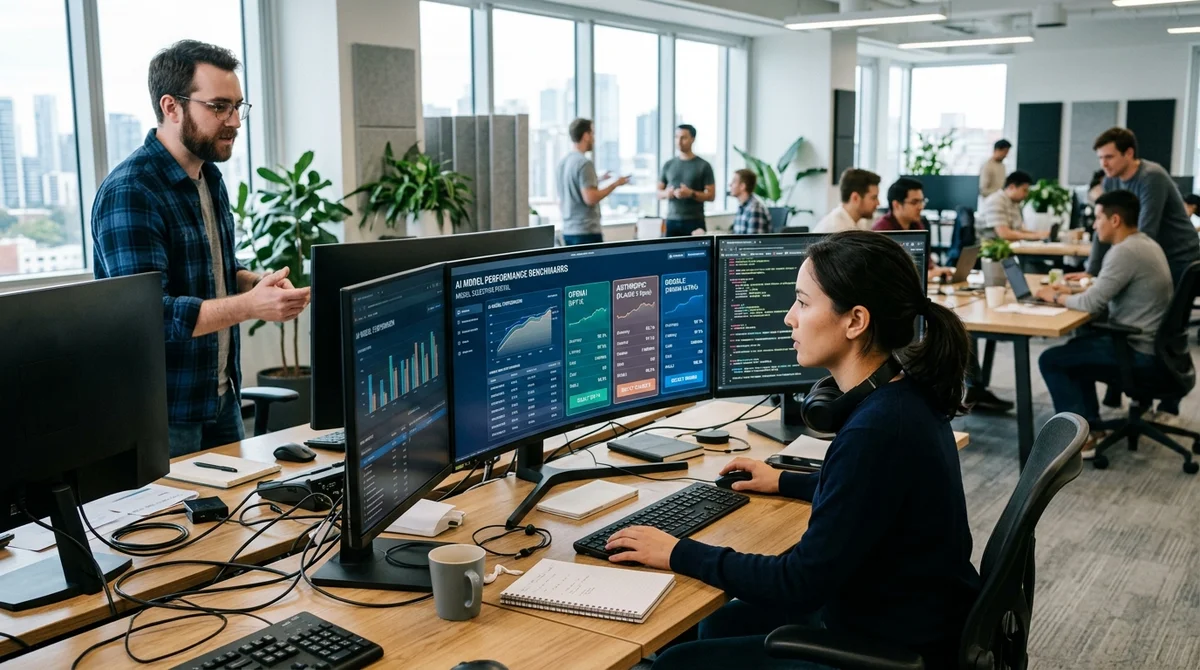
Niteshift, a startup founded by veterans of the cloud platform Datadog, has raised $7 million in a seed round from a collection of well-known angels and VC funds. The company is betting that large corporations are tired of depending on Big AI: they want the freedom to choose between model providers and are willing to pay for it.
The lock-in problem in the AI industry
When developers integrate the OpenAI API or Claude directly into their code, they effectively tie the whole project to that provider. This means:
- No quick way to switch to a competitor without rewriting code
- Exposure to the provider's pricing policy, with no alternatives when prices rise
- Technical debt whenever the API contract changes
- No option of local deployment or of using your own models
- Risk that the provider stops developing a function you need
Migrating from one platform to another takes months of negotiation, adaptation and retesting. For large corporations that is expensive and risky, especially when the integration touches critical systems.
Provider abstraction as the solution
Niteshift builds an abstraction layer between the developer's code and the specific model provider. The developer writes the code once, and the platform routes requests to the right provider: OpenAI, Anthropic, Google, a local model or a self-hosted solution.
This lets companies easily test new models in production, switch to cheaper alternatives for individual tasks, or duplicate requests across several models to check quality. In effect, the platform becomes a single control point for the entire AI stack.
The analogy: if OpenAI is a cloud provider, Niteshift is the abstraction that makes it easy to swap clouds. This is the very architecture that Datadog helps companies monitor today.
Investors see a trend
The founders come from Datadog, where they spent years engineering scalable systems, and they understand how the right architecture protects against dependencies. The round included Bain Capital, GitHub and Stripe veterans, former executives of Notion and Figma, and angels from Sequoia and Benchmark.
"Companies are tired of being held hostage by
Big AI," is how investors backing independence tooling see the trend.
For the venture industry, this is a signal: rebuilding AI infrastructure for independence is profitable.
What this means
AI infrastructure is splitting into two camps: model makers (OpenAI, Anthropic, Google, Meta) and makers of independence (Niteshift, LiteLLM). For corporations this is good news: competition turns into pure competition on price and quality, rather than an attempt to lock a company into an ecosystem.
Datadog veterans understand that the same trend that played out with clouds will play out with LLMs: startups that offer freedom win.
*Meta has been designated an extremist organization and is banned in Russia.
- Nov 1, 2026Local models lose to Opus and Codex: 0.21 on a MacBook versus 1.00 for Codex
- Nov 1, 2026Kimi scores 96.2% on a 1C database analytics test and emerges as a fallback if Claude access is blocked
- Nov 1, 2026OpenAI Rewrites GPT Behavior Rules: Five Values and a Chain of Command
- Nov 1, 2026Google admits AI Mode cuts search revenue, shares fall 15%
Key Questions Answered
What are the key details on The lock-in problem in the AI industry?
When developers integrate the OpenAI API or Claude directly into their code, they effectively tie the whole project to that provider. This means: No quick way to switch to a competitor without rewriting code Exposure to the provider's pricing policy, with no alternatives when prices rise Technical debt whenever the API contract changes No option of local deployment or of using your own models Risk that the provider stops developing a function you need Migrating from one platform to another takes months of negotiation, adaptation and retesting. For large corporations that is
What are the key details on Provider abstraction as the solution?
Niteshift builds an abstraction layer between the developer's code and the specific model provider. The developer writes the code once, and the platform routes requests to the right provider: OpenAI, Anthropic, Google, a local model or a self-hosted solution. This lets companies easily test new models in production, switch to cheaper alternatives for individual tasks, or duplicate requests across several models to check quality. In effect, the platform becomes a single control point for the entire AI stack. The analogy: if OpenAI is a cloud provider, Niteshift is the abstra
What are the key details on Investors see a trend?
The founders come from Datadog, where they spent years engineering scalable systems, and they understand how the right architecture protects against dependencies. The round included Bain Capital, GitHub and Stripe veterans, former executives of Notion and Figma, and angels from Sequoia and Benchmark. "Companies are tired of being held hostage by Big AI," is how investors backing independence tooling see the trend. For the venture industry, this is a signal: rebuilding AI infrastructure for independence is profitable.
Test Frontier LLMs & Autonomous Agents in One Workspace
Run Claude Opus 5.5, GPT-6, Gemini 3.1, and DeepSeek side-by-side in Nomad AI (nomadnet.ai) — unified model routing, deep research, and multimodal workflows under one subscription.
The AI world, distilled — once a week
Seven stories that actually mattered, hand-picked. No noise, no reposts, no press releases.
Done! Check your inbox for a confirmation.