Infrastructure Before the Model: How Businesses Are Rethinking Their Approach to AI
PSM built its own AI agent and ran into a hardware ceiling. Instead of picking a model first, the company prepared the infrastructure. That led to the idea of an AI ready module: a ready-made base that lets you deploy AI without redoing your servers. The core lesson is simple: infrastructure first, model second.
AI-processed from Habr AI; edited by Hamidun News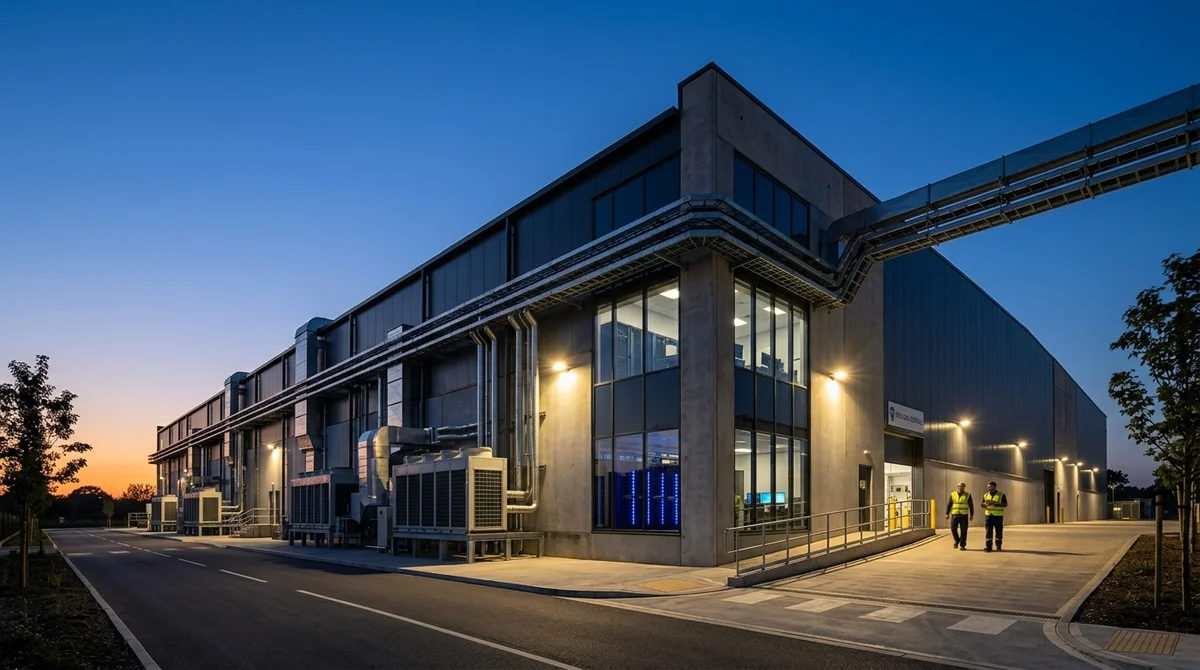
Businesses want their own AI. Everyone asks which model to choose. But no one thinks about what that model will run on. PSM Unlimited ran into this problem firsthand. The team built a corporate AI agent, trained its people and was ready to scale, then hit a wall of hardware limits. The solution came out of a mistake: infrastructure comes first, the model second.
Why the model is only half the job
When businesses talk about AI, everyone discusses algorithms, neural networks and model quality. That is natural: a model is visible, articles are written about it, and it can be demonstrated. But AI does not live in the cloud as an abstract set of weights and parameters. It lives on servers, and those servers have to be the right ones.
In practice it looks like this: you deploy an agent and it works on a test set. You start to scale and hit limits. Not enough GPUs. Memory runs out. The network can't keep up. The processors overheat. You have to rebuild the infrastructure, then tune the model again for the new conditions.
What an AI ready module is
AI ready means the infrastructure is prepared in advance, before you choose which model to run. The foundation is in place, and you can build on it. It includes:
- Compute — GPU/TPU clusters with enough power for parallel processing
- Memory — GPU VRAM and server RAM without bottlenecks
- Storage — fast SSDs for models, logs and cache (not HDDs)
- Network — low latency between nodes, high bandwidth
- Cooling and power — readiness for 24/7 loads
It is not a specific model, and not TensorFlow or PyTorch. It is the physical home in which any AI can live without rework.
What this gives a business
First, speed. You don't spend months reworking servers. You don't wait for GPU deliveries. You take a ready-made base and launch the model tomorrow.
Second, scalability. When new requirements arrive (more users, a heavier model), the infrastructure is already ready for them. No architectural rework is needed; changing a config is enough.
Third, cost. The right infrastructure saves electricity (efficient cooling and power), expensive resources (no overbuying of hardware) and engineers' time (no fighting bottlenecks).
What this means
AI is not magic in the cloud. It is silicon, plastic and electricity. Choosing a model is easier than preparing infrastructure. That is why a business that starts with infrastructure rather than the model beats competitors who learn about hardware problems only after the code is already written.
- Nov 1, 2026Local models lose to Opus and Codex: 0.21 on a MacBook versus 1.00 for Codex
- Nov 1, 2026Adobe's EditAgent judge picks a usable edit 81.3% of the time, versus 74.8% for EditScore
- Nov 1, 202616 models tested on 7 search tools: Exa averaged 10.5 out of 14, SearXNG about 3
- Nov 1, 2026Google's StreamVibe video agent beats other models by 10.7% on response timing and quality
Key Questions Answered
Why the model is only half the job?
When businesses talk about AI, everyone discusses algorithms, neural networks and model quality. That is natural: a model is visible, articles are written about it, and it can be demonstrated. But AI does not live in the cloud as an abstract set of weights and parameters. It lives on servers, and those servers have to be the right ones. In practice it looks like this: you deploy an agent and it works on a test set. You start to scale and hit limits. Not enough GPUs. Memory runs out. The network can't keep up. The processors overheat. You have to rebuild the infrastructure,
What an AI ready module is?
AI ready means the infrastructure is prepared in advance, before you choose which model to run. The foundation is in place, and you can build on it. It includes: Compute — GPU/TPU clusters with enough power for parallel processing Memory — GPU VRAM and server RAM without bottlenecks Storage — fast SSDs for models, logs and cache (not HDDs) Network — low latency between nodes, high bandwidth Cooling and power — readiness for 24/7 loads It is not a specific model, and not TensorFlow or PyTorch. It is the physical home in which any AI can live without rework.
What this gives a business?
First, speed. You don't spend months reworking servers. You don't wait for GPU deliveries. You take a ready-made base and launch the model tomorrow. Second, scalability. When new requirements arrive (more users, a heavier model), the infrastructure is already ready for them. No architectural rework is needed; changing a config is enough. Third, cost. The right infrastructure saves electricity (efficient cooling and power), expensive resources (no overbuying of hardware) and engineers' time (no fighting bottlenecks).
Test Frontier LLMs & Autonomous Agents in One Workspace
Run Claude Opus 5.5, GPT-6, Gemini 3.1, and DeepSeek side-by-side in Nomad AI (nomadnet.ai) — unified model routing, deep research, and multimodal workflows under one subscription.
The AI world, distilled — once a week
Seven stories that actually mattered, hand-picked. No noise, no reposts, no press releases.
Done! Check your inbox for a confirmation.