Enemies of AI Regulation Gathered in Washington. The 2026 Elections Changed the Game
At the AI Honors ceremony in Washington, senators from both parties, entrepreneurs, and military officials gathered—a strange coalition around AI regulation. The 2026 elections have turned artificial intelligence into a political battleground. Republicans, particularly those connected to venture capital and startups, want light regulation: innovation, competition, minimal bureaucracy. Democrats push for protection: citizen data security, algorithmic bias mitigation, and corporate accountability. What was once a technocratic discussion has become deeply political.
AI-processed from The Verge; edited by Hamidun News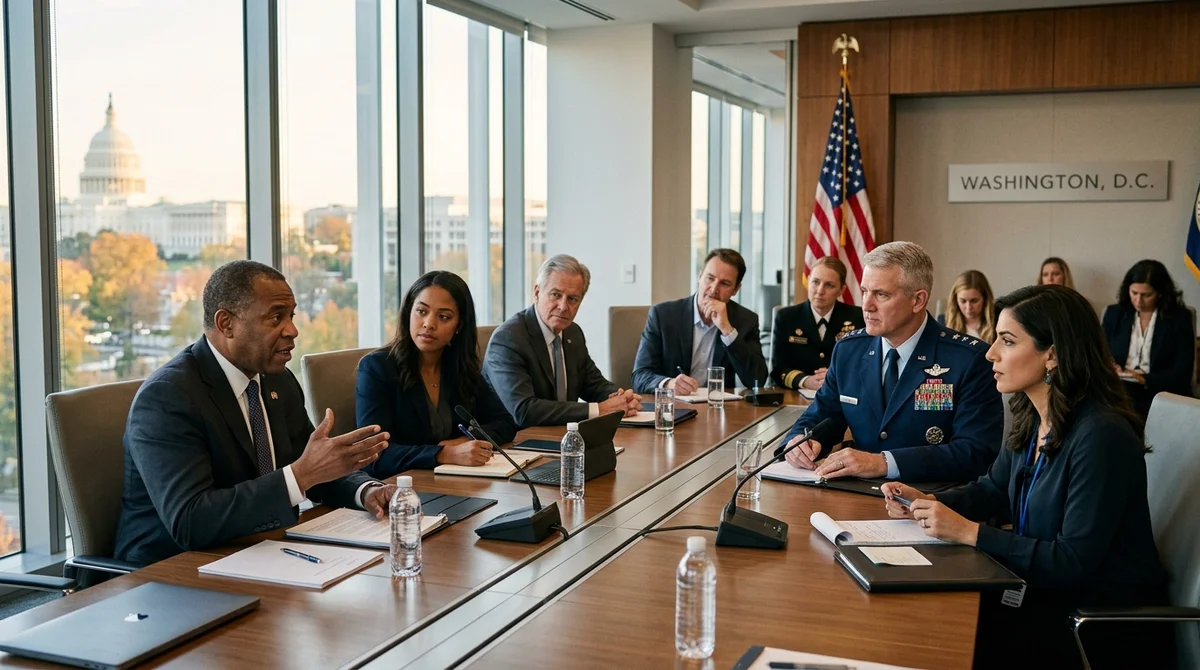
At the Second Annual AI Honors in Washington, something rare happened: people who usually stand on opposite sides of the barricade gathered at one table. Senators from both parties, famous venture capitalists, military generals, and television stars came together with one goal—though what exactly that goal is, they themselves don't seem to fully understand. The conversation about AI regulation stopped being technocratic and became deeply political. And it started right after the 2026 elections came into view.
A Gathering of Strange Bedfellows
At the event, the following ended up in the same room:
- Senator Mike Rounds (Republican, South Dakota) and Senator Mark Warner (Democrat, Virginia)—both wield significant influence on tech committees
- Kevin O'Leary (businessman, known for sharp criticism of excessive regulation) and representatives of traditional American capital
- Military officials (Major General Patrick Ellis)—AI is becoming a national security issue
- Television hosts and public figures who bring PR weight
That's what a coalition that isn't a coalition looks like: they're united only by the understanding that AI is too important to leave unregulated. But on the rules themselves, they completely disagree with each other.
Republicans and Democrats—Two Americas
Republicans (especially those connected to venture capital and the startup scene) want light regulation: innovation, competition, minimal bureaucracy. Democrats pull toward protection: citizen data security, bias mitigation in algorithms, corporate accountability to society.
In normal times, these positions simply coexist. But the 2026 elections have made AI a visible issue for voters. Now each faction must demonstrate that it stands for 'its own' vision of AI—and look reasonable and serious while doing so, not like a technophobe or irresponsible chaos agent.
Result: strange alliances. Military officials who need fast innovation in defense shake hands with Silicon Valley elites. Democrats seek supporters among 'job protection' and ethics advocates. Everyone smiles and talks about 'proper regulation' (each meaning their own version).
Elections Turn the Table
Two weeks ago, this was a boring topic for Washington newsletters. Now it's a hot political issue. Congressional candidates are already preparing stances on 'I'm for innovation' or 'I'm for responsibility,' with no third option.
AI Honors shows that there can be only one scriptwriter for this political theater—the election results. Those who rule now are betting on one vision of AI. Those who hope to rule after are betting on another. Both camps are right halfway between 'we're smart people' and 'but you're fools.'
What This Means
In the coming months, AI regulation will become mainstream American politics, not an expert niche. The strange alliances at the Second Annual AI Honors are a harbinger: the 2026 elections will shuffle the cards in Silicon Valley and Washington DC simultaneously.
Need AI working inside your business — not just in your newsfeed?
I build production AI for companies — custom CRM, internal tools, autonomous agents, workflow automation. Owned by you, shaped to your process, no per-seat tax. Built by Zhemal Khamidun, CPO of AlpinaGPT (AI platform, 6,000+ users).
The AI world, distilled — once a week
Seven stories that actually mattered, hand-picked. No noise, no reposts, no press releases.
Done! Check your inbox for a confirmation.