Chipmaker Groq raises $650 million and pivots to AI inference
AI chipmaker Groq raises $650 million in funding and shifts to software for AI inference — processing requests to neural networks. This strategic pivot shows th
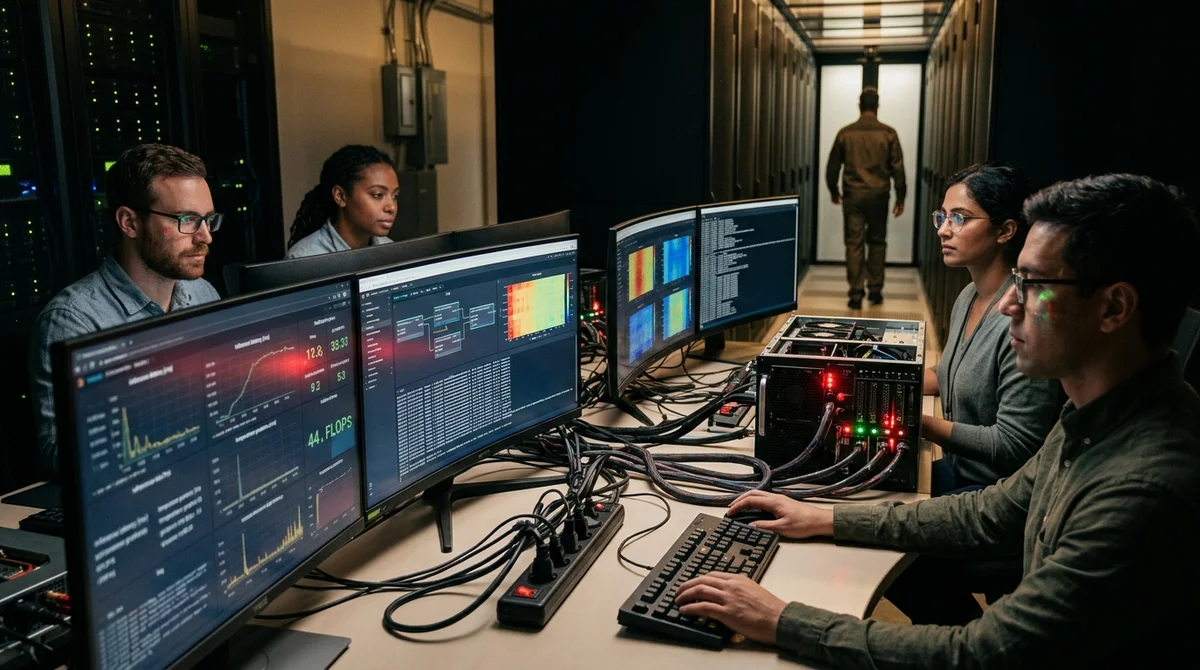
Groq, a chipmaker focused on AI, is raising $650 million in a new financing round and transitioning from hardware production to software for AI inference — accelerating and optimizing how artificial intelligences process and respond to queries.
What's happening with Groq
Groq is known for its specialized processors designed for AI workloads. The company was built on the idea that hardware optimized for neural networks performs significantly better than general-purpose processors like Nvidia GPUs. But now Groq is making a pivot: investing serious resources into a software layer that runs on top of its hardware and makes AI inference faster and cheaper. This doesn't mean Groq is abandoning hardware — rather, it's rethinking where the real money lives and where value is created for customers.
The $650 million in funding is a serious signal. Investors believe Groq can build a team and lead in this new direction.
Why inference specifically?
Inference is the bottleneck in AI production. Training a model is expensive and takes months, but it happens rarely. Running a trained model (inference) — doing this thousands of times a day for millions of users — is routine and scale. The faster a model responds, the better the user experience and the lower the operational costs.
Groq sees where it hurts most:
- Inference accounts for roughly 80% of the cost to maintain AI systems in production
- Even a 10% speedup translates to millions of dollars in annual savings at scale
- Software can deliver significant acceleration if you correctly optimize computations for specific hardware
The chip market is already crowded
The AI chip industry is seeing record capital inflows. Nvidia dominates, but AMD, Google (TPU), Intel, Apple, and a dozen VC-backed startups (Cerebras, Graphcore, SambaNova, others) are each pursuing their own approach. The result: hardware gets cheaper, production becomes mass-produced. Margins fall.
Groq can't win a fair fight in the pure-hardware space. Too much money, too much entrenched expertise with established players. But software is a different game. It's about algorithms, about how to organize computation, about fusing operations, about optimizing for the specifics of particular hardware and particular tasks (LLM inference, embedding computation, fine-tuning). Here you can find high margins, sticky solutions, and barriers to entry.
What this means
Groq isn't alone. Other specialized chipmakers (and even giants like Nvidia) are also investing in inference software. It's a signal about a shift in the AI industry: hardware is becoming a commodity, and money flows toward where value is created — in optimization and ease of use.
For business, this means: the choice of chip may matter less than choosing the right software stack for inference. Your AI hardware supplier may soon be valuable not as a chipmaker, but as a provider of expertise and tools for running models.
Хотите не читать про ИИ, а внедрить его?
«AI News» — это полезные новости из мира ИИ. Системно научиться работать с нейросетями и применять их в работе — в Hamidun Academy.