Startup Shift offers free cleaning in exchange for video data for robots
Startup Shift has launched an unusual project in New York: it cleans residents’ homes for free, but in return records the entire process — from washing dishes to mopping floors. This footage will go to robotics companies to train household robots. The company plans to expand to London and other cities.
AI-processed from The Verge; edited by Hamidun News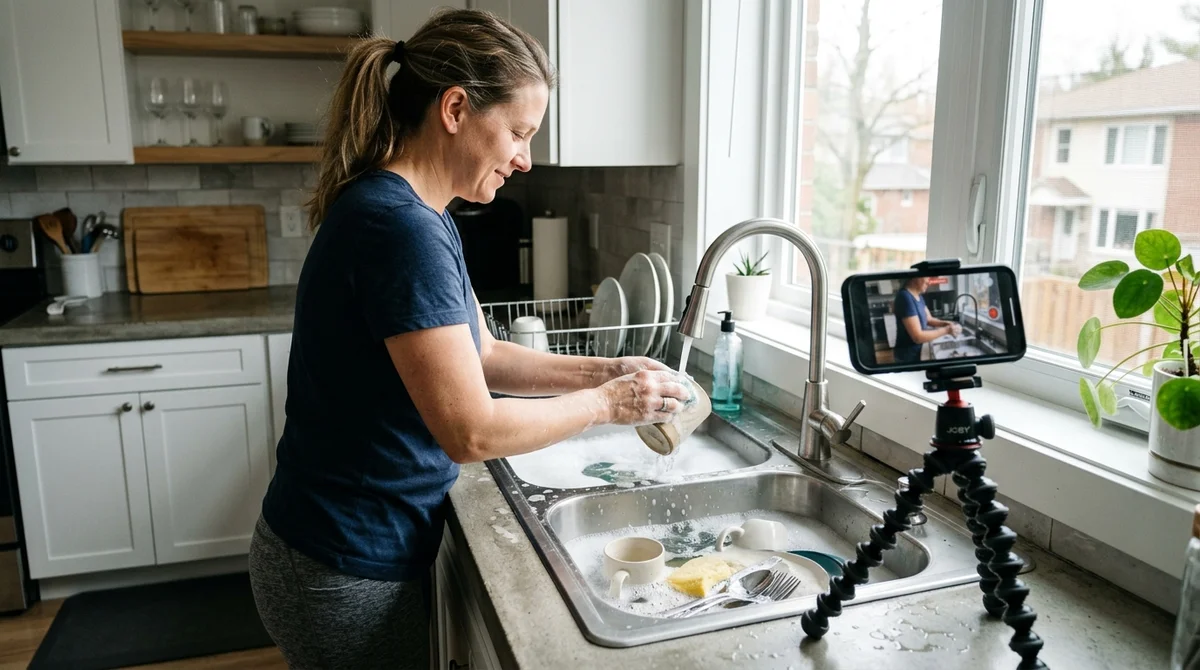
Shift is launching an unusual project in New York: offering city residents completely free cleaning. But in return, the company requires one thing — to film the entire work process of cleaners from start to finish.
Free cleaning at the cost of video data
The project sounds attractive: get rid of extra hassles, let professionals tidy up your home — and all of this without a single dollar from your pocket. In return, Shift will get hours of video recordings where all the nuances of work are visible: how dishes are washed, how tables and floors are cleaned, how different surfaces are handled. The company is already planning expansion to London, San Francisco, and other cities, accumulating data volumes in each region.
Robots urgently need training data
Behind this noble idea lies a pragmatic calculation. Tesla Optimus, Boston Dynamics, Figure AI, and dozens of other companies developing home robots are running into one wall: a shortage of quality training video. To teach a machine to wash dishes, you need not hundreds, but hundreds of thousands of hours of real-world video. This is exactly what Shift is collecting:
- Real homes with unpredictable layouts and difficult access
- Different types of dishes, tables, floors — not laboratory standards
- Natural human movements that vision algorithms cannot model
- Huge amounts of data, filmed in different climatic and household conditions
Such videos are expensive if you look for them on the open market. Shift found a way to obtain them for almost free.
Why this is not simple
It sounds easy, but the devil is in the details. First, video is only half the battle. A robot must learn to interpret the video sequence: understand what exactly the cleaner is doing and why. This requires a colossal amount of annotated data and powerful neural networks. Second, privacy issues arise. Can you film in a person's home? What if relatives appear in the frame? Windows with a view of neighbors? Personal belongings? Shift is silent on this topic for now, but sooner or later these questions will become critical — especially in Europe with its GDPR.
What this means
We are on the verge of a real revolution in home robotics. Companies stop waiting for ideal conditions in the laboratory — they go into the real world and collect data there. Shift is just a pioneer in this trend. If the model works, we will see many companies rushing to copy it. And then ordinary people will be able to get free home services in exchange for their work being a teacher for future robots.
- Oct 26, 2026Court Vacates Pelkey Sentence After Judge Said He Liked AI Video of the Victim
- Oct 26, 2026Jimeng AI Launches "Short Drama Studio" to Run the Full Production Cycle in One Window
- Oct 26, 2026Nikon strips micro-video contest winner of prize over generative AI
- Oct 25, 2026Tsinghua Team Releases HandsOn: 66 Tasks to Test Robot Dexterity
Key Questions Answered
What are the key details on Free cleaning at the cost of video data?
The project sounds attractive: get rid of extra hassles, let professionals tidy up your home — and all of this without a single dollar from your pocket. In return, Shift will get hours of video recordings where all the nuances of work are visible: how dishes are washed, how tables and floors are cleaned, how different surfaces are handled. The company is already planning expansion to London, San Francisco, and other cities, accumulating data volumes in each region.
What are the key details on Robots urgently need training data?
Behind this noble idea lies a pragmatic calculation. Tesla Optimus, Boston Dynamics, Figure AI, and dozens of other companies developing home robots are running into one wall: a shortage of quality training video. To teach a machine to wash dishes, you need not hundreds, but hundreds of thousands of hours of real-world video. This is exactly what Shift is collecting: Real homes with unpredictable layouts and difficult access Different types of dishes, tables, floors — not laboratory standards Natural human movements that vision algorithms cannot model Huge amounts of data,
Why this is not simple?
It sounds easy, but the devil is in the details. First, video is only half the battle. A robot must learn to interpret the video sequence: understand what exactly the cleaner is doing and why. This requires a colossal amount of annotated data and powerful neural networks. Second, privacy issues arise. Can you film in a person's home? What if relatives appear in the frame? Windows with a view of neighbors? Personal belongings? Shift is silent on this topic for now, but sooner or later these questions will become critical — especially in Europe with its GDPR.
Build & Ship Production AI Apps with Vibe Coding
Join Zhemal Khamidun's hands-on Vibe Coding Intensive at hamidun.com/vibecoding — master Claude Code, Cursor, and autonomous agentic workflows.
The AI world, distilled — once a week
Seven stories that actually mattered, hand-picked. No noise, no reposts, no press releases.
Done! Check your inbox for a confirmation.